Backwards Mario

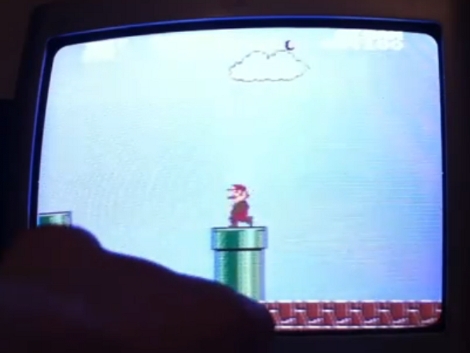
So you’ve long since mastered Super Mario Bros. and it no longer challenges you? Have you tried playing it from right to left? That’s what Backwards Mario is all about. The first portion of the hack is getting the image to display backwards. He’s working with an old CRT television, which uses a magnetic ring to aim the electron gun at the screen. By swapping the left and right wires from that ring you can flip the image horizontally. Now Mario will be travelling right to left, but the controller buttons will send Mario the wrong direction on screen. This is a snap to fix, just crack open the controller and swap the signals for the left and right buttons. Now it’s time to fall in love with the classic game all over again, just like [JJ’s] doing in the video after the break.

Continue reading “Backwards Mario”

CRT Art: Wobbulator

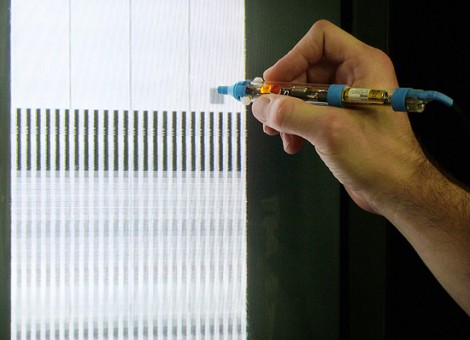
The Wobbulator is a black and white CRT television that has additional hardware to manipulate the electrons as they bombard the phosphor layer of the screen. It was created by [June Paik] and you can find it at The Experimental Television Center. [Blair Neal] took some time to share the background information and some video on this interesting device.

The television has a second ”yoke” of coils around the ray tube. The TV still functions normally with these coils installed, but running a signal through them can further manipulate the picture. Hook, them up to a function generator and you can get some pretty wild effects. In this case, the signals from a sound generator are controlling the coils, resulting in the audio/video artwork which you can view after the break.

Continue reading “CRT Art: Wobbulator”

Hackaday Links: June 27, 2010

Precision CRT manufacture

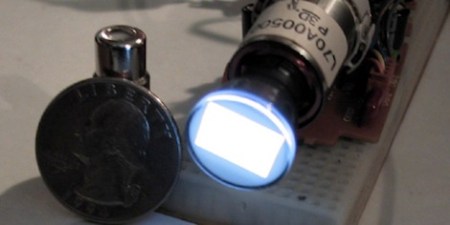
Here’s a great video from Tektronix about building a precision cathode ray tube. The tube manufacture method was developed to use in oscilloscopes and we’d guess it dates back to the early 1960’s. [Thanks Bill]

Snake on an LED matrix

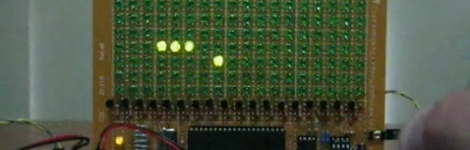
We would have done a full post o this beautifully built LED matrix but we just couldn’t find much information on it. For now, enjoy the video of the device playing the classic game of Snake. [Thanks Xdr]

Wire bundling

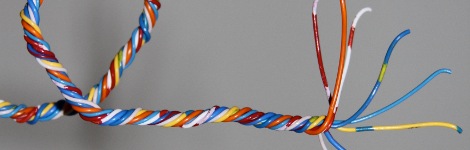
We’re not sure if this is brilliant or just snake oil. Here’s a method of bundling wires together by twisting them with an electric drill. We’ve always just used our hands but we’ve never really worked in any kind of volume either. [Thanks Kacper]

Adding SCART To A Cheap CRT Television

[133MHz] cracked open a cheap tube television to add a SCART connector. He knew he had a chance at success when he discovered all of the knock-outs on the back of the connector panel because one of them was exactly the right size for the connector. But it wasn’t quite as easy as soldering in one component. He ended up injecting his own RGB data from the SCART connector directly into the onscreen display, making an end run around the missing feature. [133MHz] removed some resistors in the circuit and used the empty lead holes to patch in his own circuit, feeding the RGB data from the SCART connector to the OSD chip in the format it needed.

This one takes you way down the rabbit hole. We’re glad he provided so much background about the hack but it’s going to take us a little while to fully wrap our heads around how he figured it out.

[Thanks Victor]

Cathode Ray Tube Leads The Way On This Bot

[Daqq’s] latest creation is this little robot with a CRT mounted on the front. Obviously ‘why?’ is the wrong question here, but we know this is right up his alley considering his propensity for the less common like this plasma ball Nixie tube. The solidly-built bot uses two stepper motor controlled wheels and an omni-wheel on the front to create a trike. An ATmega128 controls the system but the real story here is the CRT. It requires a hefty voltage regulator for the -600V to +200V the Tungsram DG7-123 tube needs. Trouble along the way ranged from dealing with stray magnetic fields from the power supply, to mounting the fragile tube itself. Take a look at his detailed writeup linked above and join us after the break for the demo videos.

Continue reading “Cathode Ray Tube Leads The Way On This Bot”

Ionocraft Aka Lifters

It’s hard to believe that in five years we haven’t covered lifters before. This realization was sparked when [Tyler] tipped us off about a lifter project demonstrated at the Kansas City hackerspace called CCCKC.

Lifters, the casual name for ionocraft, fly without combustion or moving parts. We’re not going to tackle the particulars of what makes flight possible, but high voltage is required to feed the phenomenon that provides the lift. One of the first comments when we asked what to do with old CRT monitors was to use them for lifters. The flyback transformer puts out plenty of voltage if you can tap into it without killing yourself (no, seriously, that’s an issue).

This is the method that the CCCKC folks used. Take a peek at the video after the break. If you’re thirsting for more fun with lifters, stop by the Lifter Project.

Continue reading “Ionocraft Aka Lifters”

Music Visualizer (oscilloscope)

musicscopetv

The Music visualizer is actually a second build based on an earlier design[Thanks Roger]. The build was influenced by Zyra’s How to make an oscilloscope out of a television. The hack is quite simple, patch the output of an amplifier into the vertical deflection coils of the CRT. This is a good use for that old TV you may have laying around  but don’t want to recycle it just yet. While on the subject we had covered the Mac SE/30 audio visualizer in 2006. For those looking for something a little more hard core, here is a bit about Homemade cathode ray tubes.