Digital Designer Teaches High School

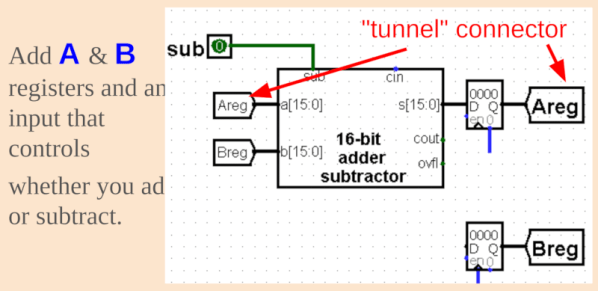
We wish we had met [Mr. Mueller] when we were in high school. After 20 years as a digital design engineer, he decided to teach a digital electronics class at the high school level at LASA high school in Austin, Texas. He’s been doing it for seven years and has made his course material available via Google Docs.

Don’t let the high school level fool you. Topics range from simple electronics to Spice. There’s coverage of discrete devices, oscilloscopes, and Arduinos. There’s plenty of digital logic, of course, and a simple 16-bit microprocessor, too. There are labs for FPGAs using Verilog and talks about ARM. It’s pretty comprehensive and we wonder if they can really cram all this into a single school year. One thing we saw that caught our eye was the simulation of a transistor using Play-Doh. Turns out it isn’t an electrical simulation, but a simulation of how photolithography creates transistors. Still good stuff.

This would be great for teaching students of pretty much any age, even if you took only parts of it. It would also be worthwhile for self-study. We know how much work it takes to put something like this together, and we can’t commend [Mr. Mueller] and the LASA high school enough for making it available to everyone.

There is more and more course material out there at all levels and we think that’s a great thing. If you need something for a younger set, try a blindfold.

3DBuzz Closes With A Final Gift

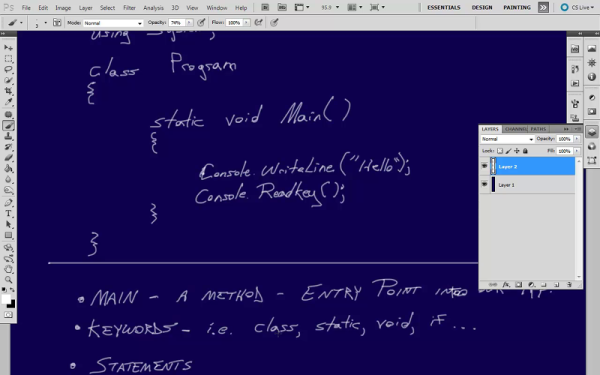
If you wanted to learn about creating modern computer games, 3DBuzz had some of the best tutorials around. In fact, some of the tutorials about C#, C++, Android, and math would be useful for anyone, while the ones about game art and modeling in Maya are probably mostly for game developers. While these were once available only by subscription, the company — now defunct — has left them available for download via this BitTorrent file.

We don’t know enough about things like Blender and Maya to evaluate the material, but it is well regarded and the ones we do know something about seem very high quality. There are, for example, many videos about C++ and C# that are very professional and cover quite a few topics.

Continue reading “3DBuzz Closes With A Final Gift”

Navigating The Dark Side: Controlling Robots With Zero Radio Communication

While autonomous robots have been the subject of some projects in the past, this particular project takes a swing at building a robot that can teach children about controls and robotics.

The idea is to mimic a space mission on the dark side of the moon, where radio contact is nearly impossible. The students learn to program and debug embedded devices and sensors, even before some of them have learned the alphabet!

The material for the challenge allows the microcontroller to be programmed in a simple Arduino program (Blink) as well as lower level languages like C++ or Java. The main hardware consists of an Arduino Uno R3-based rover controlled over WiFi by an ESP8266. The sensor data from the robot is gathered from an ultrasound distance sensor an a camera, as well as a SIM7000E GSM+GPS. Commands are polled from a server, sent via a web page and REST interface.

The rover responds to commands for directions, takes pictures, and scans its distance remotely. Some custom libraries are written for the serial communication and camera to account for spotty communication. The latest challenge expansion is a probe that pays attention to battery life and power consumption, challenging students to account for power usage during the robot’s lifetime.

Since the project’s conception, the rovers have already been used in schools, and we’re excited to see a new approach for younger students to learn controls and programming.

Endless Electronic Problems For Solving

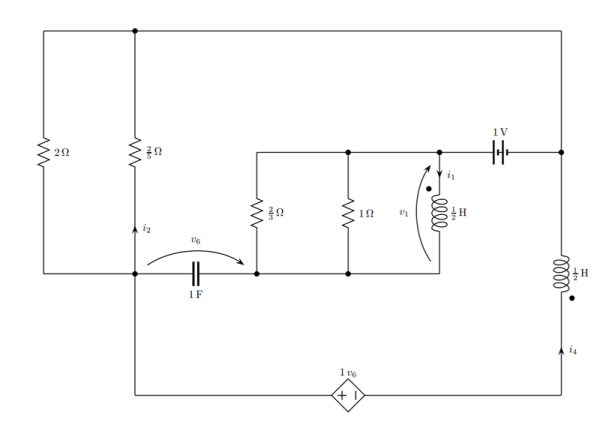
We know not everyone who likes to build circuitry wants to dive headfirst into the underlying electrical engineering that makes everything work. However, if you want to, now is a great time. Many universities have most or all of their material online and you can even take many courses for free. If you want an endless pool of solved study problems, check out autoCircuits. It can create many different kinds of electronics problems and their solutions.

You can get a totally random circuit, or choose if you want to focus on DC, AC, two-ports, or several other types of problems. You can also alter the general form of the problem. For example, for a DC analysis, you can have it assign circuit values so that the answer is a value such as 45 ohms, or you can have it just use symbols so that the answer might be i4=V1/4R. You even get to pick the difficulty level and pick certain types of problems to avoid. Just be fast. After the site generates a problem, you have 10 seconds to download it before it is gone forever.

Continue reading “Endless Electronic Problems For Solving”

How To Build The Strongest Arches

When it comes to architectural features, there are probably not many as quintessentially memorable as arches. From the simplicity of the curved structure to the seemingly impossible task of a supposedly collapsable shape supporting so much weight in mid-air, they’ve naturally fascinated architects for generations.

For civil engineers, learning to calculate the forces acting on an arch, the material strength and properties, and the weight distribution across several arches may be familiar, but for anyone with only a basic physics and CAD background, it’s easy to take arches for granted. After all, they grace the Roman aqueducts, the Great Wall of China, and are even present in nature at Arches National Park. We see them in cathedrals, mosques, gateways, and even memorialized in the case of the St. Louis Gateway Arch. Even the circular construction of watch towers and wells, as well as our own rib cages, are due to the properties of arches.

But what really goes into constructing a strong arch? Continue reading “How To Build The Strongest Arches”

Clean Water Technologies Hack Chat

Join us on Wednesday, September 4th at noon Pacific for the Clean Water Technologies Hack Chat with Ryan Beltrán!

Access to clean water is something that’s all too easy to take for granted. When the tap is turned, delivering water that won’t sicken or kill you when you drink it, we generally stop worrying. But for millions around the world, getting clean water is a daily struggle, with disease and death often being the penalty for drinking from a compromised source. Thankfully, a wide range of water technologies is available to help secure access to clean water. Most are expensive, though, especially at the scale needed to supply even a small village.

Seeing a need to think smaller, Ryan started MakeWater.org, a non-profit program that seeks to give anyone the power to make clean water through electrocoagulation, or the use of electric charge to precipitate contaminants from water. There’s more to MakeWater than electrocoagulation kits, though. By partnering with STEM students and their teachers, MakeWater seeks to crowdsource improvements to the technology, incorporating student design changes into the next version of the kit. They also hope to inspire students to develop the skills they need to tackle real-world problems and make a difference in the lives of millions.

join-hack-chatOur Hack Chats are live community events in the Hackaday.io Hack Chat group messaging. This week we’ll be sitting down on Wednesday, September 4 at 12:00 PM Pacific time. If time zones have got you down, we have a handy time zone converter.

Click that speech bubble to the right, and you’ll be taken directly to the Hack Chat group on Hackaday.io. You don’t have to wait until Wednesday; join whenever you want and you can see what the community is talking about.

Parallax Update Hack Chat

Join us on Wednesday, August 28th at noon Pacific for the Parallax Update Hack Chat with Chip and Ken Gracey!

For a lot of us, our first exposure to the world of microcontrollers was through the offerings of Parallax, Inc. Perhaps you were interested in doing something small and light, and hoping to leverage your programming skills from an IBM-PC or an Apple ][, you chanced upon the magic of the BASIC Stamp. Or maybe you had a teacher who built a robotics class around a Boe-Bot, or you joined a FIRST Robotics team that used some Parallax sensors.

Whatever your relationship with Parallax products is, there’s no doubting that they were at the forefront of the hobbyist microcontroller revolution. Nor can you doubt that Parallax is about a lot more than BASIC Stamps these days. Its popular multicore Propeller chip has been gaining a passionate following since its 2006 introduction and has found its way into tons of projects, many of which we’ve featured on Hackaday. And now, its long-awaited successor, the Propeller 2, is almost ready to hit the market.

The Gracey brothers have been the men behind Parallax from the beginning, with Chip designing all the products and Ken running the business. They’ll be joining us on the Hack Chat to catch us up on everything new at Parallax, and to give us the lowdown on the P2. Be sure to stop be with your Parallax questions, or just to say hi.

join-hack-chatOur Hack Chats are live community events in the Hackaday.io Hack Chat group messaging. This week we’ll be sitting down on Wednesday, August 28 at 12:00 PM Pacific time. If time zones have got you down, we have a handy time zone converter.

Click that speech bubble to the right, and you’ll be taken directly to the Hack Chat group on Hackaday.io. You don’t have to wait until Wednesday; join whenever you want and you can see what the community is talking about.