Philips Says: No Internet Of Things For You!

The 900-pound gorilla in the corner of the Internet of Things (IoT) hype that everyone is trying to ignore is interoperability. In the Internet of Internets (IoI) everything works on a few standards that are widely accepted: IP and HTML. The discrepancies are in the details and the standards wars are in the past. Websites are largely interoperable. Not so in the wild-west ethos of the IoT.

Philips makes a line of ZigBee-enabled RGB lightbulbs that took the enthusiast community by storm. And initially, Philips was very friendly to other devices — it makes a ZigBee-to-WiFi bridge that would let you control all of your ZigBee-based lights, regardless of their manufacturer, from your phone. Until now.

Philips has just rolled out a “Friends of Hue” certification process, and has since pushed out a firmware update where their Hue bridges stop interoperating with non-certified devices. You can read Philips’ version of the story here.

Philips Locks Out 3rd Party ZigBee Hardware
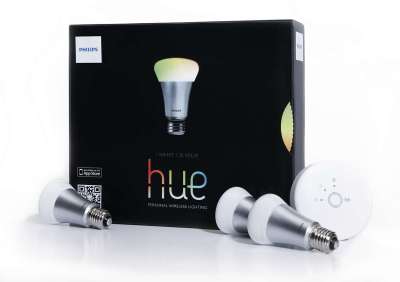
The hub shown on the right is what's being locked down.
The hub shown on the right is what’s being locked down.

The short version is that, ZigBee standards be damned, your future non-Philips lights won’t be allowed to associate with the Philips bridge. Your GE and Osram bulbs aren’t Friends of Hue. DIY RGB strips in your lighting mix? Not Friends of Hue. In fact, you won’t be surprised to know who the “Friends of Hue” are: other Philips products, and Apple. That’s it. If you were used to running a mixed lighting system, those days are over. If you’re not on the friends list, you are an Enemy of Hue.

Their claim is that third party products may display buggy behavior on a Philips network, and that this loads up their customer-response hotlines and makes people think that Philips is responsible. Of course, they could simply tell people to disable the “other” devices and see how it works, putting the blame where it belongs. Or they could open up a “developer mode” that made it clear that the user was doing something “innovative”. But neither of these strategies prevent consumers from buying other firms’ bulbs, which cost only 30-50% of Philips’ Hue line.

While Philips is very careful to not couch it as such, the Friends of Hue program really looks like an attempt to shut out their competitors; Philips got an early lead in the RGB LED game and has a large share of the market. As they say themselves in their own press release “Today these 3rd party bulbs represent a minimal fraction of the total product connected to our bridges so the percentage of our users affected is minimal.” And they’d like to keep it that way, even though the people they’re hurting are probably their most vocal and dedicated customers.

Who owns the IoT?

This Techdirt response to the situation is positively apoplectic, and there’s been the predictable flood of tirades in the comments on Slashdot. [Joel Ward], who in January was celebrating the ability to afford enough colored lights to appease his son is not so happy anymore.

And while we, with our manual light switches, laugh comfortably at the first-world problems of Hue consumers, we have to ask ourselves whether we’re next. Today they come for our RGB lightbulbs, but tomorrow it might be our networked toasters. A chilling thought!

Snark aside, the IoT brings two of the saddest realities of the software world into your home appliances: Where there’s code, there’s vulnerabilities, and when you can’t control the code yourself you aren’t really in control. You may own the lightbulb, but you’re merely licensing the firmware that runs it. The manufacturer can change the rules of the game, or go out of the product line entirely, and you’re high and dry. What can you do? Pull out your JTAG debugger.

Of course it’s insane to suggest that everyone needs to become an embedded-device firmware hacker just to keep their fridge running. As we’ve written before, we need to come up with some solution that puts a little more control in the hands of the ostensible owners of the devices, while at the same time keeping the baddies out. We suggest a press-to-revert-firmware button, for instance. When Philips pushes a non-consumer-friendly upgrade, you could vote with your fingertips — but then you’d miss out on bug fixes as well. Maybe it’s better to just give in an learn to love Windows 10.

There are no easy solutions and no perfect software. The industry is still young and we’ll see a lot of companies staking out their turf as with any new technology. It seems to us that IoT devices leave consumers with even less choice and control than in the past, because they are driven by firmware that’s supposed to be invisible. It’s just a lightbulb, right?

What do you think? Any ideas about how to put the power back in the hands of the “owner” of the device without everyone’s refrigerators becoming botnet zombies? Let us know in the comments.

Thanks [djxfade] for the tip!

Edit: Shortly after we ran this piece, Philips backed down:

“We underestimated the impact this would have upon the small number of our customers who currently use uncertified lights from other brands in the Philips Hue system. We have decided to continue to enable our customers who wish to integrate these uncertified products within their Philips Hue system.”

The Internet Of Minecraft Things Is Born

Minecraft has come a long way since [Notch] first thought up the idea that would eventually make him a billionaire. The game can be enjoyed on so many levels and become so engaging that grown adults who should know better spend far more time playing it than working on, say, their backlog of Hackaday posts. As if that weren’t bad enough, now Minecraft threatens to break out of screen with the ability to control a WiFi light bulb from within the game.

For those unfamiliar with Minecraft, it’s an open world game that allows players to interact with blocks of various materials. Players can build, destroy, explore and create landscapes and structures. An active modding community contributes everything from cosmetic texture packs to new block types with extended functionality. It was one of these mods that was leveraged to “break the fourth wall” in Minecraft. [giannoug] used the OpenComputers mod, which allows placement of programmable in-game computers with a full complement of peripherals, including an Internet connection. That allowed [giannoug] to send commands to his Brand X eBay WiFi light bulb, the protocol for which his friend [Thomas] had previously reverse engineered. Flip a switch in Minecraft and the real-world light bulb comes on instantly. Pretty cool.

We’ve seen quite a few builds where Minecraft blocks inspired real-world lamps, but this is a step beyond and might be a great way to get kids into programming using Minecraft. But it’s not the first time Minecraft has broken the fourth wall – check out this 2012 effort to build a microcontroller-based Minecraft server that can toggle pins from within the game.

[Thanks to aggvan and Stathis K for the near-simultaneous tips!]

Belkin WeMo Teardown

[Brian Dipert] over at EDN has a teardown of Belkin’s answer to the Internet of Things (IoT) craze: the WeMo. This little WiFi gadget plugs into an outlet and lets you turn a connected device on and off from a smart phone app or something like Amazon Echo.

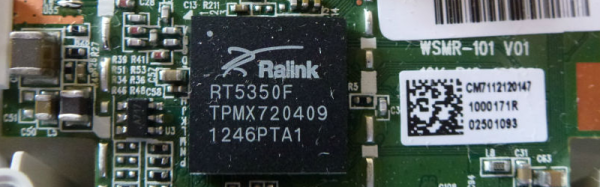
As you might expect from a cheap piece of consumer hardware, there’s not a whole lot inside. The digital board contains a Ralink WiFi chip, an antenna etched on the PCB, and a handful of components, including an SDRAM and some flash memory.

Continue reading “Belkin WeMo Teardown”

Get Your Internet Out Of My Things

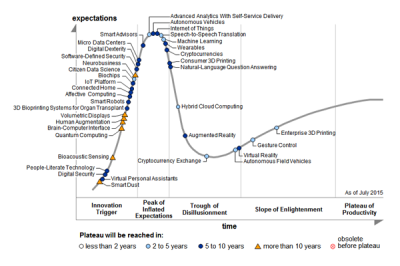
2014 was the year that the Internet of Things (IoT) reached the “Peak of Inflated Expectations” on the Gartner Hype Cycle. By 2015, it had only moved a tiny bit, towards the “Trough of Disillusionment”. We’re going to try to push it over the edge.

emerging-tech-hc.png;wa0131df2b233dcd17Depending on whom you ask, the IoT seems to mean that whatever the thing is, it’s got a tiny computer inside with an Internet connection and is sending or receiving data autonomously. Put a computer in your toaster and hook it up to the Internet! Your thermostat? Hook it up to the Internet!? Yoga mat? Internet! Mattress pad? To the Intertubes!
Snark aside, to get you through the phase of inflated expectations and on down into disillusionment, we’re going to use just one word: “security”. (Are you disillusioned yet? We’re personally bummed out anytime anyone says “security”. It’s a lot like saying “taxes” or “dentist’s appointment”, in that it means that we’re going to have to do something unpleasant but necessary. It’s a reality-laden buzzkill.)

Continue reading “Get Your Internet Out Of My Things”

Echo, Meet Mycroft

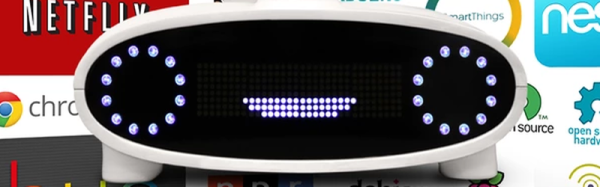
The Amazon Echo is an attempt to usher in a new product category. A box that listens to you and obeys your wishes. Sort of like Siri or Google Now for your house. Kickstarter creator [Joshua Montgomery] likes the idea, but he wants to do it all Open Source with a Raspberry Pi and an Arduino.

The Kickstarter (which reached its funding goal earlier this month) claims the device will use natural language to access media, control IoT devices, and will be open both for hardware and software hacking. The Kickstarter page says that Mycroft has partnerships with Lucid and Canonical (the people behind Ubuntu). In addition, they have added stretch goals to add computer vision and Linux desktop control to Mycroft.

Continue reading “Echo, Meet Mycroft”

cpu

Reach Out And Touch Your Computer

[Carter Yagemann] found himself in a bit of a pickle. He uses his computer mostly for gaming, but would like to access it remotely from time to time to do a littler server work on the side. The problem is gaming computers eat up a lot of electrons and he didn’t want to waste them by leaving it on all the time. The obvious solution was to use the Wake on Lan function. Unfortunately, his motherboard did not support this technology.

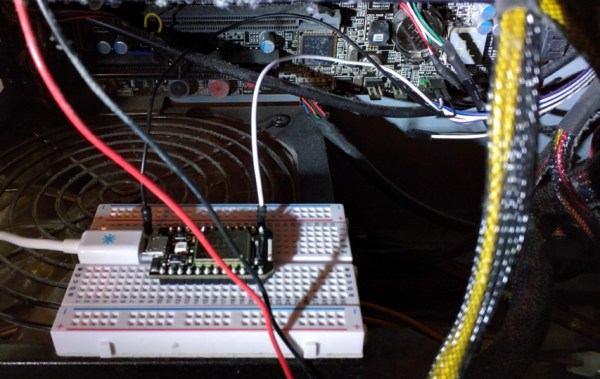
Like any good hacker would do, [Carter] used an IoT board to connect the power button of his PC to the internet. He achieved this goal with a Particle Core board. His motherboard was an ATX variety, so wiring up two of the IoT board’s I/O pins to the power on pins on the motherboard was a simple task accomplished with the help of an inline resistor.

This hack is so easy that it’s a great alternative to the blinky LED first program we all know so well. Want to get started in the hacking community? This is a great way to get going.

Hackaday Prize Semifinalist: Sharing Pollution Analytics

A while ago, [Joshua Young] had a conversation with an environmental scientist. There aren’t many government-funded pollution monitoring stations around Texas, but there are a lot of well-off home owners associations in Houston that have the sensors to collect the data. Air quality monitoring is important, and more data is usually better, and without these HOA’s providing the data for free, these environmental scientists wouldn’t have the data to do their job.

[Joshua]’s project is taking the idea a few members of those HOA’s had and expanding it to the entire world. For his entry to the Hackaday Prize, he’s creating a system to share local pollution data with the entire Internet.

The system [Joshua] is building uses a suite of air quality sensors to measure sulfur dioxide, carbon monoxide, nitrogen oxides, ozone and particulate matter. These sensors connect to the Internet through either an ESP8266 WiFi module or a LoRa radio module, push the data onto the cloud, and let the entire world know what the air quality is.

Using tens of thousands of individual base stations to gather data has been done before; Weather Underground uses ten times as many weather stations than the National Weather Service to get better weather tracking resolution. Pollution sensors aren’t normally a part of a weather station, and with [Joshua]’s project, the environmental scientists tracking this data will hopefully get the data they need.

The 2015 Hackaday Prize is sponsored by: