Phosphorescent Laser Painting


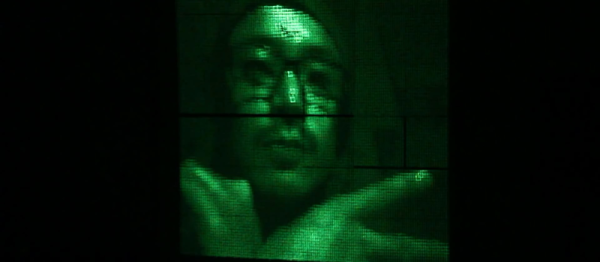
Here’s a simple and interesting idea that increases the visual persistence of a laser scanner image. Using glow-in-the-dark paint, [Daito Manabe] prepares a surface so that the intense light of a laser leaves a trace that fades slowly over time. He’s using the idea to print monochromatic images onto the treated surface, starting with the darkest areas and ending with the lightest. The effect is quite interesting, as the image starts out seeming quite abstract but reveals its self with more detail over time.

As evidenced in the test videos, the bursts of laser scanning are matched to the fade rate of the paint. Therefore it would seem that the time taken to “write” an image is directly proportional to the desired visual persistence of the final image. We wonder, by combining clever timing and variable laser intensity could you write images much more quickly? How hard would it be to use this for moving pictures? With the ability to create your own tiny laser projector, and even an RGB scanner, there must be a lot of potential in this idea for mind-blowing visual effects. Add portability by using a phosphor-treated projection screen!

Share your ideas and check out the test videos after the break.
Continue reading “Phosphorescent Laser Painting”

Open Source Your Rave With OpenLase

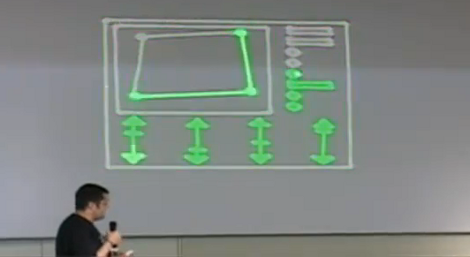
Without a doubt, Laser Projectors are a great way to project large, bright images on any surface you can imagine. With a high enough quality projector and software package, excellent images and visualizations can be displayed in real time. [marcan], of the openkinect project, decided that there were not any open source laser projection packages out there that suited his wants or needs, so logically he decided to write his own. Because home-made laser projectors often use the audio out port of a PC, building the framework on top of the JACK unix sound software to control the hardware made perfect sense. OpenLase includes plugins for audio visualizations, 2D and 3D gaming, as well as converting video streams into laser format in real time.

Be sure to check out the Chaos Communication Congress presentation [marcan] gave after the break, as well as all the extra demo videos on his website.

Continue reading “Open Source Your Rave With OpenLase”

Hackaday Links: November 28, 2010

The Clock Clock

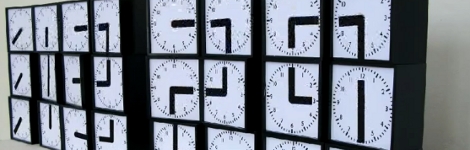
This digital display is made from several analog clocks with thick hands. Together they make something of a 7-segment display, which can be used to display the time. It reminds us of the “Shared Time” installation we covered previously. [Thanks Drum365 via Anonimiss Files]

Quickly desolder lots of parts

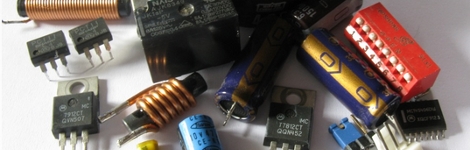
[Rhys Goodwin] is grabbing parts from junk PCBs but he’s not using a rework station. Instead it’s a hot-air gun and a brisk tap on the bench to send the parts flying. Well, at least he’s not using a blow-torch like [Ben Heck] does.

Binary Hero

This bank of 8 toggle switches is the controller for Binary Hero, a geeky take on Guitar Hero. When you see a decimal number come down the screen set your toggle to the binary equivalent in time or the game will be over before you know it. [Thanks Fabien]

Quick fan POV

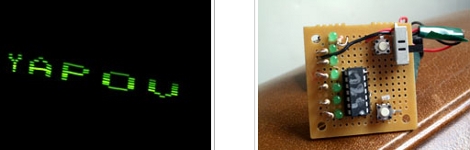
[GMG] took a small persistence of vision board and slapped onto an oscillating fan blade. Along with a couple of magnets on the safety cage this display is a persistence of vision hack you can pull off in an hour or two.

Speed up laser etching

[James] figured out a way to cut down on the time it takes to etch multiple copies of one item with a laser cutter. It doesn’t run the laser faster, but orients the pieces in a way that means less movement of the head while the laser is not on. Read through his article and see if this method can help you out when doing some CNC work.

The Transistor Takes On The Machine

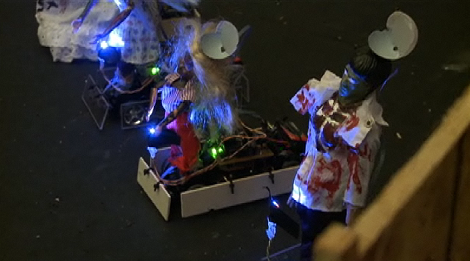
It only took 4 hackerspaces, but we finally get to see a zombie movie inspired project; hackerspace The Transistor Takes on the Machine with a Dawn/Shawn of the Dead movie theme. Race cars disguised as zombies swarm toward the players, who then use laser tag like guns to “shoot” down the approaching undead. The whole thing is a mess of Arduinos communicating with xBees to a central iMac G3, but it all comes together rather well and is promised to be released open source.

Now all that’s left is deciding which hackerspace wins the competition. Who do you have your money on?

[Thanks Deven]

Gas Containment For Laser Cutters

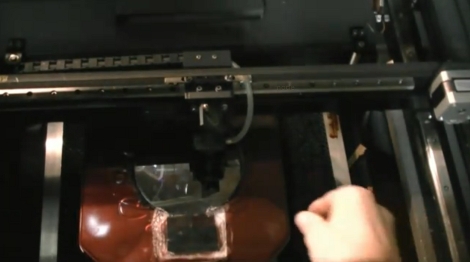
Tired of breathing all the noxious fumes your laser cutter puts out? Yeah… we don’t have a laser cutter either. But [Jeri Ellsworth] does and she needed a way to evacuate off-gases generated during cutting so that they don’t damage the laser cutter, or her lungs. What she came up with is a containment box that attaches to a pump system.

The problem is that you want to keep the gases away from the laser cutter hardware but you still need to be able to shoot the laser at your work material. Her clever solution is to use a silicone wafer like the ones with which she makes integrated circuits. They allow the infrared laser to pass through without being chopped in half. What you see in the image above is a red box with the round wafer in the center. Near the bottom of the image is a clear window so you can see what’s going on with your work piece. But to get the full idea you need to watch the video embedded after the break.

We can’t help but think she’s building this in preparation for some more chemistry hacking.

Continue reading “Gas Containment For Laser Cutters”

Laser Mic Makes Eavesdropping Remarkably Simple

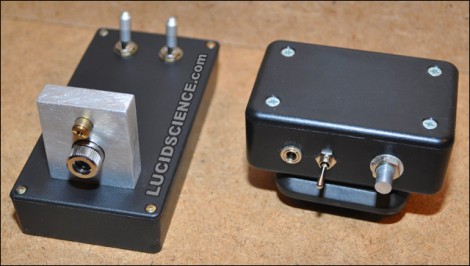
Here’s a surprisly simple way to build yourself a laser-based listening device. It consists of two modules, a transmitter and a receiver. The transmitter is a set of lasers, one is visible red for aiming, and the other is infrared for measuring the vibration of a surface. Point the transmitter at the window of the room you want to listen in on and the laser can be reflected back to the receiver. The receiver module has a phototransistor to pick up the infrared laser light, and an LM386 audio amplifier to generate the audio signal sent to a pair of headphone. The need to be well-aligned which is easy enough using a pair of tripods. Check out the demo after the break.

Looking for something to do with the leftover laser diodes from this project? Try making yourself a laser microscope.

Continue reading “Laser Mic Makes Eavesdropping Remarkably Simple”

Laser Marquee Projector

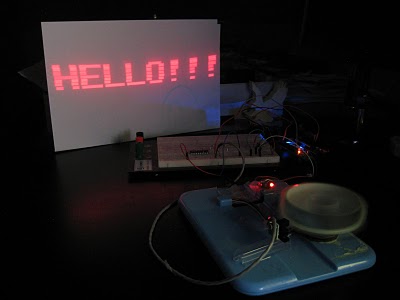
This laser message scroller is built with inexpensive parts. The heart of [Raul’s] system is a spinning pill-box with eight mirrors on it. Each redirects the laser to a different vertical portion of the projection surface. There are eight small arms on the apparatus that each break the beam of an optical sensors as it spins, facilitating the precise synchronization needed to generate the projected image correctly. In the video after the break we can make out what looks like an Arduino controlling the system. This makes sense as it’s easy to connect the laser pointer and sensor, and the USB connection allows for the streaming of messages to the system.

Want to see a more complicated setup? Check out the POV laser projector from a few years back. Continue reading “Laser Marquee Projector”