App Detects Parkinsons Disease And COVID-19 Via Audio

One of the challenges of diagnosing diseases is identifying them early. At this stage, signs may be vague or confusing, or difficult to identify. Early diagnosis is often tied to the best possible treatment outcomes, so there’s plenty of incentives to improve methods in this way.

A new voice-based method of diagnosing disease could prove fruitful in this regard. It relies on machine learning techniques to detect when patients may be suffering from certain conditions.

Continue reading “App Detects Parkinsons Disease And COVID-19 Via Audio”

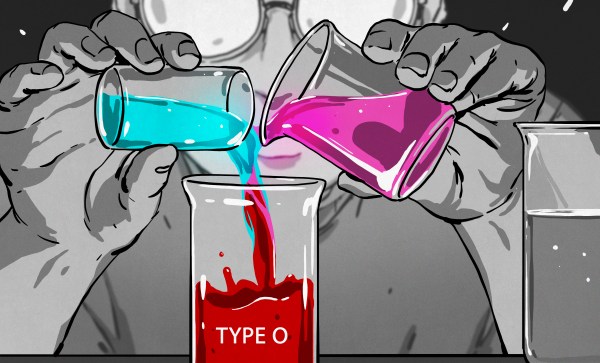
The Blood Factory: New Research May Open The Door To Artificial Blood

There were news stories afoot this week with somewhat breathless headlines that suggested a medical breakthrough was at hand: “In a 1st, two people receive transfusions of lab-grown blood cells.” A headline like that certainly catches the eye, especially as the holidays approach and the inevitable calls for increased blood donations that always seem to happen this time of year as the supply gets pinched. Does a headline like that mean that someone is working on completely artificial blood?

As always with this sort of thing, the answer is a mixed bag. Yes, a team in the UK has transfused two patients with a small amount of lab-grown red blood cells, and it’s the first time that particular procedure has been performed. But while the headline is technically correct, the amount transfused was very small, so the day when lab-grown whole blood transfusions replace donated blood isn’t exactly here yet. But the details of what was done and why it was attempted are the really interesting part here, and it’s worth a deep dive because it does potentially point the way to a future where totally synthetic blood may be a real thing.

Continue reading “The Blood Factory: New Research May Open The Door To Artificial Blood”

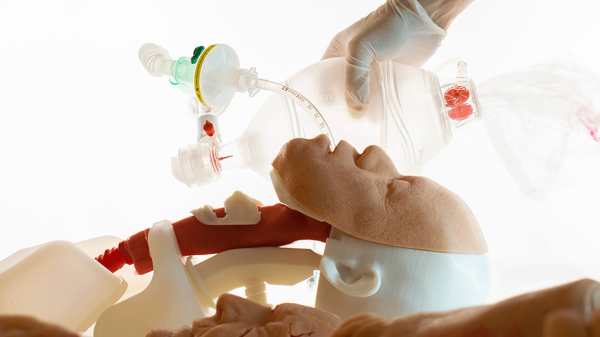
A profile view of a medical training mannequin with a tube down its "throat." A ventillation bag is in the gloved hand of a human trainee.

Making Medical Simulators Less Expensive With 3D Printing And Silicone

Medical training simulators are expensive, but important, pieces of equipment. [Decent Simulators] is designing simulators that can easily be replicated using Fused Deposition Modeling (FDM) printers and silicone molds to bring the costs down.

Each iteration of the simulators is sent out for testing by paramedics and doctors around the world, and feedback is integrated into the next revision. Because the trainers are designed to be easily replicated, parts can easily be replaced or repaired which can be critical to keep personnel trained, especially in remote areas.

While not open source, some models are freely available on the [Decent Simulators] website like wound packing trainers or wound prostheses which could be great if you’re trying to get a head start on next year’s Halloween costumes. More complicated models will be on sale starting in January as either just the design files or a kit containing the files and the printed and/or silicone parts.

Interested in more medical hacks? Check out this Cyberpunk Prosthetic Eye or this Arduino Hearing Test Device.

Smart Pills Can Tell Your Doctor That You’ve Taken Them

We have many kinds of pills available these days to treat all kinds of different disorders. Of course, the problem with pills is that they don’t work if you don’t take them. Even Worse, for some medicines, missing a dose can cause all kinds of undesirable withdrawl effects and set back a patient’s treatment.

Smart pills aim to fix this problem with a simple monitoring solution that can tell when a patient has taken their medication. They’re now publicly available and authorized for use, so let’s look at how they work.

Continue reading “Smart Pills Can Tell Your Doctor That You’ve Taken Them”

New Parkinson’s Test Smells Success

Parkinson’s disease affects millions of people all over the world. The degenerative condition causes characteristic tremors, trouble walking, and often comes with complications including dementia, depression, and anxiety.

One of the major challenges around Parkinson’s disease involves diagnosis. There’s no single, commonly-available test that can confirm or rule out the disease. It’s can cause particular frustration as the disease is most treatable in its early stages.

That may soon change, however. One woman identified that she seemingly had the ability to “smell” the disease in those affected, and is now working with scientists to develop a test for the condition.

Follow Your Nose

The human sense of smell, by and large, isn’t particularly impressive. It helps us enjoy the scent of fresh bread baking in an oven, or the aroma of freshly cut grass. However, as a tool for inspecting and learning about the world around us, it really comes up short.

Some of us, though, are more capable in the olfactory department than others. Joy Milne from Perth, Scotland, is one such person. She happened to detected a change in her partner’s characteristic smell, one day, and twelve years later, they were diagnosed with Parkinson’s disease.

The idea that someone could “smell” a difference with people with Parkinson’s disease is an easy one to test. When Milne eventually put the idea together that the different smell she noticed was perhaps related to her husbands condition, she quickly drew the interest of scientists. With the aid of her partner, a former doctor, she teamed up with researchers Dr. Tilo Kunath and Professor Perdita Barran to investigate further. Continue reading “New Parkinson’s Test Smells Success”

3D Printed Cartilage Ushers In Ear-a Of Custom Body Parts

When it comes to repairing human bodies, there’s one major difficulty: spare parts are hard to come by. It’s simply not possible to buy a knee joint or a new lung off the shelf.

At best, doctors and surgeons have made do with transplants from donors where possible. However, these are always in short supply, and come with a risk of rejection by the patient’s body.

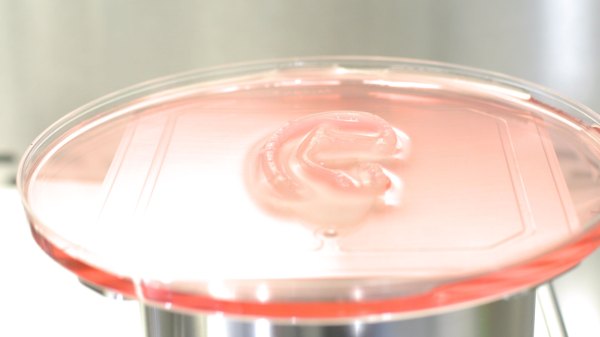
If we could 3D print new custom body par/ts to suit the individual, it would solve a lot of problems. A new ear implant pioneered by 3DBio Therapeutics has achieved just that.

Continue reading “3D Printed Cartilage Ushers In Ear-a Of Custom Body Parts”

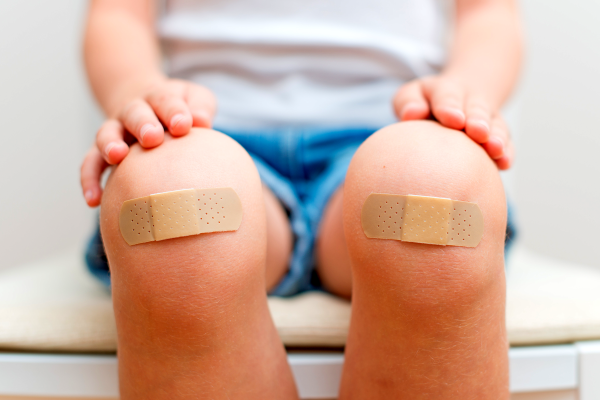
Healing Wounds With The Power Of Electricity

Once upon a time, even a simple cut or scrape could be a death sentence. Before germ theory and today’s scientific understanding of medicine, infections ran rampant and took many lives.

While we’re now well-armed with disinfectants, dressings, and antibiotics, scientists are continuing to investigate new and unique methods to improve the treatment of wounds. As it turns out, a little electricity might actually help wounds heal faster.

Continue reading “Healing Wounds With The Power Of Electricity”