Arduino Environment On ATmega644

Our friend [Zach Hoeken] at NYC Resistor is porting the Arduino environment to an ATmega644 chip. This doesn’t really add new functionality to the ATmega644 as it is already fully programmable, but it does add a user-friendly and familiar environment to the ATmega, allowing users to build their Arduino-based projects with more powerful hardware. The ATmega is, after all, the biggest DIP package AVR makes, featuring 64k flash and 4k RAM (both four times as much as an Arduino) and 32 I/O pins, which is 12 more than an Arduino. The video is only proof of concept, so we will let you know when [Zach] releases more details.

[via NYC Resistor]
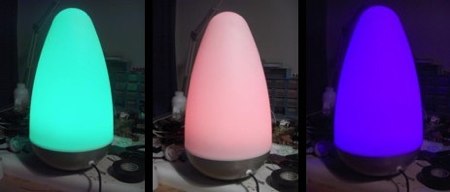
Tom’s RGB Mood Lamp


[Tom] has been refining a board that drives a high power RGB LED for applications like this moodlight. It’s based around an ATmega8 microcontroller. The goal was to make an RGB LED easy to work with: It can cycle between colors in standalone mode. You can control it via a serial interface. It also has a pin header to hooking up three potentiometers for manual color mixing. Boards aren’t available yet, but he’s already posted a build tutorial. The board looks straightforward enough that it shouldn’t be too hard to layout if you really want to.

Air Hockey Robot


Don’t be ashamed, we suck at air hockey too. Luckily for us, we now have a robot opponent to blame or losing streak on. Engineers at Nuvation didn’t build this air hockey playing robot, they simply adapted a standard industrial robot arm for the task. It is controlled jointly by a ColdFire processor and a 9S08 microcontroller. An array of high power LEDs and a camera are positioned over the air hockey table, which captures the position of the puck. The robot reportedly wins 90% of its games, even against solid opponents. While this is more of project to show the power of ColdFire processors, we can’t help but think it will lead to a rash of unbeatable robot opponents. We’ve already been robo-owned at foosball; what’s next?

Single Side Arduino-ish Beta Board


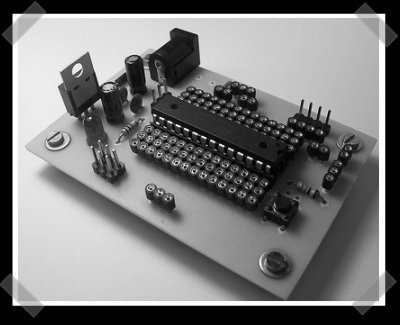
Via [ladyada], [Raijuu] combined some ideas from [Ladyada]’s boarduino and [evilmadscientists] Atmel business card created his own single sided (for easy etching) project board for ATMega8/128 projects. You can tell that the design is an expression of frustration from past projects; We can definitely appreciate features like separate power and multiple sockets on each pin. (We’d probably consider adding some soldering points to allow for permanent connections.)

UPCB Makes Your Arcade Stick Universal


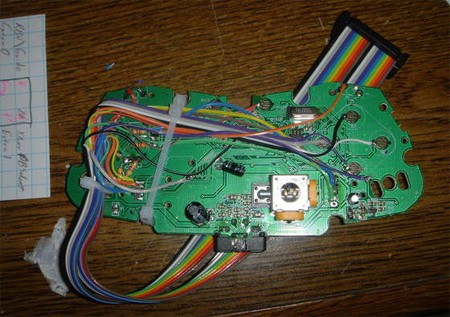
The Universal PCB project lets you make any controller (specifically arcade sticks) console agnostic. A PIC microcontroller is used to translate between the button presses and the signals for the specific console you’re connected to. It uses a DB15 for the external plug. The PIC knows which console you’re plugged into based on which pins are high or low in your console specific adapter cable. The board includes a piggyback plug so you can plug in an Xbox360 controller board (like the one above) since the console requires authentication. The PIC’s firmware is conveniently upgradeable over the USB cable.

Low Voltage Coil Gun


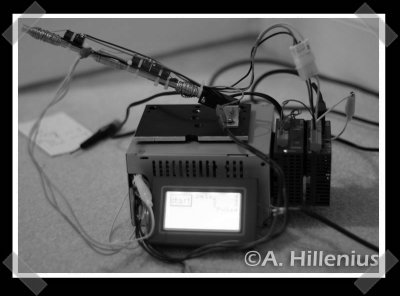
[Andrew] sent in his low voltage coil gun. He used some control hardware that most hardware hackers probably don’t have on their shelf, bit it’s still a good proof of concept. Each coil is driven by a dedicated relay, and a PC power supply feeds the system juice, while a programmable logic controller does the work. Since it’s just a matter of triggering the coils in order, the PLC could be easily replaced by a micro controller.