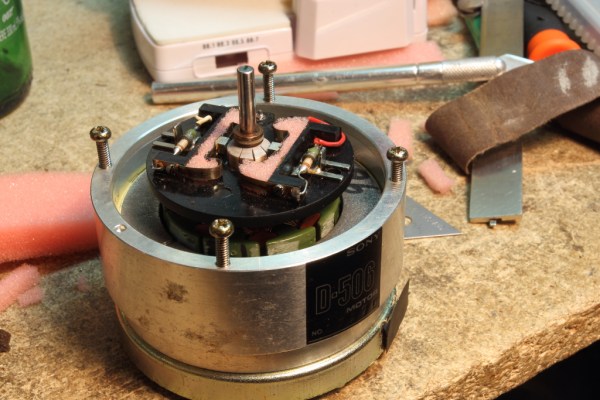
Sony VTR with replacement foam brushes

Resurrecting A 1960’s VTR With Foam

Nearly fifty years back, Sony launched the DVC-2400, their first consumer grade video camera. This unit weighed in at 10 pounds, and recorded only 20 minutes of footage per reel. It left something to be desired for $1250, or nearly $9000 in today’s dollars.

[NeXT] got his hands on one of these camera kits, and began bringing it back to life. While all the pieces were included, the Video Tape Recorder (VTR), which is used to play back the footage, didn’t power up. A little poking found a dead transistor. After determining a modern replacement part, the voltages checked out. However, the drum still wasn’t spinning.

Further disassembly found that the drum’s DC motor was made on the cheap, using a foam instead of springs to apply pressure on the brushes. This foam had worn out and lost its springy qualities, so no electrical contact was made. New foam was cut out as a replacement. Once reassembled, the drum spun successfully. After some adjustment, the VTR was running at the correct speed once again.

With this working, the VTR should be ready to go. However, camera still isn’t working, so we’re awaiting a part 2.

First Edition Of German Computer Mag Is A Blast From The Past

Every once in a while we get nostalgic for the old days of computing. Here, we’re getting nostalgic for a past that wasn’t even our own, but will probably bring a smile to all the German hackers out there. c’t magazine has its first issue available on their website (PDF, via FTP), and it’s worth checking out even if you can’t read a word of German.

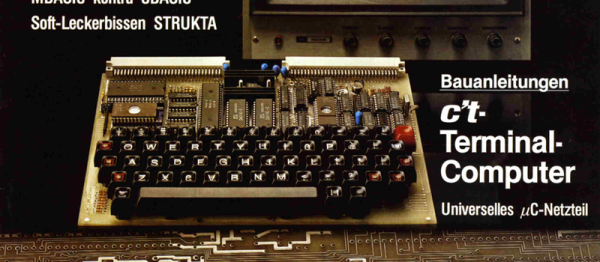
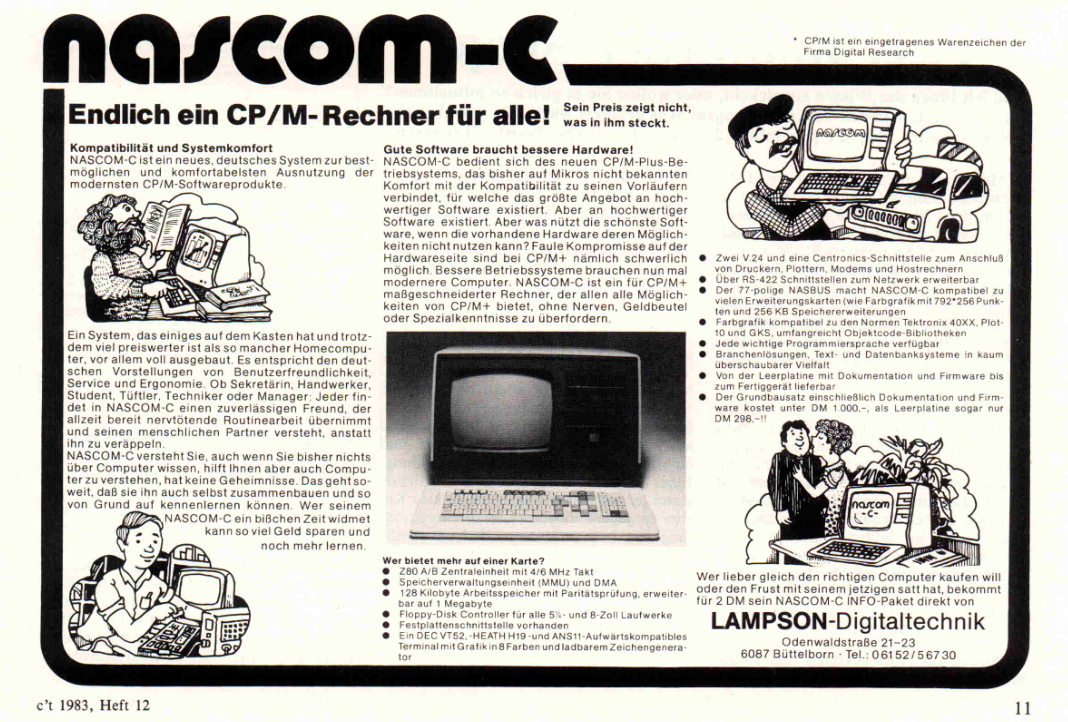
ct-adIt’s dated November/December 1983, and you’re definitely hopping in the WABAC machine here. The cover image is a terminal computer project that you’re encouraged to build for yourself, and the magazine is filled with those characteristic early-computer-era ads, many of them for the physical keyboards that you’d need to make such a device. Later on, c’t would provide plans for a complete DIY PC with plotter, one of which we saw still running at the 2015 Berlin Vintage Computer Festival.

The issue is chock-full of code for you to type out into your own computer at home. If you didn’t have a computer, there are of course reviews of all of the popular models of the day; the TRS-80 Model 100 gets good marks. And if you need to buy a BASIC interpreter, there’s an article comparing Microsoft’s MBASIC with CBM’s CBASIC. A battle royale!

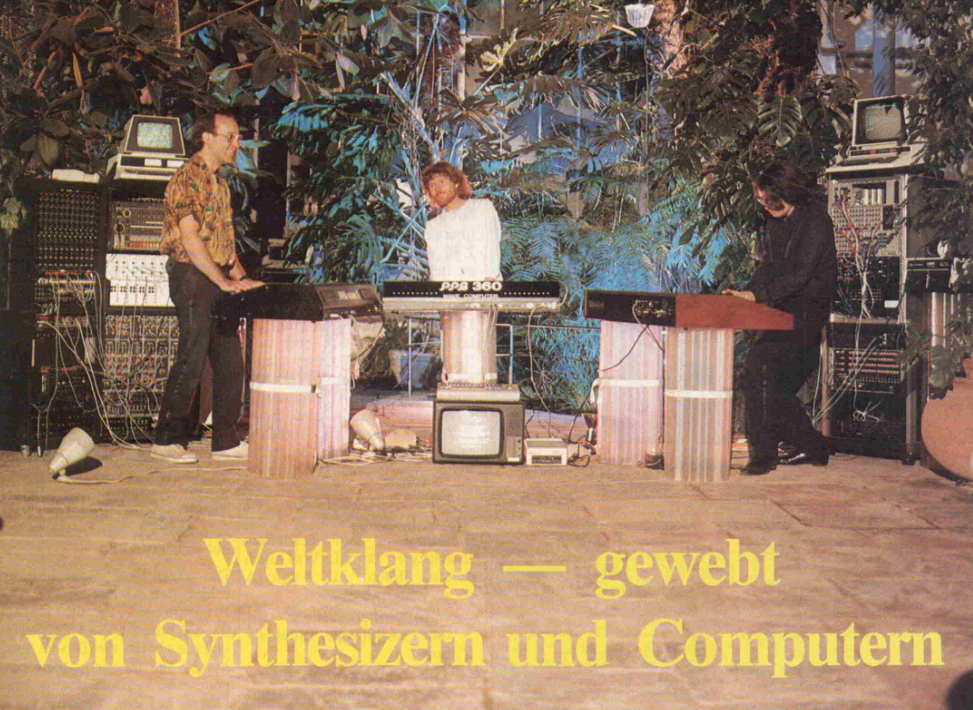
ct_mag_computer_bandOther hot topics include modifications to make your ZX81’s video output sharper, the hassle of having to insert a coded dongle into your computer to run some software (an early anti-piracy method), and even a computer-music band that had (at least) a Commodore 64 and a CBM machine in their groovy arsenal.

It’s no secret that we like old computers, and their associated magazines. Whether you prefer your PDP-11’s physical or virtual, we’ve got you covered here. And if your nostalgia leans more Anglophone, check out this Byte magazine cover re-shoot.

The First Radio Sets: A Spark Gap And A Coherer

[Ashish] let us know about his experiments in recreating the earliest type of radio set: a spark-gap transmitter and iron-filings coherer. He goes through the historical development of the kit in great detail, so we’re just going to skip that part. Go read it yourself!

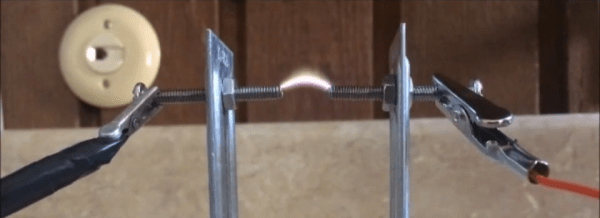
Instead, we’re going to tease you with the coolest part of the rig: the coherer. In [Ashish]’s build, it’s a piece of tubing with some iron filings between two bolts. When a sufficiently strong EM wave hits the filings, they stick together and bridge the gap between the bolts, allowing electricity to flow and light up an LED, for instance. You can see this in [Ashish]’s video below the break, along with kmore discussion of that coherer.

Continue reading “The First Radio Sets: A Spark Gap And A Coherer”

Retrotechtacular: A Mechanical UART

We’ve heard it said that no one invented the old mechanical Teletype. One fell from the sky near Skokie, Illinois and people just duplicated them. It is true these old machines were similar to a modern terminal. They sent and received serial data using a printer instead of a screen. But inside, they were mechanical Rube Goldbergs, not full of the electronic circuits you’d think of today.

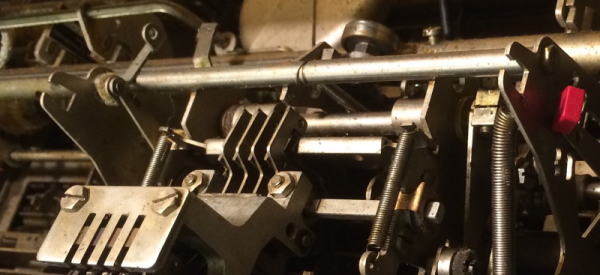
Teletype was the best-known name, but there were other mechanical monster terminals out there. [Carsten] recently took some pictures of his 99 pound Olivetti mechanical terminal. According to him, there’s only one electronic component within: a bistable solenoid that reads the data. Everything else is mechanical and driven with a motor that keeps everything at the right baud rate (110 baud).

Like the Teletype, it is a miracle these things were able to work as well as they did. Lacking a microcontroller, the terminals could respond to an identity request by spinning a little wheel that had teeth removed to indicate which letters to send (TeleType used a similar scheme). Things that are simple using today’s electronics (like preventing two keys pressed at once from being a problem) turned out to be massive design challenges for these old metal monsters.

Turns out that when [Carsten] last fired the terminal up, a capacitor finally gave up its magic smoke. He plans to fix it, though, and as long as it isn’t a mechanical problem, we bet he will.

We’ve talked about Teletypes a few times in the past, including using them for text messaging and even Twitter.

Core Memory For The Hard Core

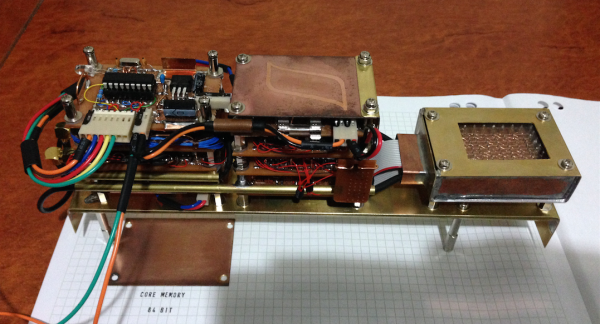
[Brek] needed to store 64 bits of data from his GPS to serve as a last-known-position function. This memory must be non-volatile, sticking around when the GPS and power are off. Solutions like using a backup battery or employing a $0.25 EEPROM chip were obviously too pedestrian. [Brek] wanted to store his 64 bits in style and that means hand-wired core memory.

OK, we’re pretty sure that the solution came first, and then [Brek] found a fitting problem that could be solved, but you gotta give him props for a project well executed and well documented.

Continue reading “Core Memory For The Hard Core”

Vulcan 74: A Masterpiece Of Retro Engineering

[Radical Brad] has played around with FPGAs, video signals, and already has a few astonishing projects of bitbanged VGA on his resume. Now he’s gone insane. He’s documenting a build over on the 6502.org forums of a computer with Amiga-quality graphics built out of nothing but a 65C02, a few SRAM chips, and a whole pile of logic chips.

The design goals for this project are to build a video game system with circa 1980 parts and graphics a decade ahead of its time. The video output is VGA, with 400×300 resolution, in glorious eight-bit color. The only chips in this project more complex than a shift register are a single 65c02 and a few (modern) 15ns SRAMs. it’s not a build that would have been possible in the early 80s, but the only thing preventing that would be the slow RAM chips of the era.

So far, [Radical] has built a GPU entirely out of 74-series logic that reads a portion of RAM and translates that to XY positions, colors, pixels, and VGA signals. There’s support for alpha channels and multiple sprites. The plan is to add sound hardware with support for four independent digital channels and 1 Megabyte of sample memory. It’s an amazingly ambitious project, and becomes even more impressive when you realize he’s doing all of this on solderless breadboards.

[Brad] will keep updating the thread on 6502.org until he’s done or dies trying. So far, it’s looking promising. He already has a bunch of Boing balls bouncing around a display. You can check out a video of that below.

Continue reading “Vulcan 74: A Masterpiece Of Retro Engineering”

Fisher Price Bluetooth Speaker Hack

A good hacker hates to throw away electronics. We think [Matt Gruskin] must be a good hacker because where a regular guy would see a junky old 1980’s vintage Fisher Price cassette player, [Matt] saw a retro stylish Bluetooth speaker. His hack took equal parts of electronics and mechanics. It even required some custom 3D printing.

You might think converting a piece of old tech to Bluetooth would be a major technical challenge, but thanks to the availability of highly integrated modules, the electronics worked out to be fairly straightforward. [Matt] selected an off the shelf Bluetooth module and another ready-to-go audio amplifier board. He built a custom board to convert the stereo output to mono and hold the rotary encoder he used for the volume control. An Arduino (what else?) reads the encoder and also provides 3.3V to some of the other electronics.

The really interesting part of the hack is the mechanics. [Matt] managed to modify the existing mechanical buttons to drive the electronics using wire and hot glue. He also added a hidden power switch that doesn’t change the device’s vintage look. Speaking of mechanics, there’s also a custom 3D printed PCB holder allowing for the new board to fit in the original holder. This allows [Matt] to keep the volume control in its original location

Continue reading “Fisher Price Bluetooth Speaker Hack”