DIY Animatronic Penguin Shakes And Grooves

animatronic_penguin

Instructables user [djsfantasi] wanted to build an animated holiday display using puppets as a means of raising money for a local arts program. After doing a bit of reading and research however, he decided that building animatronic characters for the display was not that far fetched an idea.

His first inclination was to build a penguin, allowing him to focus mostly on torso motion rather than having to articulate arms and legs as well. His goal was to enable his penguin to “dance” by shimmying and shaking as well as flapping his wings. Using plywood, four servos, along with some miscellaneous connecting rods and cables, he went to work.

The penguin is operated using a SSC-32 servo controller that features an ATmega168 MCU at its core. This allows him to control all of the servos independently, and also in concert, allowing for combined movements. The penguin’s mouth also functions, using a circuit that synchronizes its movements to an audio file.

While the robot is currently tethered to his computer via a serial cable, [djsfantasi] mentions that he is currently working on an iPhone app that will be able to control the robot wirelessly. All he needs to do now is build an animatronic Tom Servo then toss a Crow skin over this one, and he’ll be all set!

Keep reading to get a look at the penguin moving and grooving in the video below.

Continue reading “DIY Animatronic Penguin Shakes And Grooves”

Bluetooth Tomy Omnibot Hack


tomy_omnibot_hack

[DJ Sures] sent us his most recent hack, and it’s one that is sure to please those who enjoy a good dose of 80’s nostalgia. He located a Tomy Omnibot on eBay and snatched it up immediately. While he was waiting for it to arrive, he planned out what he would add to it once it showed up at his door. Once the robot was delivered, he cleaned it up, painted it, then got down to business.

The original robot had no ability to move its arms or head, so he immediately added servos to enable those actions. A wireless camera was inserted between the Omnibot’s eyes, and a wireless mic was mounted in his chest. He has also added some features found in his previous projects, such as voice recognition, visual recognition, voice synthesis, and the ability to remotely control the bot. He plans on adding an ultrasonic ping sensor and IR floor sensors in the near future. This is a great build so far, and it sounds like he has plenty more in store.

Be sure to stick around for a video of the robot in action, and if you are interested in some of [DJ Sures’] previous work, check these out as well.

Continue reading “Bluetooth Tomy Omnibot Hack”

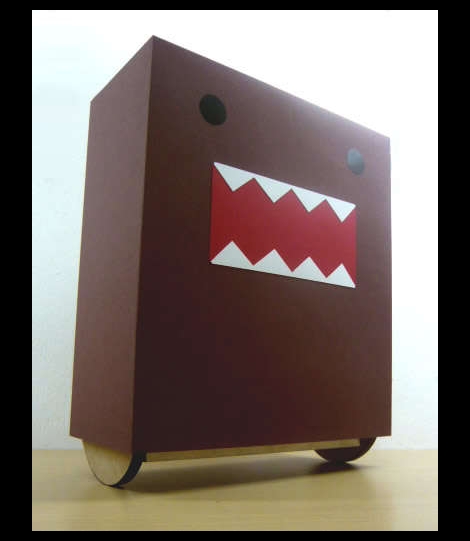
Voice-controlled Rolling Robot

rolling_voice_controlled_robot

[societyofrobots] recently posted an Instructable on how to build a voice controlled robot in just a few hours time. This robot isn’t particularly cheap, weighing in at about $230, but it is a fun project if you have the means. The bot is driven around by a pair of servos, taking their directions from an Axon II MCU. A VRbot voice recognition module is used to listen for commands, enabling the user to record up to 32 custom triggers for directing the robot.

All of the source code for the robot is included, as well as instructions on how to get started programing the microcontroller. The code provides some basic functionality, but there’s likely plenty more that can be done with the powerful on-board ATmega460. While this robot would make for a great beginner/intermediate project as-is, it should be noted that [societyofrobots] manufactures and sells the Axon II, so this Instructable is half guide/half self-promotion. Have any of you had experience with the Axon II? Let us know what you think.

Keep reading to see a video of the build process as well as the robot doing its thing.

Thanks, [Bill Porter].

Continue reading “Voice-controlled Rolling Robot”

NES Game Pad Guided Robotic Arm

nes_robotic_arm

Instructables user [Bruno] sent in his most recent creation, a robotic arm controlled using an old NES game pad. He scavenged the majority of his parts from a pair of old HP printers, including motors pulleys, belts and more. In fact, most of the metal and plastic components that he used come from the old printer chassis as well. He has included copies of the templates he used when manufacturing both the plastic and metal components, which should come in handy should anyone try to replicate his work.

[Bruno] also included all of the source code for the robotic arm and mentions that the project required two PICs due to pinout requirements. He ultimately decided to use two cheaper models over a single more expensive unit that would have supplied all of the pins he needed. His cost conscious build is impressive and undoubtedly demonstrates just how many old components can be reused in new projects if you really put some thought into it. Great job with this build, keep up the good work!

Be sure to keep reading to see some video of the arm in action.

Continue reading “NES Game Pad Guided Robotic Arm”

Sumo Style Robot

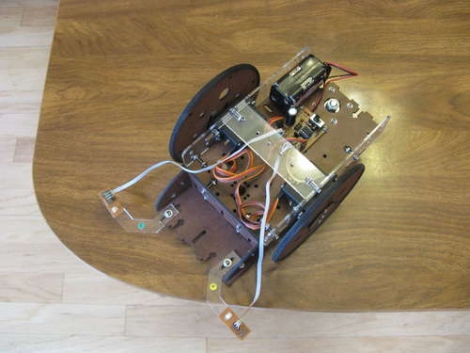
[Jeremy] really wants to compete in some sumo bot wrestling, and in order to have robotic sumo wrestling one needs to make some robots, which is what [Jeremy’s] build log is all about.

The framework is made out of 6mm thick Sintra (which is a type of closed cell pvc foam sheet) with the use of a CNC machine, using a “sliced” design style framework. Two geared motors fit snug inside of the internal frame and some wheels from solarbotics are attached to the ends. The arrangement of the drive wheels in the rear, and the large front end, seems like good design for the end application where robots doing turtle flips would be no fun.

Keeping in mind this is not a fully finished project and therefore does not have code or schematics posted, the brains of this beast are in a similar state, and should be pretty easy to figure out. The thinking is handled by an atmega328, and fed by IR sensor pair’s to detect light / dark patterns on the floor or table, and an array of proximity sensors along the front and sides to detect its opponent.

And while this project may not be completed, it at one point was dead and set aside, after some months [Jeremy] went back for a second look and found out that the only thing dead about it was the power regulator and h-bridge and quickly got it back up and working, which is a good reminder to not give up, even when it does go poof.

Jamming Gripper Completes Robot Drug Dealer

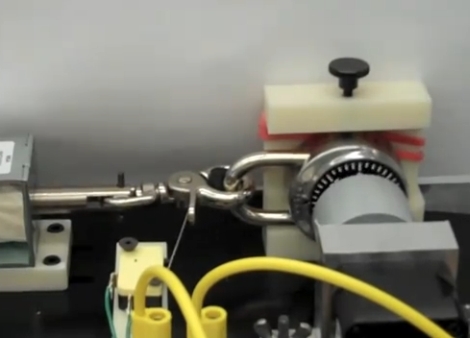
Here’s an inexpensive way to build your own jamming gripper. [Steve Norris] combined a robot arm with a few inexpensive items to achieve similar results as the original. Much like the last DIY version he started with a balloon and some coffee grounds, but instead of using his own body as a vacuum pump he sourced a Reynolds Handi-Vac, an inexpensive food vacuum sealer. It connects to the balloon using some plastic tubing, and sucks all of the air out, locking the coffee grounds around an object for a firm grip. The video after the break even shows the gripper picking up two aspirin. At first we thought a servo motor was being used to seal off the tube once the air had been pumped out. Instead, it is covering a hole in the tubing, which breaks the vacuum when it’s time to let go of an object.

Continue reading “Jamming Gripper Completes Robot Drug Dealer”

How To Be A Dinosaur For Christmas

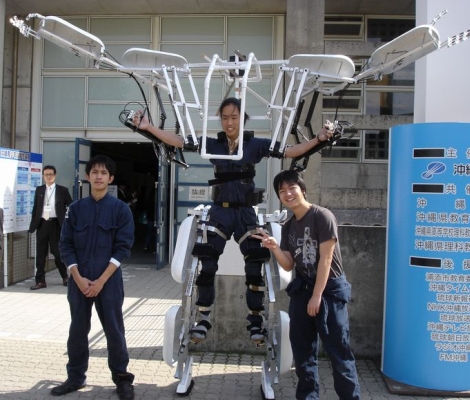
Well, this metal suit might not make you a dinosaur, but it would be perfectly possible for you to play one on your computer. Retailing on eBay for a mere $2,397.99 OBO (plus Freight for a 350 pound box), this device was made and used for the motion capture of Ugobe’s Pleo Robot. With the right external components (no word on what those are), it would be perfectly possible to get this suit up an going back on Motion Capture as all the onboard electronics are included. This setup would be perfect for anyone planning an animated dinosaur movie that needs some reference movements, or for any mad scientist engineer who needs a control rig for a 40 story robotic dino of death. The possibilities are endless!

[eBay via Engadget]