Robot That Runs On Rat Brain Cells


Scientists at the University of Reading have created a robot that runs not on microprocessors, but on brain cells extracted from a rat fetus. The robot is equipped with several sensors which stimulate the rat neurons whenever the robot approaches a wall; the response of the neurons then determines whether the robot avoids the wall or crashes into it. The truly fascinating bit is that the rat brain cells don’t automatically know how to respond to the stimuli from the sensors, but instead learn to respond appropriately through repeated stimuli.

No word yet on whether the scientists will teach the robot to sing “Despite all my rage / I am still just a brain in a vat”.

Creepy Robot Eye Follows You And Winks In Response


Opto-Isolator is an interesting art installation that was on display at the Bitforms Gallery in NYC. This single movement-tracking eye creates a statement about how we view art and is a response to the question “what if art could view us?”. The somewhat creepy display not only follows the person viewing it, but mimics blinks a second later and averts its gaze if eye contact is kept up for too long. Its creators [Golan Levin] and [Greg Baltus] have done a great job mimicking human behavior with such a simple element and the social implications of it are truly fascinating.

If they wanted to, [Levin] and [Baltus] could possibly crank up the spook factor by adding facial recognition and programming it to remember how certain people interact with it, then tailor its behavior to wink at different rates or become more shy or bold, depending on the personality of the person watching it. Of course, that would require that someone goes back to it more than once…

[via Glass Tumbler]

Drive A Robot In Australia Over The Web


BP Australia has commissioned an online game where you get to drive robots around an obstacle course. Make no mistake, these are real robots. Actually they are modified versions of the Surveyor SRV-1 vehicles that are popular with research labs, and schools everywhere.

Go to the website, get in queue and pray for no clouds. These babies are solar powered, so you’ll have to try to get in while its day time in Australia. The entire set is built in miniature, so you feel like you’re driving a tank around a city.

[via Robots Dreams]

Miniature Balancing Robot


It might not be as elegant or technologically-advanced as a Segway or a motorized unicycle, but this easily constructed 2-wheeled robot might be a fun project for a free afternoon. The heart of the balancing mechanism is an SPDT switch with a button cell attached that reverses the motor when the robot begins to tip in one direction. It’s not controllable and it tends to fall over quite a bit, but it’s a good starting point and could be refined by lowering the center of gravity or figuring out a simple way to change the motor speed based on how far the robot has tipped over. There are no accelerometers or tilt switches so the components could be sourced from a parts bin, and its simple design definitely leaves a lot of room for improvement.

Remote Controlled Pill-bot


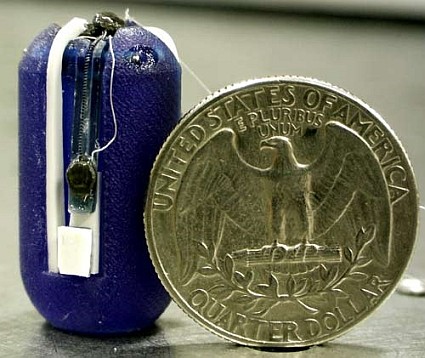
The NanoRobotics Lab at Carnegie Mellon University has come up with a medical robot that can be swallowed, and is then able to be controlled from outside the body. The device has small arms with adhesives that can attach to slippery internal surfaces, which has previously proven difficult. Once inside the body, it can be used to view damaged areas, deliver drugs, as well as biopsy questionable tissues, and possibly even be used to cauterize bleeding wounds with a small laser. The device could be stopped, and even reversed to get a better look at areas that may have gone unnoticed otherwise. This would be a major advancement in diagnosing intestinal problems, and could lead to potentially life saving treatments. Did we mention that it has lasers?

[via Neatorama]

Electric Screwdriver Robot Hand


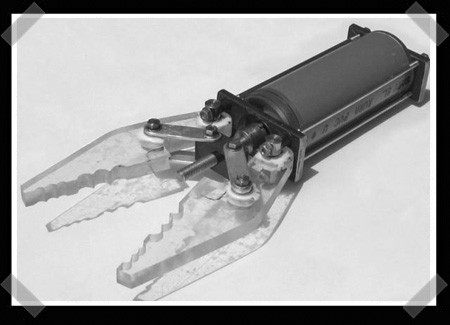
Here’s an interesting grabber hand built for use on an ROV. This grabber is a novel use of a very common and extremely cheap electric screwdriver, that is probably found in everyone’s toolbox. It is also a great way to reuse that small electric screwdriver you have kicking around that uses proprietary batteries that are not worth replacing. Many of the ROV’s covered previously could benefit from such a powerful device built from very common materials off his parts list. Because the screwdriver was extremely cheap the designer chose not to completely seal the housing.

It seems like this simple design that could be used in many robotic projects and by simply changing the jaws could yield other creative uses. The first thing that comes to mind is to upsize this hack into something bigger and stronger. Either way, you might not want to get your fingers in there.

Robot Red Snapper


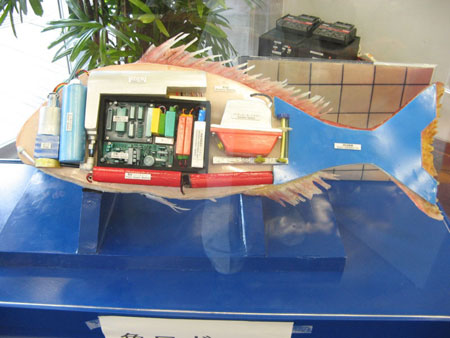
Engineers at the University of Kitakyushu have built this red snapper robot. Intended for wildlife surveys, this robot sports an array of sensors as well as a hand painted silicon body. It is decidedly more realistic looking than the Robofish and the Essex University robot fish. They say that the life like construction will aid in getting information about natural behavior of sea animals since it won’t stand out. It features a “unique” propulsion system that allows it to swim like a real fish. More information on that system would be nice. You can see more pictures of it here, but the descriptions are all in Japanese.

Continue reading “Robot Red Snapper”