GSM Enabled Security Door

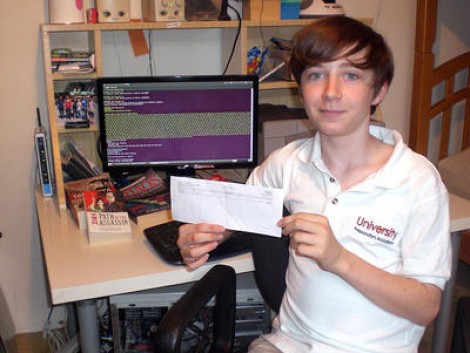
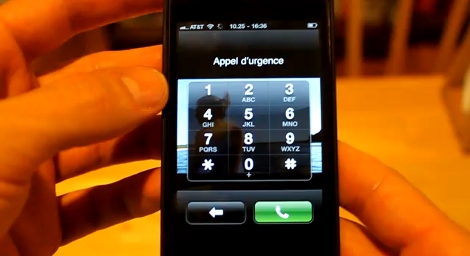
The security door at the front of [Oliver’s] building uses an intercom system to let in guests remotely. Each unit has an intercom handset with a button that unlocks the door. [Oliver] wanted a way to enter without carrying any extra items so he built a system to unlock the door with his cell phone.

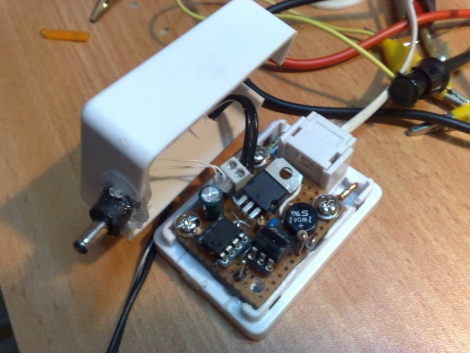
He patched into the intercom and attached a GSM module. The module runs python so he wrote a script that will monitor the entryway buzzer, then wait for an approved cell phone connection to unlock it. He went through a couple of different iterations for the final project. The first attempt used XBee modules to communicate between the intercom handset and the GSM module. For the final version, he snaked cable through his wall using rare-earth magnets (creative!) in order to forgo the use of a battery in the handset.

Who doesn’t carry a cell phone with them?  Because of this, the use of GSM modules in automation is a trend we think will continue to gain popularity.

Disabling Your Cell Phone’s Mic For Security

reedswitch

[Dan] set up this simple cell phone hack to disable his microphone when he’s not using his cell phone. He had read that the government can listen to you using your cell phone, even when it is off. This concerned him enough to hack into his phone. He removed the expansion port and wired the microphone to a magnetic reed switch. A strong magnet located in the screen side of his flip phone opens the circuit when he closes the phone. He notes that you could always just pop the battery out of your phone, but then you are left completely disconnected. This mod allows you to still receive phone calls.

Create A Temporary Phone Number With Inumbr

Maybe you don’t want that one person that has barged into your life to know your private phone number? Could be a salesperson or a co-worker who you aren’t that impressed with, but have to get in contact with. Check out inumbr.

inumbr is a free online service that gives US users the ability to set up a unique phone number, have it forwarded to any number within the US and then have it set to expire without a trace when finished with it. The unique inumbr’s are never reused, and can be extended if longer terms are required. Users choose from a list of 22 area codes from major US cities like Chicago, Los Angeles and New York, select an expiry date and set a number that it should be forwarded to. When the term is up, the number is expired from the system, and never used again for any other user. If you wish to use the number at a later date, you can log into the inumbr system and reactivate it.

As we are becoming more and more mobile and security conscious, the desire for these types of services grows. A phone number can now be given out at will, with security and privacy remaining intact. Google Voice is a major player in this arena. A somewhat similar service, they allow for a unique number with voice mail to forward to other numbers at will, creating a masked or unidentified private number that can be used to give out to 3rd parties. inumbr makes this process simpler with the ability to cut off and reactivate numbers as desired.

Tiny GSM Alarm System

[youtube=http://www.youtube.com/watch?v=W746qoZsrEs]

We’ve covered this sort of thing before, but there is something to be said for the simplicity of this tiny GSM alarm system by [trax]. The alarm system is designed to send the owner a text message when a sensor is triggered. This alarm only works with Siemens phones, but it shouldn’t be too hard to find one.  The alarm is configured via a dip switch on the board and can also be armed and disarmed by text. The brains of this system is a PIC16F84A. The code and schematics are included at the bottom of the page.

Continue reading “Tiny GSM Alarm System”

Smartphone Anti-virus Software

cracked

With DEFCON and Black Hat going on, a lot of security issues are being made public. This year, cellphones have been a larger target than before. More and more people are carrying complex smartphones that have more ways to go wrong. Even worse, since phones are tied to a billed account, it is possible for malicious software to charge phones discreetly. However, Flexilis promises to keep your phone safe. It’s a free mobile anti-virus that works on most smartphones and PDAs with more clients in the works. It also provides easy backup and recovery options, as well as the ability to wipe the phone if it’s lost. The phone makers really need to fix the probelms, but in the meantime Flexilis can provide a quick response.

[via WSJ Digits]

Build A Wireless Keylogger

wireless_keylogger_schematics (Custom)

Hardware Keylogger solutions has released the plans and files for their wireless logger. It has a range of about 50 yard between the transmitting dongle and the receiver. It is based around an Atmel AT91SAM7S64 and the PCB is pretty tiny. In case you hadn’t noticed yet, they sell them as well. The cool thing about this is that key data is transmitted in real time, allowing you to see it as it happens instead of having to go retreive the log physically like you used to.

Hacking An IButton

breadboard1

Maxim’s iButtons, which are small ICs in button-sized disks, are starting to show up in more and more places. They have a range of uses, from temperature loggers to identification, and all use the 1-wire protocol to communicate. Over a furrtek, they hacked an iButton used for buying things from vending machines and created an infinite money cheat. They built a small rig based on the ATmega8 to read and write data to the chip. The data was encrypted, so it wasn’t feasible to put an arbitrary amount on the card. Instead, they used a similar technique to the Boston subway hack and restored a previous state to the iButton after something was bought. They also created a hand-held device to backup and restore the contents of a button for portable hacking.

[Thanks furrtek]