Could Orion Ride Falcon Heavy To The Moon?

Things aren’t looking good for NASA’s Space Launch System (SLS). Occasionally referred to as the “Senate Launch System”, or even less graciously, the “Rocket to Nowhere”, the super heavy-lift booster has long been a bone of contention for those in the industry. Designed as an evolution of core Space Shuttle technology, the SLS promised to reuse existing infrastructure to deliver higher payload capacities and lower operating costs than its infamous winged predecessor. But in the face of increased competition from commercial launch providers and proposed budget cuts targeting future upgrades and expansions of the core booster, the significantly over budget and behind schedule program is in a very precarious position.

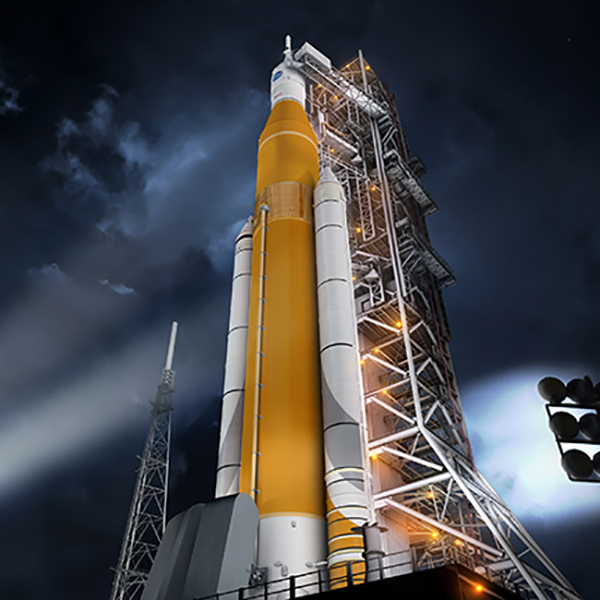
Which is not to say the SLS doesn’t look impressive, at least on paper. In its initial configuration it would easily take the title as the world’s most powerful rocket, capable of lifting nearly 105 tons into low Earth orbit (LEO), compared to 70 tons for SpaceX’s Falcon Heavy. It would still fall short of the mighty Saturn V’s 155 tons to LEO, but the proposed “Block 2” upgrades would increase SLS payload capability to within striking distance of the iconic Apollo-era booster at 145 tons. Since the retirement of the Space Shuttle in 2011, NASA has been adamant that the might of SLS was the only way the agency could accomplish bigger and more ambitious missions to the Moon, Mars, and beyond.

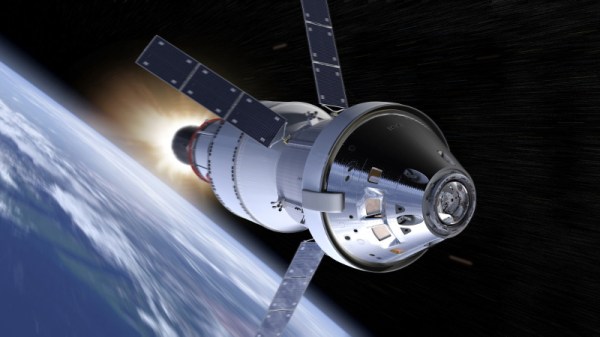
Or at least, they were. On March 13th, NASA Administrator Jim Bridenstine testified to Congress that in an effort to avoid further delays, the agency is exploring the possibility of sending their Orion spacecraft to the Moon with a commercial launcher. The statement came as a shock to many in the aerospace community, as it would seem to call into question the future of the entire SLS program. If commercial rockets can do the job of SLS, at least in some cases, why does the agency need it?

NASA is currently preparing a report which investigates what physical and logistical modifications would need to be made to missions originally slated to fly on SLS; a document which is sure to be scrutinized by SLS supporters and critics alike. Until the report is released, we can speculate about what this hypothetical flight to the Moon might look like.

Continue reading “Could Orion Ride Falcon Heavy To The Moon?”

Hitchhiking To The Moon For Fun And Profit

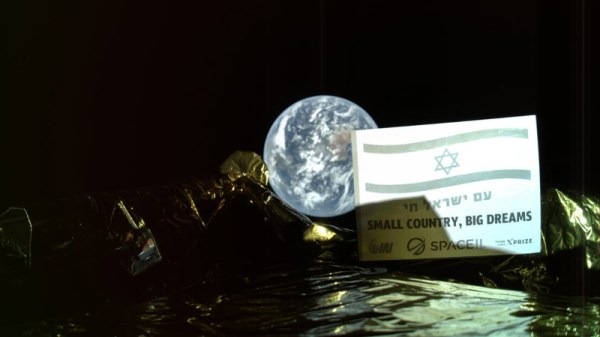
On February 22nd, a Falcon rocket lifted off from Cape Canaveral carrying the Indonesian communications satellite Nusantara Satu. While the satellite was the primary payload for the mission, as is common on the Falcon 9, the rocket had a couple of stowaways. These secondary payloads are generally experiments or spacecraft which are too small or light to warrant a rocket of their own such as CubeSats. But despite flying in the economy seats, one of the secondary payloads on this particular launch has a date with destiny: Israel’s Beresheet, the first privately-funded mission to attempt landing on the Moon.

But unlike the Apollo missions, which took only three days to reach our nearest celestial neighbor, Beresheet is taking a considerably more leisurely course. It will take over a month for the spacecraft to reach the Moon, and it will be a few weeks after that before it finally makes a powered descent towards the Sea of Serenity, not far from where Apollo 17 landed 47 years ago. That assumes everything goes perfectly; tack a few extra weeks onto that estimate if the vehicle runs into any hiccups on the way.

At first glance, this might seem odd. If the trip only took a few days with 1960’s technology, it seems a modern rocket like the Falcon 9 should be able to make better time. But in reality, the pace is dictated by budgetary constraints on both the vehicle itself and the booster that carried it into space. While one could argue that the orbital maneuvers involved in this “scenic route” towards the Moon are more complicated than the direct trajectory employed by the manned Apollo missions, it does hold promise for a whole new class of lunar spacecraft. If you’re not in any particular hurry, and you’re trying to save some cash, your Moon mission might be better off taking the long way around.

Continue reading “Hitchhiking To The Moon For Fun And Profit”

When New Space Loses Out To NASA Pragmatism

You’ve got to admit, things have been going exceptionally well for SpaceX. In the sixteen years they’ve been in operation, they’ve managed to tick off enough space “firsts” to make even established aerospace players blush. They’re the first privately owned company to not only design and launch their own orbital-class rocket, but to send a spacecraft to the International Space Station. The first stage of their Falcon 9 rocket is the world’s only orbital booster capable of autonomous landing and reuse, and their Falcon Heavy has the highest payload capacity of any operational launch system. All of which they’ve managed to do at a significantly lower cost than their competition.

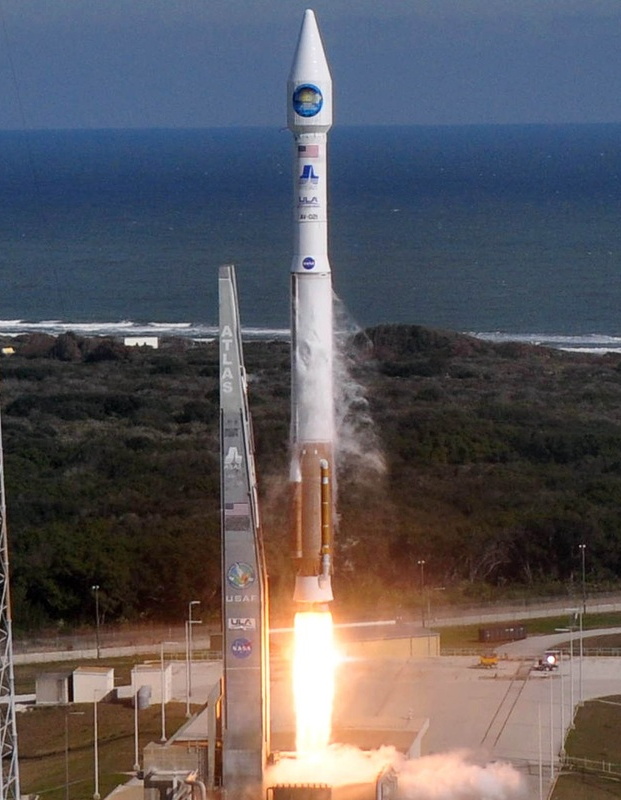
United Launch Alliance Atlas V

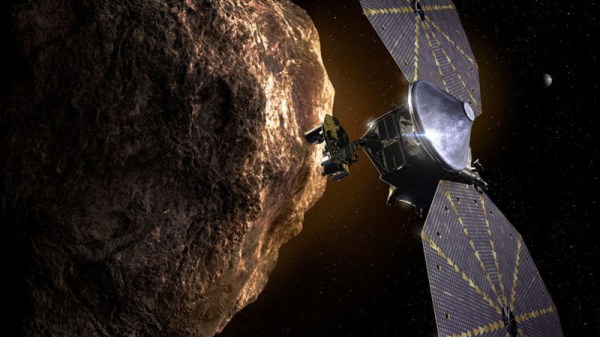
So it might come as a surprise to hear that SpaceX recently lost out on a lucrative NASA launch contract to the same entrenched aerospace corporations they’ve been running circles around for the last decade. It certainly seems to have come as a surprise to SpaceX, at least. Their bid to launch NASA’s Lucy mission on the Falcon 9 was so much lower than the nearly $150 million awarded to United Launch Alliance (ULA) for a flight on their Atlas V that the company has decided to formally protest the decision. Publicly questioning a NASA contract marks another “first” for the company, and a sign that SpaceX’s confidence in their abilities has reached the point that they’re no longer content to be treated as a minor player compared to heavyweights like Boeing and Lockheed Martin.

But this isn’t the first time NASA has opted to side with more established partners, even in the face of significantly lower bids by “New Space” companies. Their decision not to select Sierra Nevada Corporation’s Dream Chaser spaceplane for the Commercial Crew program in 2014, despite it being far cheaper than Boeing’s CST-100 Starliner, triggered a similar protest to the US Government Accountability Office (GAO). In the end, the GAO determined that Boeing’s experience and long history justified the higher sticker price of their spacecraft compared to the relative newcomer.

NASA has yet to officially explain their decision to go with ULA over SpaceX for the Lucy mission, but in light of what we know about the contract, it seems a safe bet they’ll tell SpaceX the same thing they told Sierra Nevada in 2014. The SpaceX bid might be lower, but in the end, NASA’s is willing to pay more to know it will get done right. Which begs the question: at what point are the cost savings not compelling enough to trust an important scientific mission (or human lives) to these rapidly emerging commercial space companies?

Continue reading “When New Space Loses Out To NASA Pragmatism”

The “Impossible” Tech Behind SpaceX’s New Engine

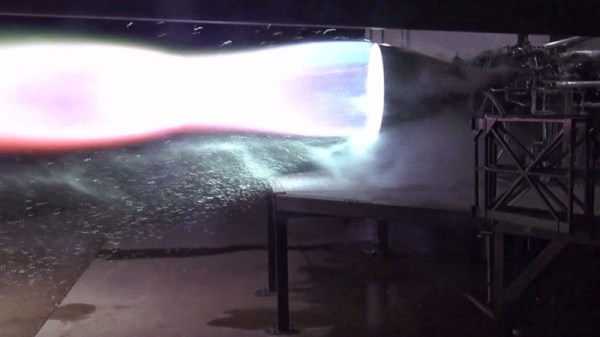
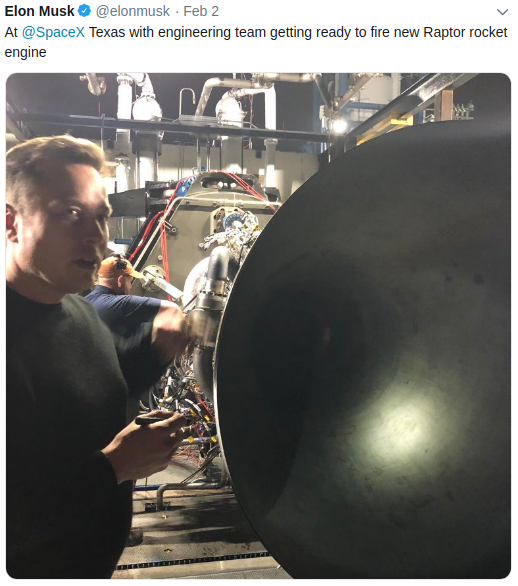
Followers of the Church of Elon will no doubt already be aware of SpaceX’s latest technical triumph: the test firing of the first full-scale Raptor engine. Of course, it was hardly a secret. As he often does, Elon has been “leaking” behind the scenes information, pictures, and even video of the event on his Twitter account. Combined with the relative transparency of SpaceX to begin with, this gives us an exceptionally clear look at how literal rocket science is performed at the Hawthorne, California based company.

This openness has been a key part of SpaceX’s popularity on the Internet (that, and the big rockets), but its been especially illuminating in regards to the Raptor. The technology behind this next generation engine, known as “full-flow staged combustion” has for decades been considered all but impossible by the traditional aerospace players. Despite extensive research into the technology by the Soviet Union and the United States, no engine utilizing this complex combustion system has even been flown. Yet, just six years after Elon announced SpaceX was designing the Raptor, they’ve completed their first flight-ready engine.

The full-flow staged combustion engine is often considered the “Holy Grail” of rocketry, as it promises to extract the most possible energy from its liquid propellants. In a field where every ounce is important, being able to squeeze even a few percent more thrust out of the vehicle is worth fighting for. Especially if, like SpaceX, you’re planning on putting these new full-flow engines into the world’s largest operational booster rocket and spacecraft.

But what makes full-flow staged combustion more efficient, and why has it been so difficult to build an engine that utilizes it? To understand that, we’ll need to first take a closer look at more traditional rocket engines, and the design paradigms which have defined them since the very beginning.

Continue reading “The “Impossible” Tech Behind SpaceX’s New Engine”

Hackaday Links Column Banner

Hackaday Links: December 9, 2018

SpaceX launched a rocket this week, and things did not go as planned. The hydraulics on the grid fins were stuck when the first stage started its atmospheric recovery, and the booster became a fish. The booster landed about a mile or so offshore, which meant we got some great footage of a failed landing, and there are even better shots of the guts of a landed booster. [Scott Manley] whipped out a video showing the ‘new’ discoveries of what’s going on inside a Falcon 9 booster. Interestingly: the weight of the upper stage is carried through the thrust plate of its engine (which makes sense…). There’s a lot of pneumatic stuff going on, and while the composite interstage is very strong along the long axis of the rocket, it doesn’t like being slammed into the ocean.

Winter is coming, and that means you should take your car out during the first snow, drive out to an empty parking lot, and do donuts. I am not kidding this is how you learn to drive in the snow. How do they do it in Russia? They weld 3000 nails to a steel wheel. Does it work? For a while, then the nails bend. We’ve seen this done by drilling screws through a tire, and that works much better; it’s less length for the screws to fulcrum over.

Aaay, we got a date for Sparklecon! It’s February 1-3rd in the endless suburban wastes of Fullerton, California. It’s in an industrial park, there’s a liquor store around the corner, and there’s a remote-controlled couch. Get on it.

Do you wish you had a hassle-free and affordable way to get scorpions delivered straight to your mailbox? Enter Dollar Scorpion Club. Dollar Scorpion Club makes a great gift for all ages. Just enter your friend’s shipping address during checkout, and the extra-special scorpion supply chain management will mean your scorpions are delivered fast to their door.

Regular Car Reviews finally reviewed a Pontiac Aztek. The takeaway is that it’s a bug-out car for Boomers, designed in that episode of The Simpsons where Homer finds out he has a brother.

Want to see something weird? It’s a G3 iMac running Windows 8. This is… weird. Either someone is doing a remote desktop into a Windows 8 machine, someone is just using screenshots, or this machine is way cooler than the craigslist seller is letting on. If you’re in Dallas, it might be worth picking this up.

International Space Station Is Racing The Clock After Soyuz Failure

Today’s failed Soyuz launch thankfully resulted in no casualties, but the fate of the International Space Station (ISS) is now in question.

Just two minutes after liftoff, the crew of the Soyuz MS-10 found themselves in a situation that every astronaut since the beginning of the manned space program has trained for, but very few have ever had to face: a failure during launch. Today the crew of two, Russian Aleksey Ovchinin and American Nick Hague, were forced to make a ballistic re-entry into the Earth’s atmosphere; a wild ride that put them through higher G forces than expected and dropped the vehicle approximately 430 km from the launch site in Baikonur. Both men walked away from the event unharmed, but while the ordeal is over for them, it’s just beginning for the crew of the ISS.

Until a full investigation can be completed by Roscosmos, Russia’s space agency, the Soyuz rocket is grounded. This is standard procedure, as they obviously don’t want to launch another rocket and risk encountering the same issue. But as the Soyuz is currently the only way we have to get humans into space, this means new crew can’t be sent to the ISS until Roscosmos is confident the issue has been identified and resolved.

Soyuz MS-11, which would have brought up three new crew members to relieve those already on the Station, was scheduled for liftoff on December 20th. While not yet officially confirmed, that mission is almost certainly not going to be launching as scheduled. Two months is simply not long enough to conduct an investigation into such a major event when human lives are on the line.

The failure of Soyuz MS-10 has started a domino effect which will deprive the ISS of the five crew members which were scheduled to be aboard by the end of 2018. To make matters worse, the three current crew members must return to Earth before the end of the year as well. NASA and Roscosmos will now need to make an unprecedented decision which could lead to abandoning the International Space Station; the first time it would be left unmanned since the Expedition 1 mission arrived in November 2000.

Continue reading “International Space Station Is Racing The Clock After Soyuz Failure”

Let’s Talk About Elon Musk’s Submarine

When word first broke that Elon Musk was designing a kid-sized submarine to help rescue the children stuck in Thailand’s Tham Luang cave, it seemed like a logical thing for Hackaday to cover. An eccentric builder of rockets and rocket-launched electric sports cars, pushing his engineering teams and not inconsiderable financial resources into action to save children? All of that talk about Elon being a real life Tony Stark was about to turn from meme into reality; if the gambit paid off, the world might have it’s first true superhero.

With human lives in the balance, and success of the rescue attempt far from assured (regardless of Elon’s involvement), we didn’t feel like playing arm-chair engineer at the time. Everyone here at Hackaday is thankful that due to the heroics of the rescuers, including one who paid the ultimate price, all thirteen lives were saved.

Many said it couldn’t be done, others said even saving half of the children would have been a miracle. But Elon’s submarine, designed and built at a breakneck pace and brought to Thailand while some of the children were still awaiting rescue, laid unused. It wasn’t Elon’s advanced technology that made the rescue possible, it was the tenacity of the human spirit.

Now, with the rescue complete and the children well on their way to returning to their families, one is left wondering about Elon’s submarine. Could it have worked?

Continue reading “Let’s Talk About Elon Musk’s Submarine”