Yet Another Cat Door

posted Jan 24th 2011 1:00pm by
filed under: arduino hacks

Cat Flap Fever

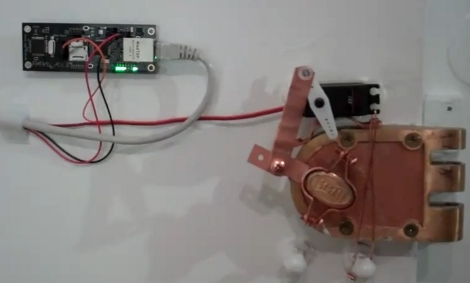
RFID cat flaps are one of those projects we see all of the time. They are generally pretty simple to rig up, not too expensive, and have a good “wow” factor for any non-technical friends or family, not to mention tremendously useful. Why did we decide to share this one? Well, for one, it is simple. It doesn’t tweet, email, or text message, it just gets the job done. Two, it is excellently documented, including a detailed parts list and a step by step schematic just about anyone could use to build their own. [landmanr] does mention that he recommends some sort of project enclosure to protect the electronics from damage, which would be bad for the poor cat stuck outside.

Google takes Science Fairs global

posted Jan 24th 2011 12:00pm by
filed under: contests

Teen hackers get ready to compete for cash and prizes. Google, the big G itself, is sponsoring a Science Fair but it’s not in a town near you, it’s online (no surprise there). Project entries will populate the content of a new corner of the Googleverse, with contestants 13-18 competing alone or as a team. The grand prize is a trip to the Galapagos Islands for ten days, but there are also cash scholarships for all of the winners. Check out their promo video for the event after the break.

If you’re a college student who’s too old to be eligible don’t forget to keep your eyes open for details about 2011 Google Summer of Code. Last year’s information is still up, but they usually release the details sometime in the first quarter.

Read the rest of this entry »


Roll the D’Icey

posted Jan 24th 2011 10:50am by
filed under: toy hacks

Most of the dice related hacks we run into have to do with pseudo random number generation, but today we saw something different. This sleek looking jumbo die is actually a prize holding box opened by a secret sequence of rotations. Using an accelerometer and an ATmega 328 with a sub-micro servo to control the locking mechanism. Worried about the batteries going flat and losing your treasure indefinitely? Good news! The batteries are accessable without giving away the secret inside.

It also turns out that this is an update to an earlier project from the same laboratory, so be sure to check that out as well to see where this build came from. Code is available for anyone looking to make their own, as well as a useful parts list.

[via Hacked Gadgets]

DIY Ultrasonic range finder for $5

posted Jan 24th 2011 8:51am by
filed under: arduino hacks

After finding some ultrasonic transducers online for a dollar each [Kerry Wong] decided to create an ultrasonic range finder. The result is much like parallax’s PING))) sensor but much cheaper. His post is not only a good way to save some money, but also does a good job of explaining how ultrasonic sensors work.  The transmit circuit is essentially an H-bridge, much like what you would use to control a motor. To listen to the returning echo he uses a pair of high gain/low noise op-amps to filter and amplify the signal.  The board he uses to test the range finder (not included in the cost) is an ATMega328 running the Arduino boot loader.  He also provides lots of example code to boot.

Hackaday links: January 24, 2011

posted Jan 24th 2011 7:19am by
filed under: Hackaday links

New Project Hosting site

[Paul] wrote in to tell us about his brand new hack hosting service, HackHut. Based on WordPress with some modifications, it is definitely worth keeping an eye on as new features emerge.

Instructabliss

Speaking of project hosting, Instructables are a common source of projects as well as complaints. Instructabliss by [Daid] is an often mentioned solution in our comments, and we thought we would bring it up so commenters don’t have to. We understand why it was made and think it was a clever hack, but we don’t officially endorse it. We survive on Ad revenue, if someone were doing this to us, it would hurt. We’re also not sure about the legalities of such a service, so keep us updated.

Grass Burning Robot

[Sebastian] brings us his grass burning, flame throwing robot. This robot takes in SVG files to create its burn path, and burns away. Not too many details, but be sure to check out the photos on his site.

[via Make]


Your very own cloud chamber

posted Jan 23rd 2011 12:21pm by
filed under: chemistry hacks


[Kenneth] and [Jeff] spent a weekend building a cloud chamber. This is a detection device for radiation particles that are constantly bombarding the earth. It works by creating an environment of supersaturated alcohol vapor which condenses when struck by a particle travelling through the container, leaving a wispy trail behind. This was done on the cheap, using isopropyl alcohol and dry ice. They already had a beaker, and after a few tries figured out that the dry ice worked best when serving as a bed for the flask. A black piece of paper was added inside the base of the container to help raise the contrast when looking for condensate. They experimented with a couple of different methods for warming the alcohol, including an immersion heater built from power resistors.

There’s a video explaining the apparatus which we’ve embedded after the break. It’s a bit hard to see evidence of particle travel in the video but that’s all the more reason you should give this a try yourself.

Read the rest of this entry »

Backwards Mario

posted Jan 23rd 2011 10:21am by
filed under: nintendo hacks, video hacks

So you’ve long since mastered Super Mario Bros. and it no longer challenges you? Have you tried playing it from right to left? That’s what Backwards Mario is all about. The first portion of the hack is getting the image to display backwards. He’s working with an old CRT television, which uses a magnetic ring to aim the electron gun at the screen. By swapping the left and right wires from that ring you can flip the image horizontally. Now Mario will be travelling right to left, but the controller buttons will send Mario the wrong direction on screen. This is a snap to fix, just crack open the controller and swap the signals for the left and right buttons. Now it’s time to fall in love with the classic game all over again, just like [JJ's] doing in the video after the break.

Read the rest of this entry »

Revive your tired Dremel battery pack

posted Jan 23rd 2011 8:46am by
filed under: repair hacks

It turns out there’s nothing more than six Nickel Cadmium AA rechargeable batteries inside of that cordless Dremel battery pack. Yep, standard rechargeable AA’s that you can buy most anywhere, and now you can revive that aging battery pack by following [Stuuf's] guide. Since you’re already at it, a few more bucks will yield a real upgrade by using the superior Nickel Metal Hydride batteries which should yield around three times as much use between charging. We totally understand having a battery pack, since the shape of the case is part of the handheld tool, and it should be easy to interchange the battery as one unit. We just wish that the battery pack had been designed to have the AA cells swapped out by the user once they had reached the end of the line.

Do you have other cordless tools in need of a pick-me-up? Check out this Makita battery pack repair hack for a point in the right direction.

[Thanks Bluewraith]


Hack a Day serves up fresh hacks each day, every day from around the web as well as hacking related news.

Send us your hacks


Hacks

Resources