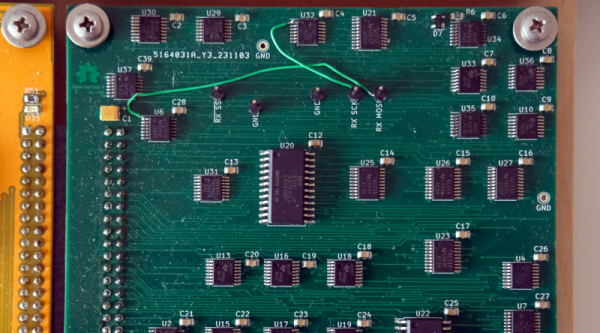
A modern normal network card will have onboard an Ethernet controller which, of course, is a pre-programmed microcontroller. Not only does it do the things required to keep a computer on the network, it can even save the primary CPU from having to do certain common tasks required for communicating. But not [Ivan’s]. His homebrew computer — comprised of 7 colorful PCBs — now has an eighth card. You guessed it. That card connects to 10BASE-T Ethernet.
There’s not a microcontroller in sight, although there are RAM chips. Everything else is logic gates, flip flops, and counters. There are a few other function chips, but nothing too large. Does it work? Yes. Is it fast? Um…well, no.
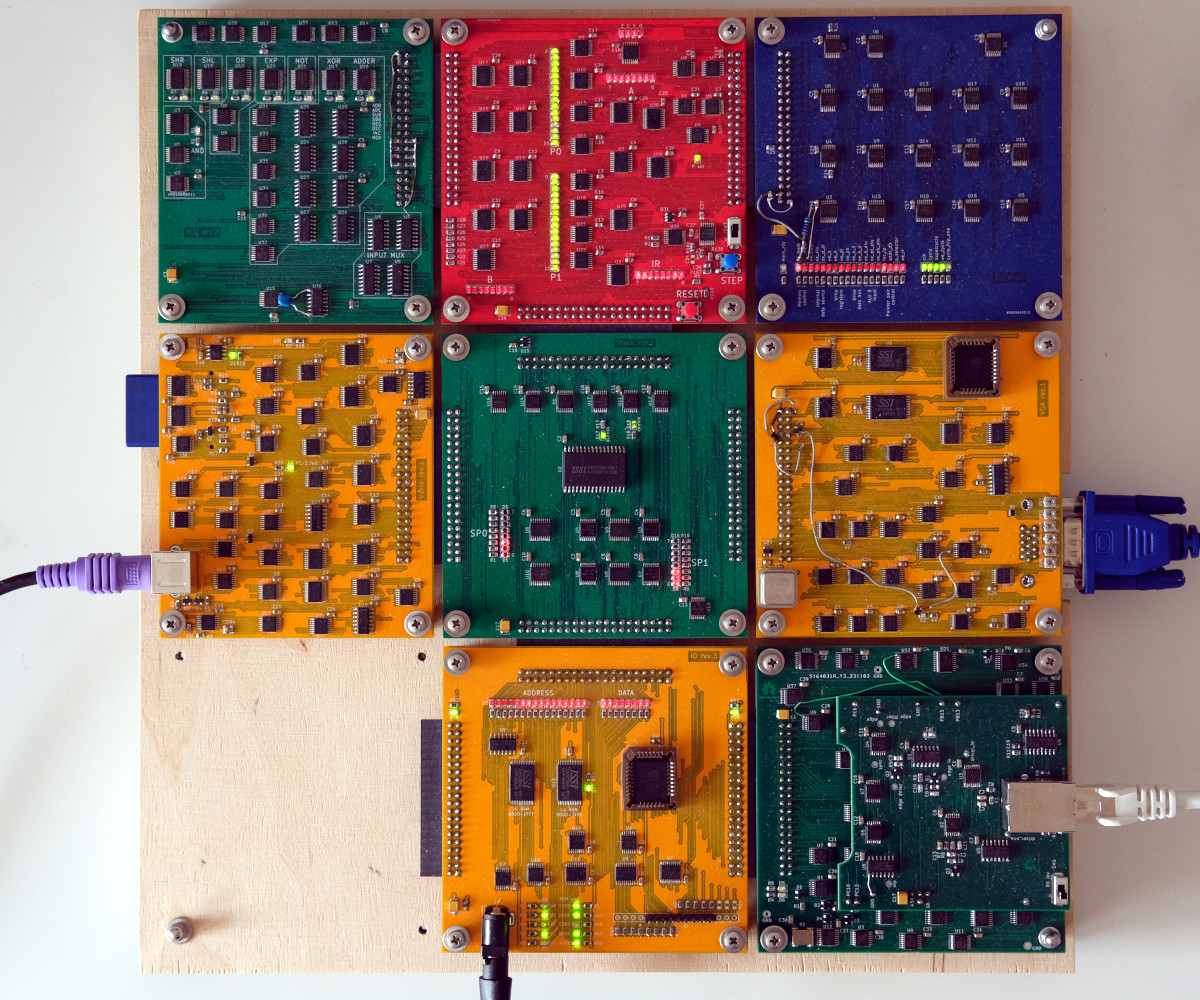
He can ping others on the network with an 85 ms round trip and serve web pages from his homebrew computer at about 2.6 kB/s. But speed wasn’t the goal here and the end result is quite impressive. He even ported a C compiler to his CPU so he could compile uIP, a networking stack, avoiding the problems of writing his own from scratch.
Some compromises had to be made. The host computer has to do things you normally expect a network card to do. The MTU is 1024 bytes (instead of the more common 1500 bytes, but TCP/IP is made to expect different MTU sizes, which used to be more common when more network interfaces looked like this one).
Even on an FPGA, these days, you are more likely to grab some “IP” to do your Ethernet controller. Rolling your own from general logic is amazing, and — honestly — the design is simpler than we would have guessed. If you check out [Ivan]’s blog, you can find articles on the CPU design, its ALU, and even a VGA video card all from discrete logic. The whole design, including the network card is up on GitHub.
We love the idea of building a whole computer system soup to nuts. We wish we had the time. If you need a refresher on what’s really happening with Ethernet, our [Arya Voronova] can help.