Vista On A PS3


Apparently you can run pretty much anything on a PS3. [mopx0] has managed to get Vista running on his PS3. He used Qemu 9.0.1 to install Vista on a PC. He says it takes “about a day or so”, after using Vlite to speed it up, so be patient. You then make an image of the install and copy it to your PS3. Don’t worry though, your hard work will be rewarded by a speedy 25 minute boot time when you’re done.

Even though it is extremely slow, to the point of being nearly unusable, its good to see people pushing the boundaries of our hardware’s intended use.

[via PS3scene]

Deogen, Tiny Monitor Tester


Deogen is a small, self contained device for testing monitors. It was designed back in 2000 to reduce the amount of space and effort required to test monitors in a computer shop. The initial design used an AT90S1200 microcontroller to generate test patterns for the monitors. Being about the size of a portable CD player, it was much easier to take to any monitor and plug in for testing.

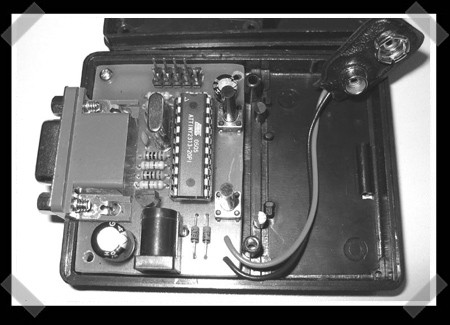
Version two of the device, pictured above, is much smaller, being about the width and height of a credit card. The depth is slightly larger than a 9 volt battery. Compared to the last vga test project we ran, this one is tiny. The unit boasts a decent set of features, such as; eight test patterns at four different resolutions, battery or DC power, and small form factor.

The processor of version two is an ATtiny2313 at 20MHz, and controls the H sync and V sync signals directly. The RGB is converted to analog using a resister network. The power circuit is custom made for low power consumption, though they note that a 78L05 equivalent unit could be used in its place.

The plans for the PCB and the software are available from their site. Head on over and check out some pictures of it in action.

[Thanks, Philip Fitzgerald]

Defcon 16: Badge Details Released


Defcon will once again be one-upping the sophistication of the conference attendee badges. Wired has just published a preview of this year’s badge. The core is a Freescale Flexis MC9S08JM60 processor. The badge has an IR transmitter and receiver on the front plus eight status LEDs. On the back (pictured below), there is a mode select button, CR123A battery, Data Matrix barcode, and an SD card slot. You can add a USB port to the badge and upload code to it using the built in USB bootloader. All the dev tools needed will be included on the conference CD or you can download the IDE in advance. The low barrier to entry should lead to some interesting hacks. In previous years, you needed a special dongle to program the hardware. There is no indication as to what the badge does out of the box. Releasing the badge early is a first for Defcon and the one pictured isn’t the attendee color, but we’re sure someone will still come up with a clone.

Now comes the fun part: What do you think the best use of this badge will be? Would Defcon be so cavalier as to equip everyone in the conference with a TV-B-Gone? I think our favorite possibility is if someone finds a security hole and manages to write an IR based worm to take over all the badges.

Defcon 14 introduced the first electronic badge which blinked in different patterns. Defcon 15 had a 95 LED scrolling marquee. [Joe Grand] will be posting more specific Defcon 16 badge details to his site after the opening ceremony. Check out more high resolution photos on Wired.

Continue reading “Defcon 16: Badge Details Released”

How-To: The Hacker’s Soldering Station


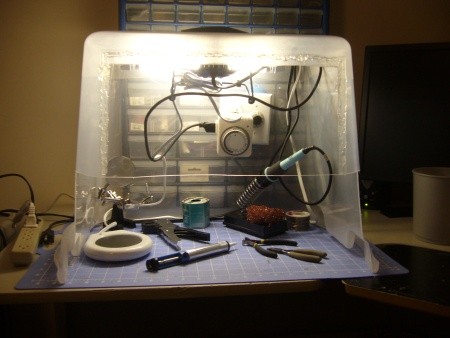
A good soldering station and fume extractor is a must for anyone interested in hacking and modding, but not everyone can afford the expensive professional models on the market. This How-To and the tips within it will guide you through the process of building an inexpensive homebrew fume hood complete with built-in time and temperature controlled soldering station and all the soldering tools you need.

Continue reading “How-To: The Hacker’s Soldering Station”

Magnetic Stripe Card Spoofer

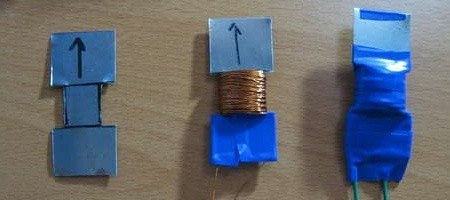
After building a USB magnetic stripe reader, [David Cranor] has found a way to fool a magnetic stripe reader using a hand-wound electromagnet and an iPod. The data on a card is read and stored on a computer, then encoded as a WAV file using a C++ program. The iPod plays the WAV file with the data through a single-stage opamp amplifier connected to the headphone jack. The amplifier is used to drive the electromagnet. Video embedded after the jump.

By no means is this a new idea. There have been a lot of mangetic stripe projects and software. This project in particular references the 1992 Phrack article “A Day in the Life of a Flux reversal” by [Count Zero].

Don’t get your hopes up just yet on strolling through high security installations using this little device. It can only replay the data from a card that has been recorded. If you don’t have a known working card, it won’t get you very far.

Continue reading “Magnetic Stripe Card Spoofer”

The GIFAR Image Vulnerability


Researchers at NGS Software have come up with a method to embed malicious code into a picture. When viewed, the picture could send the attacker the credentials of the viewer. Social sites like Facebook and Myspace are particularly at risk, but the researchers say that any site which includes log ins and user uploaded pictures could be vulnerable. This even includes some bank sites.

The attack is simply a mashup of a GIF picture and a JAR (Java applet). The malicious JAR is compiled and then combined with information from a GIF. The GIF part fools the browser into opening it as a picture and trusting the content. The reality is, the Java VM recognizes the JAR part and automatically runs it.

The researchers claim that there are multiple ways to deal with this vulnerability. Sun could restrict their Virtual Machine or web applications could continually check and filter these hybrid files, but they say it really needs to be addressed as an issue of browser security. They think that it is not only pictures at risk, but nearly all browser content.
More details on how to create these GIFARs will be presented at this week’s Black Hat conference in Las Vegas.

Make: Television

Make Magazine, famous for the Maker Faire, among other things, has announced a new project called Make: television. The show will be coming to public television stations throughout the USA starting early 2009. The big news is that you can submit 2 minute long videos of your projects to be included in the show’s Maker Channel segment. The bigger news is that if your video is selected, they’ll send you a $50 gift certificate from the Maker Shed and a free year of Make Magazine.