The New Apple TV

You’ve probably already heard about the Apple TV 2. It retails for $99 and packs a punch with HD video, optical audio, and WiFi in that tiny package. But as always, we like it for its hackability. Even though it’s just starting to ship, the hacks are already rolling in. The firmware is available from Apple’s servers and has already been unlocked with the yet-to-be-release SHAtter exploit. [Das_coach] even sent us a link to a video of the new Frontrow ported for the iPod touch (embedded after the break).

But the holy grail has to be XBMC. We’ve seen it on the first generation Apple TV and it was good. The second generation switches to the A4 processor which is an ARM Cortex-A8. Not quite as easy to port for as the Intel chip on the first generation was. But there is hope, one of the 2010 Google Summer of Code projects worked to port XBMC to another ARM device, it’s just a matter of inspiring some developers to take on the quest to make it happen. We can’t wait for the day that we can just velcro one of these to the back of our TV and be done with it, that first generation Xbox isn’t going to last forever.

Continue reading “The New Apple TV”

USB Mouse With Storage Added

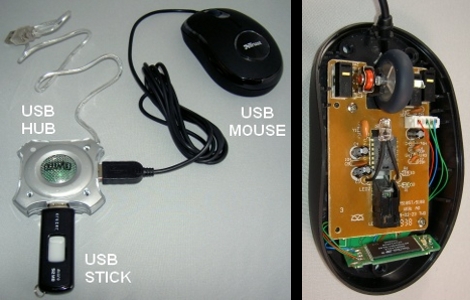
[Thice] wanted to try his hand at incorporating a USB driving into other devices. He chose to add storage to his USB mouse but didn’t want to alter the factory look provided by a color-changing LED inside. To make things fit he ended up cutting a good portion of a USB hub’s circuit board off and placing it beneath the mouse circuitry. You can see the board from the thumb drive wedged into one end of the case in the image above.

He sees this as a way of hiding data in plain sight. This is true, and it’s along the same lines we’ve seen before with a WiFi dongle in a mouse, or the thumbdrive in a controller hacks. To be truly hidden we’d like to see someone incorporate a microcontroller that monitors the mouse buttons for a certain code, and then toggles the voltage to the USB storage. This would simulate plugging and unplugging the drive, hiding it virtually as well as physically.

Wooden Quadcopter Body

brings back memories of balsa wood gliders

[Greasetattoo] shares the process of building his wooden quadcopter body that won 2nd place in the Minnesota state fair.  His plans were purchased as a kit back in 1999, but he never got around to actually building them. The original plans called for a foam board body, but he felt that a wooden piece of art would be much nicer. This build isn’t focusing on the electronics, they’re just a kit from Mikrokopter. Instead, it is a log of the entire process of making the beautiful wooden body. He really put some nice detail in there from the layered and nicely finished dome to the little oak sleeves for his motors. Great job [Greasetattoo].

Dazzling Coat Sure To Be In Demand With Pimps Everywhere

This is the newest addition to [Arren Parker’s] Burning Man wardrobe. The full-length lighted faux-fur coats is completely his creation. He started with a pattern that he acquired from Ebay, adding side pockets and changing the hood to a collar. From there he added the 256 RGB LEDs that make it shimmer so appealingly.

For this to work, he designed and ordered 300 tiny PCBs on which a connector socket and the LED are soldered. These are driven by a set of six TLC5940 pulse-width modulation chips, and ultimately by an Arduino. The effect is spectacular (see for yourself after the break), and we’re sure it’ll be a hit at burning man. Continue reading “Dazzling Coat Sure To Be In Demand With Pimps Everywhere”

Magnets Capable Of Brain Hacks

It has been recently discovered that all of the snap decisions that your brain makes on which hand to use to do simple tasks, such as picking up an object from a table, can now be automatically decided for you.  This is done using magnetic stimulation that is applied using transcranial magnetic stimulation or TMS.  This TMS will affect the brains ability to process motor movements and reduces the chances that the right hand will be chosen over the left.  This major discovery was found by PNAS (Proceedings of the National Academy of Sciences of the United States of America) who hopes to use this later on for rehabilitating stroke victims, making them using the limbs that may suffer from the event.  Here is to hoping that an in home product will be released in the future so children can become ambidextrous in everything they do.   It seems like that is a way off but it does seem more natural than most hacks to your body.

Via [iO9]

Dreamcast VMU, Meet IPod

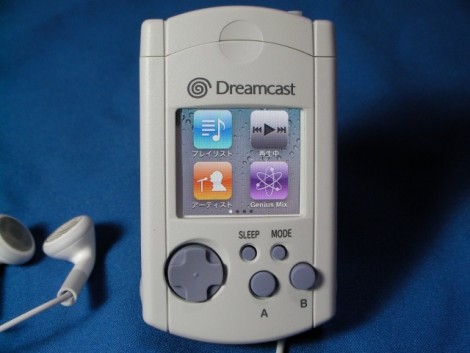
We’d bet you never had a Dreamcast Visual Memory Unit, but if you can find one now it can be turned into an iPod (translated). The VMU was originally a memory card for the not-so-popular gaming console that put an LCD screen right in your controller. When you weren’t at home you could take it with you and play mini-games. This version lacks its original guts, which have been replaced with a 6th generation iPod nano. The screen is just a bit small for the opening so a frame of white tape was applied as a bezel. The sleep button has been extended through the cover for the VMU connector. It seems there’s a gaping hole in the back of the case, but after seeing the ultrasonic knife used to cut away the plastic we don’t care. We’ve embedded video of that tool after the break.

Continue reading “Dreamcast VMU, Meet IPod”

Tiny Cray-1 Courtesy Of An FPGA

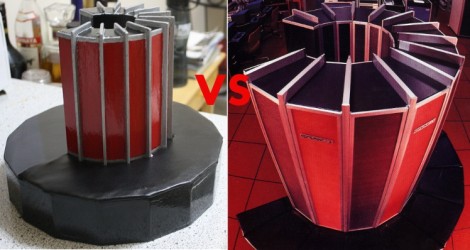
[Chris Fenton] spent a year and a half constructing a 1/10th scale Cray-1 reproduction. The famous supercomputer was meticulously modelled in a field programmable gate array for a “nearly cycle-accurate” reproduction. [Chris’] hardware of choice for the project is a Xilinx Spartan-3E 1600 development board, using 75-80% of the available resources. The finished product runs at 33 MHz and is missing a few functions but it sounds like they don’t affect code execution. We like that he didn’t stop with the processor implementation, but also took the time to produce a case for the development board that looks just like the original.

Unlike the Atari 2600 FPGA project, we’re not quite sure what we’d use this for. But that doesn’t diminish the excellence of his work.