Hackaday Prize Semifinalist: A Smart Battery Analyzer

[K.C. Lee]’s entry for the Hackaday Prize won’t cure cancer, wipe a disease from the planet, stop an alien invasion, or save the world. His battery charger and analyzer is, however, a useful little device for determining the charge and discharge characteristics of batteries, and can also be used as dual channel electronic load, current source, or power supply.

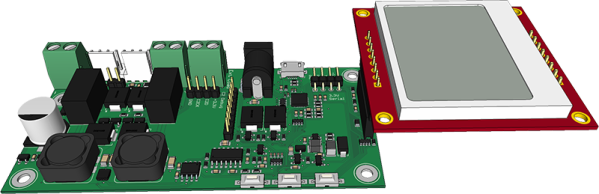
Inside [K.C.]’s device are all the tools required for charging and discharging lithium-ion, lead acid, and NiMH batteries. He’s doing this with a few slightly unusual circuits, including a SEPIC DC to DC converter, and an ‘analog’ PWM controller. these two techniques together mean [K.C.] can get away with smaller caps and inductors in his design, which also means less ripple on the output. As far as battery chargers and dischargers go, this one is very well designed.

Control of battery discharging and charging happens through a SILabs 8051-based microcontroller with USB. The UI is a simple Nokia LCD and an app running in Windows. If you want to save the world, this isn’t the project for you. If you need to test a few rechargeable batteries, this is a great device to have on the workbench.


The 2015 Hackaday Prize is sponsored by:

Hackaday Links Column Banner

Hackaday Links: August 30, 2015

A month ago, we ran a post about [Jim]’s rare and strange transparent microchips. He’s back at it again, this time taking a look at the inner workings of MOSFETs

The Unallocated Space hackerspace is moving, and they’re looking for a few donations to get the ball rolling.

Yes, it’s a Kickstarter for a 3D printer, but the LumiPocket is interesting, even if only on the basis of the engineering choices. It’s a UV laser resin printer, and they’re using a SCARA arm to move the laser around. They’re also doing a top-down resin tank; it requires more resin, but it seems to work well enough.

Around DC or northern Virginia? We’re going to be there on September 11th through the 13th. We’re holding a Hackaday Prize Worldwide meetup at Nova Labs in Reston, Virgina. Sign up now! Learn KiCAD with [Anool]! Meet [Sudo Bob]! It’ll be a blast.

Not around DC or NOVA? This Wednesday we’ll be hosting another chat on .io.

The GEnx is one of the most beautiful and advanced engines in the world, and that means [Harcoreta] oven on the RC groups forums has made one of the most beautiful electric ducted fans in the world. On the outside, it looks like a GEnx, including reverse thrust capabilities, but inside it’s pure electronics: a brushless motor rotates a 100mm, 18-blade fan. He’s hoping to mount it on a Bixler (!). We can’t wait for the video of the maiden.

Stuffing Everything On A DIP32 Package

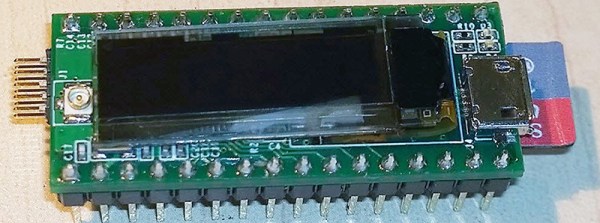
Putting an full microcontroller platform in a DIP format is nothing new – the Teensy does it, the Arduino nano does it, and a dozen other boards do it. [Alex] and [Alexey] aren’t content with just a simple microcontroller breakout board so they’re adding a radio, an OLED, an SD card reader, and even more RAM to the basic Arduino platform, all in a small, easy to use package.

The DIPDuino, as [Alex] and [Alexy] are calling it features an ATmega1284 processor. To this, they’re adding a 128×32 pixel OLED, a micro SD slot, and 1Mbit of SRAM. The microcontroller is a variant that includes a 2.4 GHz Zigbee radio that allows for wireless connections to other DIPDuinos.

What are [Alex] and [Alexey] going to do with their cool little board? They’re planning on using the OLED for a watch, improve their software so the firmware can be updated from the SD card, and one of [Alex]’s friends wants to build a RepRap controller with one of these. There’s a lot of potential with this board, and we’re interested in seeing where the guys take the project from here.

Hackaday Prize Semifinalist: A Better Smart Plug

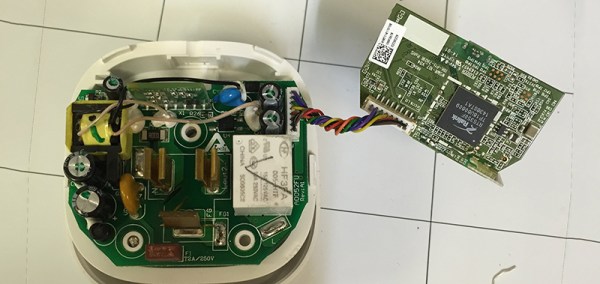
Walk into any home improvement store, and you’ll find dozens of smart accessories, home automation equipment, and WiFi-connected ephemera. The Belkin WeMo Insight is one of these devices, giving anyone with $60 and a WiFi network the ability to switch lights and appliances on and off over a network. [John] picked up one of these WiFi plugs, but it didn’t work exactly as he would like. Instead of building a smart plug from scratch, [John] replaced the controller board for a WeMo Insight for his Hackaday Prize entry, making it far more useful and a replacement for devices like the Kill-a-Watt.

In its stock form, the WeMo can only be used though the smartphone app provided by Belkin or through a few third-party services like IFFT. All of these solutions have a limited API, and don’t provide advanced power metrics. To solve this problem, [John] replaced the smart controller board inside the Belkin WeMo with one of their own design.

By volume, most of the electronics inside the WeMo are a transformer, caps, and a relay; the smarts of this smart plug are just a daughterboard. By re-engineering this daughterboard with a new microcontroller, an ESP8266, and a microSD card connector, [John] can replicate the functionality of the WeMo while adding some new features. SD card datalogging for up to four years is now possible, a RTC now provides precise time stamps on all data collected, and a few simple calculations on the microcontroller enable power factor, line frequency, and total energy metering. With the ESP, all this data can be sent up to the cloud with a vastly improved API.

It’s a great project, and something that Belkin should seriously consider for their next revision of the WeMo. For anyone stuck with a stock WeMo, [John] has made all his design files and code available, allowing anyone to replicate this build

You can check out [John]’s Hackaday Prize entry video below.

The 2015 Hackaday Prize is sponsored by:

Continue reading “Hackaday Prize Semifinalist: A Better Smart Plug”

Hackaday Prize Semifinalist: Portable A/C

Many people with Multiple Sclerosis have sensitivity to heat. When the core body temperature of an MS sufferer rises, symptoms get worse, leading to fatigue, weakness, pain, and numbness. For his entry to the Hackaday Prize, [extremerockets] is finding a solution. He’s developing a wearable, personal cooling device that keeps the wearer at a comfortable temperature.

The device is based on a wearable shirt outfitted with small tubes filled with a cooling gel. This setup is extremely similar to the inner garments worn by astronauts on spacewalks, and is the smallest and most efficient way to keep a person’s core body temperature down.

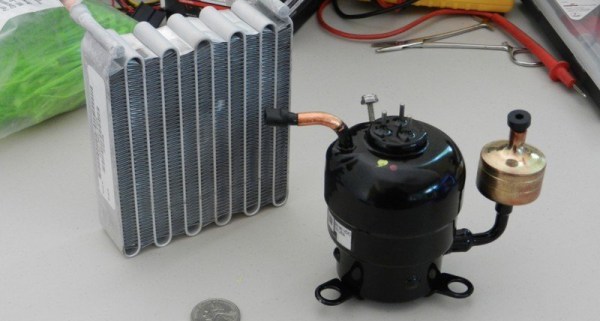
Unlike a lot of projects dealing with heating and cooling, [extremerockets] isn’t working with Peltiers or thermoelectric modules; they’re terribly inefficient and not the right engineering choice for something that’s going to be battery-powered. Instead, [extremerockets] is building a miniature refrigeration unit, complete with a real refrigeration cycle. There are compressors, valves, and heat exchanges in this build, demonstrating that [extremerockets] has at least some idea what he’s doing. It’s a great project, and one we can’t wait to see a working prototype of.

The 2015 Hackaday Prize is sponsored by:

Hackaday Prize Semifinalist: Water Quality Monitoring

The theme of this year’s Hackaday Prize is to build something that matters, and there is nothing more important than water quality and pollution. Everything we eat and drink is influenced by the water quality in rivers and reservoirs. C4Derpillar, a semifinalist for the Hackaday Prize, is solving the problems of water-related health issues with innovative sensors for under $500 USD per unit.

The C4Derpiller is using capillary electrophoresis (CE) to detect anions and cations in waterways. CE pulls a water sample through a very thin tube with an electric current. As water is moving through this capillary, a sensor is able to detect heavy metals, pesticides, and other pollutants in a water supply. The team behind C4Derpiller has written a few posts about the separation chemistry of their device

Commercial CE equipment costs tens of thousands of dollars. The team behind the C4Derpillar are hoping to develop their pollution monitoring device and make it available for about $500 USD. That’s cheap enough for multiple pollution monitoring stations in the third world, and by pushing the results to the cloud, the C4Derpillar will be able to monitor pollution in real time.

You can check out C4Derpillar’s Hackaday Prize video below.

The 2015 Hackaday Prize is sponsored by:

Continue reading “Hackaday Prize Semifinalist: Water Quality Monitoring”

Before Arduino There Was Basic Stamp: A Classic Teardown

Microcontrollers existed before the Arduino, and a device that anyone could program and blink an LED existed before the first Maker Faire. This might come as a surprise to some, but for others PICs and 68HC11s will remain as the first popular microcontrollers, found in everything from toys to microwave ovens.

Arduino can’t even claim its prominence as the first user-friendly microcontroller development board. This title goes to the humble Basic Stamp, a four-component board that was introduced in the early 1990s. I recently managed to get my hands on an original Basic Stamp kit. This is the teardown and introduction to the first user friendly microcontroller development boards. Consider it a walk down memory lane, showing us how far the hobbyist electronics market has come in the past twenty year, and also an insight in how far we have left to go.

Continue reading “Before Arduino There Was Basic Stamp: A Classic Teardown”