Water Your Plants Just Four Times Per Year

While it’s true that some plants thrive on neglect, many of them do just fine with a few ounces of water once a week, as long as the light level is right. But even that is plenty to remember and actually do in our unprecedented times, so why bother trying? [Martin] has solved this problem for us, having given every aspect of automatic plant care a lot of thought. The result of his efforts is Flaura, a self-watering open-source plant pot, and a YouTube channel to go with it.
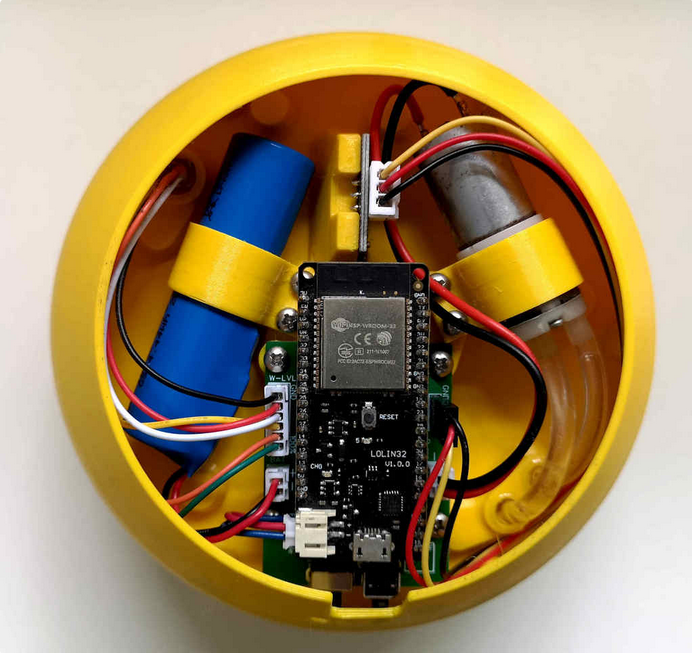
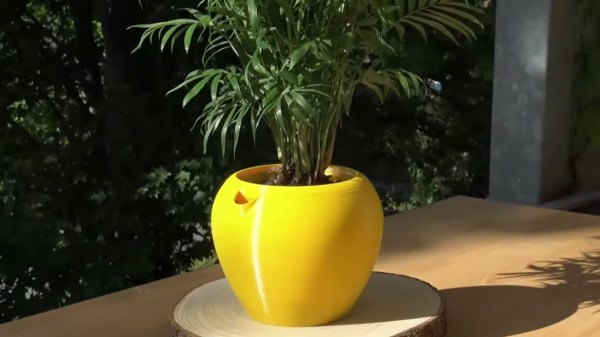
The 3D-printed pot can easily be scaled up or down to suit the size of the plant, and contains a water reservoir that holds about 0.7 L of water at the default size. Just pour it in through the little spout, and you’re good for about three months, depending on the plant, the light it’s in, and how much current water it draws. You can track the dryness level in the companion app.

Whenever the capacitive soil moisture sensor hidden in the bottom of the dirt detects drought conditions, it sends a signal through the Wemos LOLIN32 and a MOSFET to a small pump, which sends up water from the reservoir.

The soil is watered uniformly by a small hose riddled with dozens of tiny holes that create little low-pressure water jets. This is definitely our favorite part of the project — not just because it’s cool looking, but also because a lot of these types of builds tend to release the water in the same spot all the time, which is. . . not how we water our plants. Be sure to check out the project overview video after the break.

No printer? No problem — you could always use an old Keurig machine to water a single plant, as long as the pump is still good.

Continue reading “Water Your Plants Just Four Times Per Year” →
Hackaday Prize 2022: Recycled Tire Table Is Where The Rubber Meets The Road

The problem with good inventions is that we usually end up with way too many of that particular widget lying around, which can cause all kinds of problems. Take the car tire, for instance. They were a great invention that helped spell the end of buggy whips and broken wagon wheels. But there are so many used-up tires about today that some people end up burning them in large piles, of all possible things.

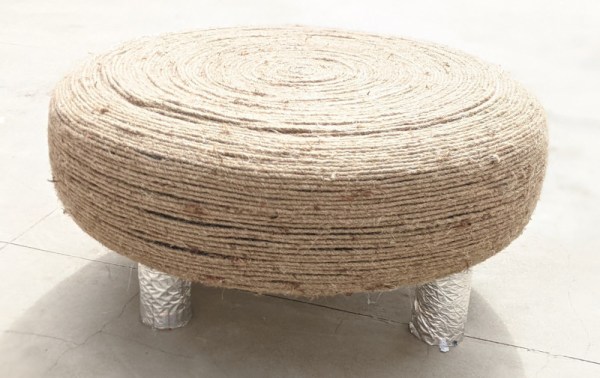
Not [Vaibhav], who prefers to turn trash into utilitarian treasures. With little more than an old tire, some jute rope, and four plastic drink bottles, they made a sturdy, low-slung piece of furniture that could be used as a coffee table, a foot stool, or whatever life calls for.

Construction was fairly simple and involved stabilizing the hollow core with a round piece of cardboard glued to either side of the tire. Then came the jute rope and glue artistry, which hides any trace of the foundational materials. Finally, [Vaibhav] glued four plastic bottles to the bottom to act as legs. We think that steel cans would last longer and support more weight, but if plastic bottles are the only option, you could always fill them with dirt or sand.

Transparent Framedeck Is Clearly Capable

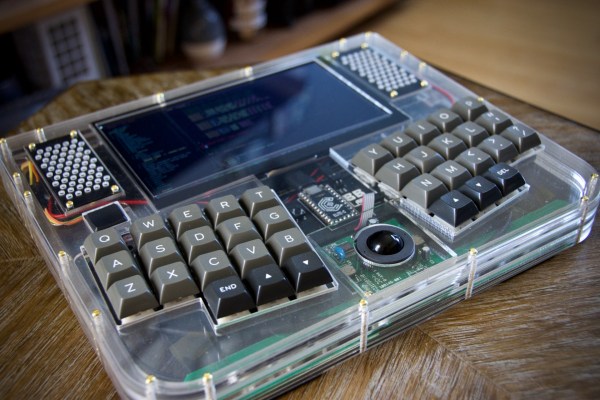
When the universe tells you to build a cyberdeck, then build a cyberdeck you must. The lucky [Richard Sutherland] got an email from user-serviceable laptop purveyors Framework about the availability of their main board for use as a single-board computer. They agreed to send him a laptop and some extra modules as long as he promised to build something awesome with it. There was just one fabulous caveat: whatever design he came up with had to be released to the public.

[Richard] took this capable board with four USB ports and built an all-in-one that pays homage to the slab-style computers like the TRS-80 Model 100, which [Richard] really wanted as a kid. It looks lovely in layered acrylic and brass, and even though we pretty much always think that see-through is the best design choice you can make, transparency really works here. Tucked into those layers is a custom 36-key split running on an Elite-C microcontroller with Gazzew Boba U4 Silent-but-tactile switches, and a trackball in between. Be sure to take the build tour and check out all the process pictures.

Acrylic looks great and seems great on paper, but what about actual use? [Richard] put rubbery SKUF feet on the front, and a pair of repositionable feet on the back. Not only will it stay in place on the table, but he’ll be able to see the screen better and type at an angle greater than zero.

As cool as it would be to have Framedeck in the apocalypse, it will be hard to hide and could get looted. You might want to build something a bit more concealed.

Printable Fix For Time Card Clock Has Owner Seeing Red Again

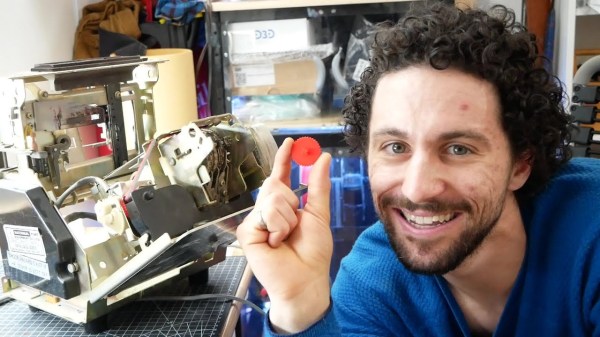
When [Morley Kert] laid eyes on a working time card-punching clock, he knew he had to have it for a still-secret upcoming project. The clock seemed to work fine, except that after a dozen or so test punches, the ink was rapidly fading away into illegibility. After a brief teardown and inspection, [Morley] determined that the ribbon simply wasn’t advancing as it should.

This clock uses a ribbon cassette akin to a modern typewriter, except that instead of a feed spool and a take-up spool, it has a short length of ribbon that goes around and around, getting re-inked once per revolution.

When a card is inserted, a number of things happen: a new hole is punched on the left side, and an arm pushes the card against the ribbon, which is in turn pushed against the mechanical digit dials of the clock to stamp the card.

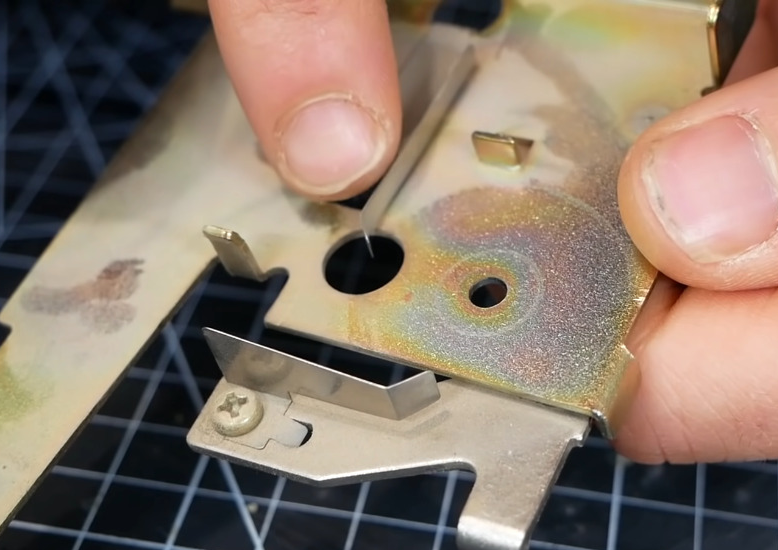
Finally, the ribbon gets advanced. Or it’s supposed to, anyway. [Morley] could easily see the shadow of a piece that was no longer there, a round piece with teeth with a protrusion on both faces for engaging both the time clock itself and the ribbon cassette. A simple little gear.

After emailing the company, it turns out they want $95 + tax to replace the part. [Morley] just laughed and fired up Fusion 360, having only caliper measurements and three seconds of a teardown video showing the missing part to go on. But he pulled it off, and pretty quickly, too. Version one had its problems, but 2.0 was a perfect fit, and the clock is punching evenly again. Be sure to check it out after the break.

Okay, so maybe you don’t have a time card clock to fix. But surely you’ve had to throw out an otherwise perfectly good coat because the zipper broke?

Continue reading “Printable Fix For Time Card Clock Has Owner Seeing Red Again” →

Why Get Dressed When There Are Software Pants?

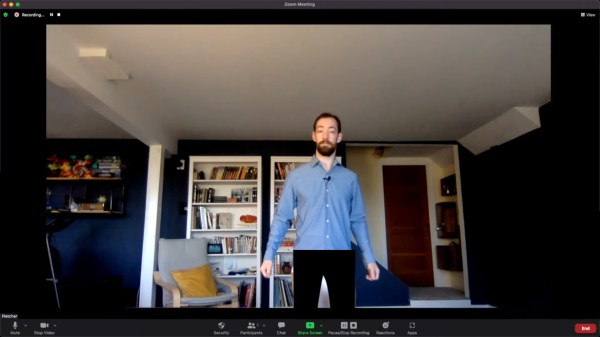
With so many of us working from home over the last two years, it’s really become apparent that people generally dislike sitting all day with pants on. Until such a utopian time when all clothing is considered unisex, and just as many men as women are kicking it in loose, flowing skirts and dresses, you may want to remember to actually wear something on your lower half, uncomfortable though pants may be. But there is another way — you could build [Everything Is Hacked]’s pants filter and continue to be a chaos agent. Check out the video after the break.

These pants go as wide as you please.

That’s right, whether you forego or just forget to dress yourself below the equator, the pants filter has you covered. It works like you might expect — machine learning tracks body landmarks and posture to figure out where your NSFW region is and keep it under wraps.

By default, it blurs everything below the belt, or you can draw on pants if you’re inclined to be in revealing tighty-whities and prefer more coverage. You can adjust the width of the pants to cover the covid-19 you may have put on since 2020, and even change the pants to match your shirt.

We love that [Everything Is Hacked] had the um, gumption to test the pants filter in public at what appears to be a local taco joint. After the first few rounds of weird looks, he switched to a pants moustache to save face.

Want to add even more fun to those boring video calls? Try connecting up some vintage hardware, or install a pull chain to end those sessions with a gesture that won’t get you fired.

Continue reading “Why Get Dressed When There Are Software Pants?” →

Hackaday Prize 2022: Vintagephone Links The Past To The Present (and Future)

Brrrrrrrring! Movies and TV are one thing, but the siren song of a rotary phone ringing in the same room as you is one of those sounds you carry forever. Not old enough to remember them? Ah, so what? There’s no reason to lose these beauties to the annals of time. In fact, we think more old phones should be repurposed so that present and future generations can experience the finger-hookin’ good time of the rotary dial and the high-voltage peal of those brass bells.

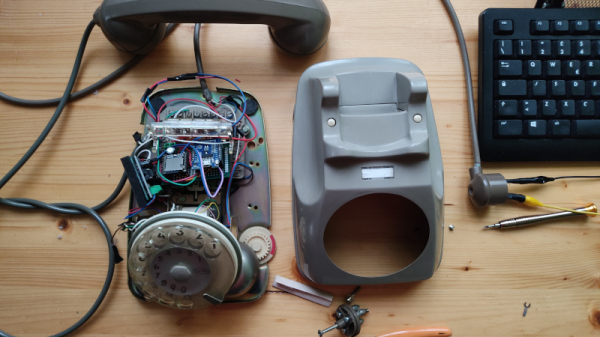
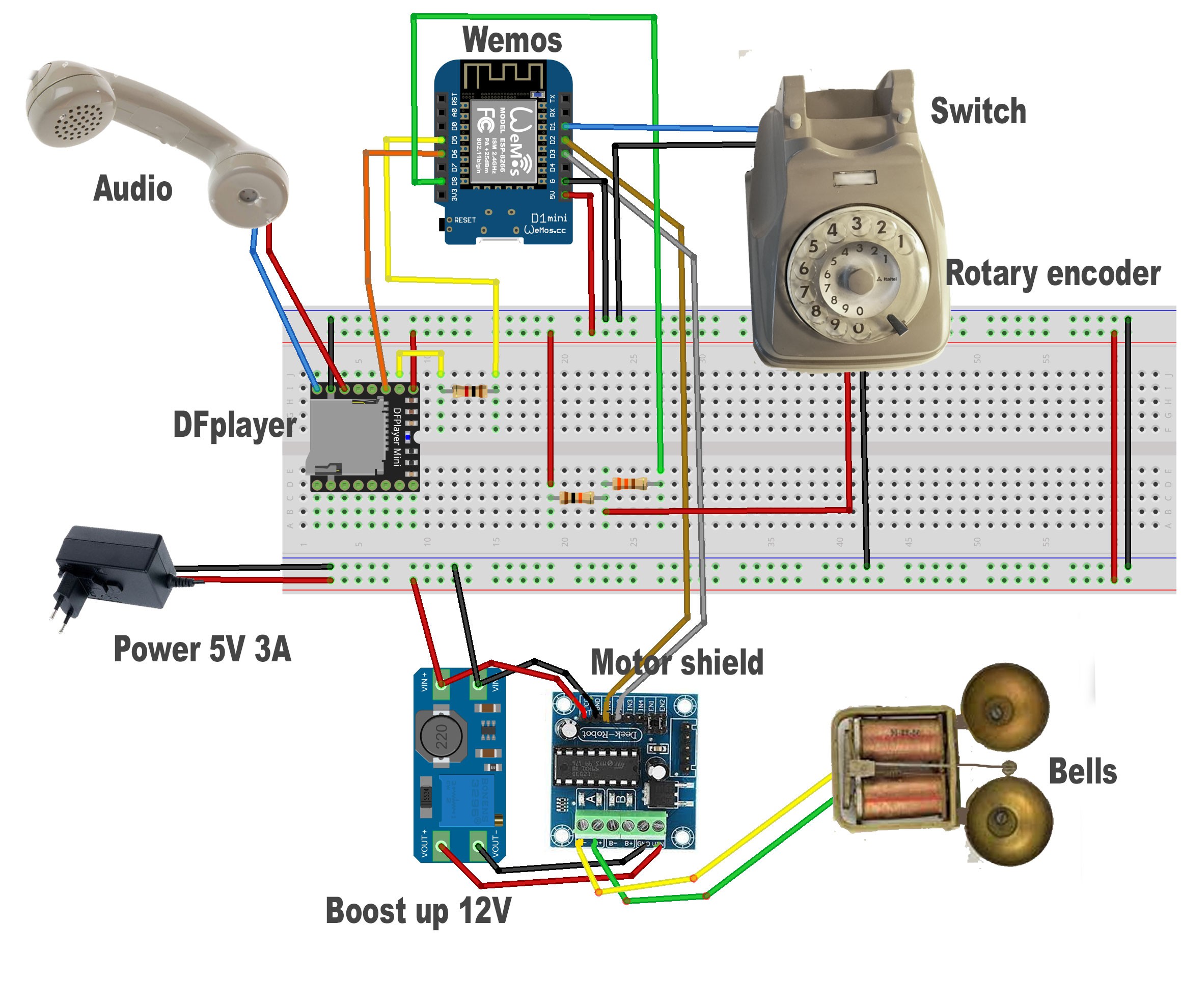
That’s exactly what [Giulio Pons] has done with Vintagephone — turned a rotary phone into a digital assistant with an analog interface. He’s reused all the good bits like the rotary dial, the bells, the handset, and the hang-up switch and connected them up to a Wemos ESP8266 development board with a mini motor driver shield and a voltage booster to ring the bells.

When it’s all said and done, [Giulio] will be able to set an alarm by dialing in the time, ring a number to get the current time and date, and ring another number to get the weather forecast. Reminds us of our childhood pastime of calling Time and Temperature to get outside verification that time had, in fact, passed inside the house on those boring rainy days.

Follow along with [Giulio] as the Vintagephone comes to life in the logs, which already have some great instructions for doing a similar number to an old phone you may have lying around. You can find the code on GitHub.

Got some old tech lying around? Teach it some new tricks and enter the Reuse, Recycle, Revamp round of the 2022 Hackaday Prize!

Modifying Old Fonts In The Name Of Baseball

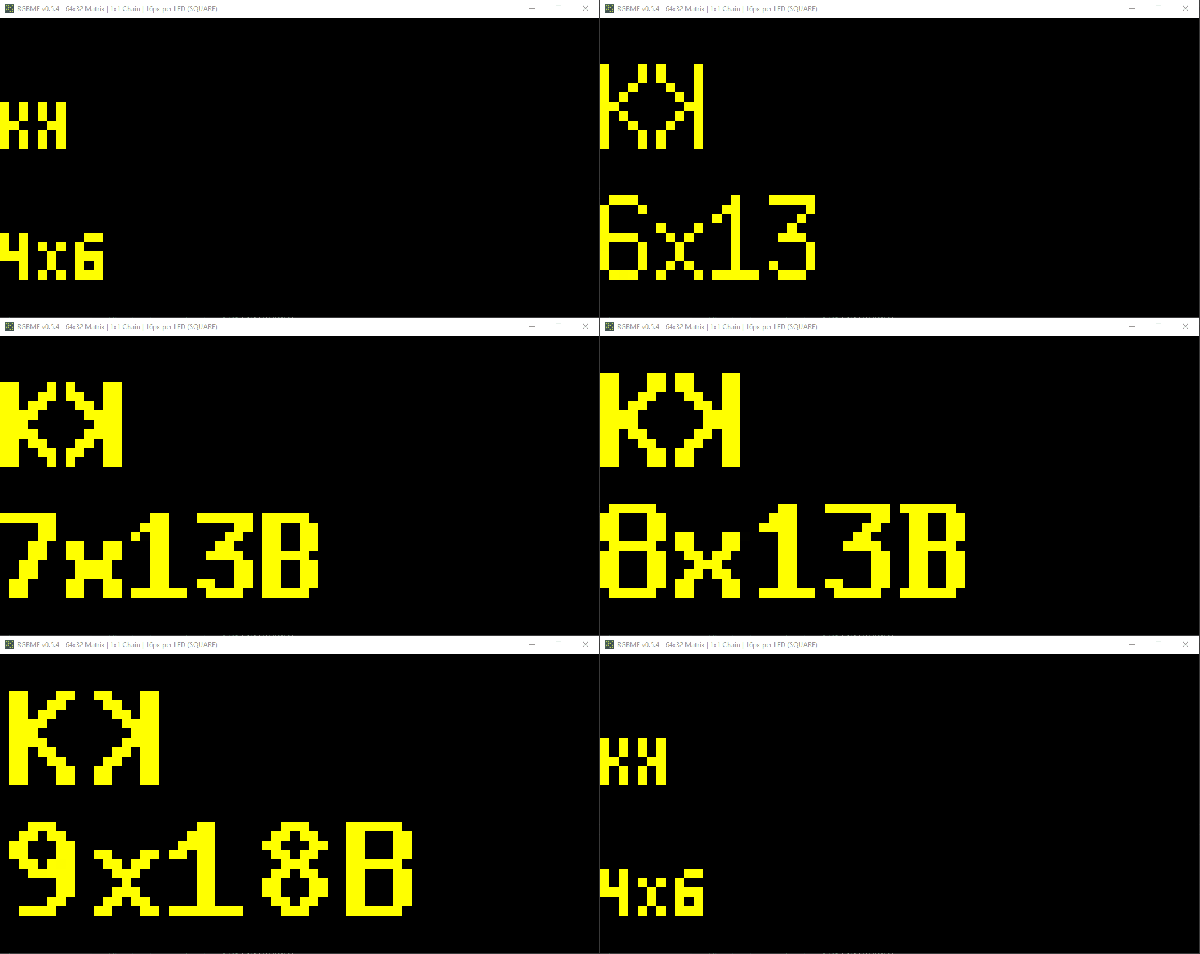
Baseball is in full swing again, and having recently accepted a position with Major League Baseball, [Ty Porter] is warming up with a big contribution to the MLB LED Scoreboard project — modifying 20-some old fonts to support baseball’s ‘ꓘ’ character that indicates a special strikeout with a called third strike (meaning the batter didn’t take a swing).

The problem is that Major League Baseball-the-entity recently deprecated the original data source for the scoreboard project. This called for a huge refactor of the codebase, including previously-patched fonts which were now showing either the font’s default no-character character, or nothing at all.

Fortunately, BDF font files are fairly human-readable and make reference to bitmap, which is an actual bitmap in hex. [Ty] settled on Unicode A4D8 (ꓘ), a character from the Tibeto-Burman language Lisu that certainly looks good enough to this baseball fan. Then it became a matter of mirroring the bitmap for ‘K’. [Ty] tried a few things like reversing the nibbles and looking up each one in a table, but that also mirrors the padding, which is bad news.

Then he tried not reversing the nibbles and just looked them up in a table, but this approach dropped and added bits unintentionally. Finally, he tried reversing the order, looking up the reversed nibble, and shifting each byte until there was no padding. This worked for most of the 20 fonts [Ty] patched. The others fell in line with some manual work.

Not much of a baseball fan? You’re almost guaranteed to like this one, especially if you hate mayo.