25C3: Nothing To Hide Announced


Germany’s Chaos Computer Club has announced the theme for their annual Chaos Communication Congress: “Nothing to hide“. Like last year’s “Full steam ahead!“, it’s open to many interpretations. People striking down privacy laws often say citizens shouldn’t mind since they have “Nothing to hide”. The phrase is also connected to the inability to hide data, as the CCC demonstrated this year by publishing the German Home Secretary’s fingerprint. On a more positive side, “Nothing to hide” is also about the free exchange of information that happens at hacker conventions. The Congress is in its 25th year and promises to be as good as ever. At last year’s 24C3, we saw great talks like [Drew Endy]’s biohacking talk and the original MiFare crypto presentation. 25C3 will be held in Berlin December 27th to 30th. The wiki is already up and they’ve published a call for participation, if you’re interested.

Acer Aspire One Hard Drive Upgrade


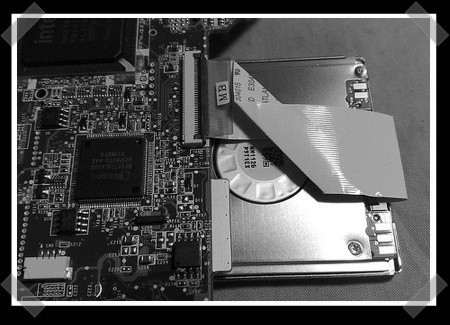
As promised, [tnkgrl] has published part two of Acer Aspire One upgrade. In part one she added Bluetooth and more RAM. This time around she focuses on the storage. The subnotebook comes from the factory with an 8GB SSD. The flash based storage readily unplugs from a small ZIF connector. [tnkgrl] replaced it with a 60GB PATA Samsung drive salvaged from an iPod. It’s a 1.8inch disk and is only 5mm thick, so it can be tucked under the motherboard. Knowing its previous use, it should prove fairly resilient. You can view a video of the swap and more photos on Flickr.

Up next is part three, where she’ll add 3G support.

Defcon 16: Biometric Cloning


One of the more novel talks we saw at Defcon was [Zac Franken] presenting on access control systems. He covered several different types, but the real fun was his live demo of bypassing a hand geometry scanners like the one pictured above. With the help of two assistants, 4 pounds of chromatic dental alginate, and 5 liters of water, he made a mold of his hand. The box he placed his hand in had markings to show where the pegs on the scanner are located. After 2 minutes he could remove his hand from the cavity. They then filled the mold with vinylpolysiloxane, making sure to remove all bubbles. 20 minutes later the hand was solid and passed the scanner’s test. This may not be a completely practical attack, but it does defeat the overall idea of biometrics; biometrics are built on the assumption that every person is unique and can’t have their features reproduced.

[Zac] also showed an interesting magnetic card spoofer that emulated all three tracks using coils of magnet wire. We hope to see more about that in the future.

[photo: morgan.davis]

Black Hat 2008: NIC Based Rootkit


While Black Hat and Defcon have both concluded, we’re going to post a few more talks that we think deserve attention. [Sherri Sparks] and [Shawn Embleton] from Clear Hat presented Deeper Door, exploiting the NIC chipset. Windows machines use NDIS, the Network Driver Interface Specification, to communicate between the OS and the actual NIC. NDIS is an API that lets programmers talk to network hardware in a general fashion. Most firewalls and intrusion detection systems monitor packets at the NDIS level. The team took a novel approach to bypassing machine security by hooking directly to the network card, below the NDIS level.

The team targeted the Intel 8255x chipset because of its open documentation and availability of compatible cards like the Intel PRO/100B. They found that sending data was very easy: Write a UDP packet to a specific memory address, check to make sure the card is idle, and then tell it to send. The receive side was slightly more difficult, because you have to intercept all inbound traffic and filter out the replies you want from the legitimate packets. Even though they were writing low level chipset specific code, they said it was much easier to implement than writing an NDIS driver. While a certainly a clever way to implement a covert channel, it will only bypass an IDS or firewall on the same host and not one on the network.

[photo: Big Fat Rat]

Black Hat 2008: Pwnie Award Ceremony


The first night of Black Hat briefings concluded with the Pwnie Award Ceremony. The awards reward achievements in security… but mostly failures. Notably, this was the first year anyone accepted an award in person. Hack a Day took home an early victory by producing a MacBook mini-DVI to VGA adapter (pictured above). The ceremony was fairly straight forward after that. Best Server-Side Bug went to the Windows IGMP kernel vulnerability. It was a remote kernel code execution exploit in the default Windows firewall. The Best Client-Side Bug went to Multiple URL protocol handling flaws like this URI exploit. Mass 0wnage went to WordPress for many many vulnerabilities. Most Innovative Research went to the Cold Boot Attack team. Lamest Vendor Response was won by McAfee for saying XSS can’t be used to hack a server. The Most Overhyped Bug went to [Dan Kaminsky] for his DNS vulnerability. Most Epic FAIL was won by the team behind Debian for shipping the OpenSSL bug for two solid years. Lifetime Achievement Award was won by [Tim Newsham]. Finally, the Best Song was by Kaspersky Labs for Packin’ The K!, which you can find embedded below.

Continue reading “Black Hat 2008: Pwnie Award Ceremony”

Black Hat 2008: FasTrak Toll System Completely Broken


FasTrak is the electronic toll collection system used by the state of California. Motorists can purchase a toll transponder for ~$26 and link the serial number with a debit account to have their tolls deducted automatically. Today at Black Hat in Las Vegas, security researcher [Nate Lawson] presented not just the privacy problems with FasTrak, but why absolutely no transaction from the tag should be trusted.

Continue reading “Black Hat 2008: FasTrak Toll System Completely Broken”