What Next For The SBC That Has Everything?

In the decade-and-a-bit since the first Raspberry Pi was launched we’ve seen an explosion of affordable single-board computers (SBCs), but as the prices creep up alongside user expectation and bloat, [Christopher Barnatt] asks where the industry will go next.

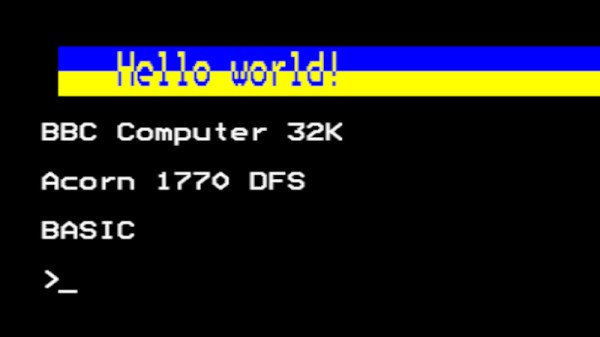
The Pi started with an unbeatable offer, $35 got you something similar to the desktop PC you’d had a decade earlier — able to run a Linux desktop on your TV from an SD card. Over the years the boards have become faster and more numerous, but the prices for ARM boards are now only nominally as affordable as they were in 2012, and meanwhile the lower end of x86 computing is now firmly in the same space. He demonstrates how much slower the 2023 Raspberry Pi OS distribution is on an original Pi compared to one of the early pre-Raspbian distros, and identifies in that a gap forming between users. From that he sees those people wanting a desktop heading towards the x86 machines, and the bare-metal makers at the lower end heading for the more powerful microcontrollers which simply weren’t so available a decade ago.

We have to admit that we agree with him, as the days when a new Raspberry Pi board was a special step forward rather than just another fast SBC are now probably behind us. In that we think the Pi people are probably also looking beyond their flagship product, as the hugely successful lunches of the RP2040 and the industrial-focused Compute Module 4 have shown.

What do you think about the SBC market? Tell us in the comments.

Continue reading “What Next For The SBC That Has Everything?”

Will Electric Tractors Farm Your Food?

There are two professions used to driving single-seaters with hundreds of horsepower, one of which is very exclusive and the other of which can be found anywhere the ground is fertile enough to support agriculture. Formula One drivers operate fragile machines pushed to the edges of their performance envelope, while the tractor at the hands of a farmer is designed to reliably perform huge tasks on dodgy ground in all weathers. Today’s tractor is invariably a large machine powered by a diesel engine, and it’s the equal of all tasks on a modern farm. Against that backdrop then it’s interesting to read the Smithsonian magazine’s look at the emerging world of electric tractors. Will they replace diesel as the source of traction in the fields?

Farm-ng’s Amiga

The two firms they focus on first are Monarch Tractor, and Solectrac. Both manufacturers offer small machines of the type we’d be inclined to describe as an orchard tractor, and Monarch are offering an autonomous option as part of their package. They also feature Farm-ng, whose machine called amusingly the Amiga, is a much smaller affair which we are guessing would be super-useful on a very intensive operation such as market gardening. We’re especially pleased to see that the emerging small electric tractor industry is embracing right to repair, something the traditional manufacturers are famous for ignoring.

It’s obvious that none of these machines are going to revolutionize the world of large high-power tractors any time soon, as they are too small for the job and can’t offer the 24/7 operation required at busy times on a farm. But it’s obvious they would be very useful on a small farm, and in particular for those tractor applications where the machine is a platform which goes from place to place to aid static work, they could be better than their diesel equivalents.

It’s odd that over the years we’ve not covered any electric tractors before. Perhaps that is, until you search instead for agricultural robots.

Restoring Dot Matrix Printer Cartridges For 2023

The noise of a dot matrix printer is probably as synonymous with 1980s computing as the modem handshake would become with the desktop experience a decade or more later. But unlike the computers that would have driven it, a dot matrix printer can still be a very useful device here in 2023. And why not? They’re cheap to operate and can produce surprisingly good quality when paired with suitable drivers. There is a snag though; while cartridges for popular models can still be found, there are plenty whose consumables are long gone. [Drygol] had an Apple ImageWriter II with exactly that problem, and after finding all his cartridges were non-functional, took a look at how to bring them back.

Inside a dot matrix cartridge is a fabric ribbon similar to the one that might once have been found on a typewriter. It’s not on a roll but folded into the space, and it’s drawn through by a pair of rollers. Not only had the ink on the fabric dried out, but the foam on the rollers had also disintegrated. Some careful dismantling, and a solution presented itself in the form of O-rings to replace the rollers. Those and a bit of mineral oil to soften the ink had the vintage Apple printing again as though it was the ’80s once more.

It’s a subject we’ve looked at before, as it turns out WD-40 makes a good ink solvent.

Nice Try, But It’s Not Aperture Synthesis

Some of the world’s largest radio telescopes are not in fact as physically large as they claim to be, but instead are a group of telescopes spread over a wide area whose outputs are combined to produce a virtual telescope equal in size to the maximum distance between the constituents of the array. Can this be done on the cheap with an array of satellite dishes? It’s possible, but as [saveitforparts] found out when combining a set of Tailgater portable dishes, not simply by linking together the outputs from a bunch of LNBs.

The video below the break still makes for an interesting investigation and the Tailgater units are particularly neat. It prompted us to read up a little on real aperture synthesis, which requires some clever maths and phase measurement for each antenna. Given four somewhat more fancy LNBs with phase-locked local oscillators and an software-defined radio (SDR) for each one then he might be on to something.

If you’re curious about the cyberdeck in the video, you might like to read our coverage of it. And the Tailgater might be a bit small, but you can still make a useful radio telescope from satellite TV parts.

Continue reading “Nice Try, But It’s Not Aperture Synthesis”

When The Professionals Trash Your Data Tape, Can It Still Be Recovered?

People trying to preserve digital artifacts held on old media often not only have to contend with the media themselves decaying, but also with obscure media formats for which there’s seemingly little chance of finding a working reader. [Kneesnap] had this problem with a tape containing the only known copy of all the assets for the game Frogger 2: Swampy’s Revenge, and the tale of how the data was recovered is a dive into both the shady side of the data recovery industry and some clever old-format hacking.

The tape was an Onstream cartridge, a short-lived format from a company whose first product hit the market at the end of the ’90s and who went bust in 2004. An old drive was found, but it proved to have a pinch roller melted with age, so in desperation the tape was sent to a data recovery company.

We admire the forbearance in not naming and shaming the data recovery company, because far from recovering the data they sent it back with the tape damaged and spliced — something you can do with an analogue tape but not a digital one without compromising the data. Then faced with an unrecoverable tape and a slightly different Onstream cartridge, how could anything be salvaged?

The answer came in overriding the drive’s sensors and initializing it with a known-good tape, then swapping out the tapes so that the drive, unaware anything had changed, could read whatever data it could find. In the event the vast majority of the archive was retrieved, making it a win for the preservation of that game.

This may be more involved than some recovery stories, but it’s not the first we’ve covered.

Own More Than One ‘Scope? You’ve Got Nothing On This Guy!

We’re guessing that quite a few of our readers have a surprising amount of redundant test gear, and we ourselves have to admit that more than one instrument adorns our benches. But we are mere dilettantes, amateurs if you will, compared to [Volke Kloke]. He’s got 350 of them in his average American home, and we have to say, among them are some beauties.

The linked newspaper article is sometimes frustratingly light on the details, but fortunately he has a website all of his own where we can all get immersed in the details. Of particular interest is an instrument which doesn’t even have a CRT, the General Radio 338 string oscillograph used a mirror drum to catch a standing wave in a tungsten wire, but there are plenty more. Is your first ‘scope among them?

As we now live in the age of cheap digital ‘scopes, at any surplus sale you’ll see plenty of CRT-based instruments going for relative pennies. Of those, the more recent and high-end ones are still extremely useful instruments, and it’s not just misty-eyed reminiscing to say that they remain a worthy addition to any bench.

Want to know about early ‘scope tech? We’ve taken a look before.

The Thousand Year (Radioactive) Diamond Battery

The Holy Grail of battery technology is a cell which lasts forever, a fit-and-forget device that never needs replacing. It may seem a pipe-dream, but University of Bristol researchers have come pretty close. The catch? Their battery lasts a very long time, but it generates micropower, and it’s radioactive.

They’re using a thin layer of vapour-deposited carbon-14 diamond both as a source of beta radiation, and as a semiconductor material which harvests those electrons. They’re expected to be used for applications such as intermittent sensors, where they would slowly charge a supercapacitor which could release useful amounts of power in short bursts.

It’s being touted as an environmental win because the carbon-14 is sourced from radioactive waste, but against that it’s not unreasonable to have a concern about the things being radioactive. The company commercializing the tech leads with the bold question: “What would you do with a power-cell that outlasts the device it powers?“, to which we would hope the answer won’t be “Throw it away to be a piece of orphaned radioactive waste in the environment when the device it powers is outlasted”. We’ll have to wait and see whether devices containing these things turn up on the surplus market in a couple of decades.

Fortunately the carbon-14 lives not in cartoonish vats of radioactive green slime but safely locked away in diamond, about the safest medium for it to be in. The prototype devices are also tiny, so we’re guessing that the quantity of carbon-14 involved is also small enough to not be a problem. We’re curious though whether they could become a valuable enough commodity to be reused and recycled in themselves, after all something that supplies energy for decades could power several different devices over its lifetime. Either way, it’s a major improvement over a tritium cell.