The MOS CIA Lives On, In 74HCT

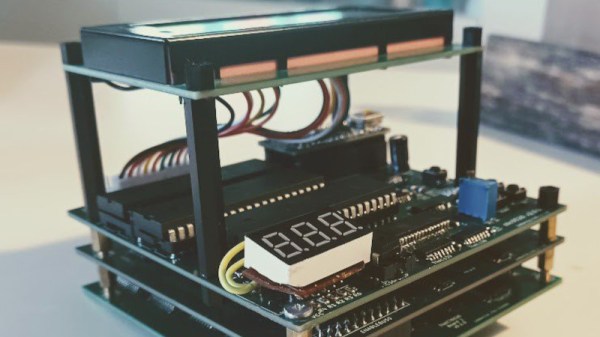
It’s always pleasing to see a project we covered in its early stages reach maturity, so were very happy to bring you an update on [Daniel Molina]’s 74HCT6526. It’s a long-running effort to produce in 74 logic a faithful replica of the MOS Technologies CIA, the integrated I/O and timer chip found in so many of the 1980s Commodore machines. When we first covered it there was only one PCB, now the project has grown to a stack of three, with the remaining functions intended to fit on two more boards.

It was very common at the time for chips such as the CIA to integrate a set of common 8-bit peripherals onto one piece of silicon, both in general purpose with almost all functions of the original now implemented. hips and in more manufacturer specific parts such as this one. A project like this one is valuable because it provides a dive into the now less-common  world of interfacing directly to a microprocessor data and address line. It’s unlikely that many Commodore 64s will end up with this stack of boards inside them, but it’s not impossible the design may help a few old machines when put on an FPGA.

Meanwhile, remember it’s not the only custom 1980s home computer chip replaced with 74 logic.
A Paste Extruder For Normal Printers

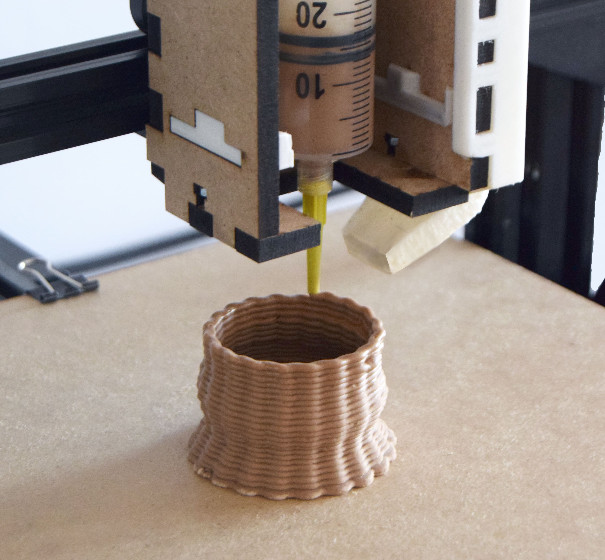
In the bright sunshine of a warm spring afternoon at Delft Maker Faire, were a row of 3D printers converted with paste extruders. They were the work of [Nedji Yusufova], and though while were being shown printing with biodegradable pastes made from waste materials, we were also interested in their potential to print using edible media.

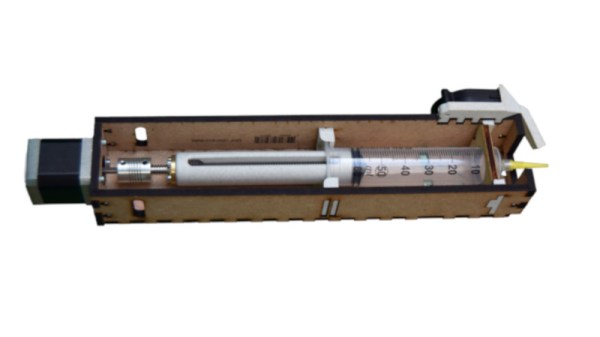
The extruder follows a path set by similar ones we’ve seen before in that it uses a disposable syringe at its heart, this time in a laser-cut ply enclosure and a lead screw driven by a stepper motor. It’s part of a kit suitable for run-of-the-mill FDM printers that’s available for sale if you have the extra cash, but happily they’ve also made all the files available.

We’ve seen quite a few syringe extruders and at least one food printer, so there’s nothing particularly new about this one. What it does give you is a relatively straightforward build and a ready integration with some mass market printers you might be familiar with. Perhaps the most interesting part of this project isn’t even the extruder itself but the materials, after all having a paste extruder gives you the opportunity to experiment with new recipes. We like it.

A Free TV With A Catch: New Normal Or Inevitable Hardware Bonanza?

The dystopian corporate dominated future may have taken a step closer, as a startup called Telly promises a free 55 inch 4K TV with a catch — a second screen beneath the main one that displays adverts. The viewers definitely aren’t the customers but the product, and will no doubt have every possible piece of data that can be harvested from them sold to the highest bidder. There’s even a microphone and camera pointed at the viewer, to complete the 1984 experience. In a sense it’s nothing new, as certain TV manufacturers have been trying to slip adverts into the interfaces on their paid-for smart TVs for years.

Oddly we’re not convinced though, that the eventual outcome of this will be as sinister as readers might expect. Indeed if the past is anything to go by, it could even herald an eventual bonanza of 4K screens for hardware hackers. To explain why, we have to travel back to the late 1990s, when free hardware for adverts startups were last tried. Back then there were a spate of companies using the same model of free or super-cheap hardware, and without exception they ran into the fundamental problem that people who rely on a free product in exchange for adverts aren’t generally high value consumers who can bring in the revenue to support buying a ton of consumer electronics. The “free” hardware from several of these startups then found its way onto the surplus market — or in the case of CueCat barcode scanners, directly into the hands of hardware hackers, and was repurposed for use in the way our community knows best.

So yes. Telly represents all that’s wrong for the privacy of viewers about the current media landscape. But who knows, it might just spawn a hacking scene all of its own. As a final note we think that they’ll have an interesting time protecting their brand name if they ever enter the British market, where “telly” has been slang for television ever since the technology entered the mainstream.

New DOS PCs, In 2023?

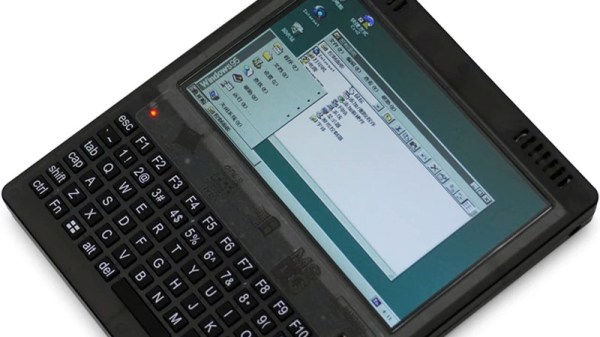
It’s not likely that we’ll talk about a new PC here at Hackaday because where’s the news in yet another commodity computer? But today along comes not one but two new PCs courtesy of the ever bounteous hall of wonders at AliExpress, that are unusual enough to take a look at. If you have around $250 to spare, you can have a brand new, made in 2023, 80386sx plamtop PC capable of running Windows 95, or an 8088 laptop for DOS. Just what on earth is going on?

Continue reading “New DOS PCs, In 2023?”

An Open-Source 4-Shaft Portable Loom

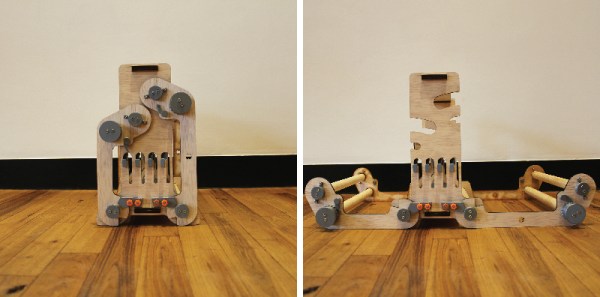
Part of writing for Hackaday involves doing the rounds of our community’s events in search of amazing projects for your delectation. This weekend it was a trip to Maker Faire Delft, thanks to the wonders of the European Interail scheme. Once on the site, [Aslı Aydın Aksan]’s 4-shaft weaving loom immediately caught our eye. This is an open-source portable folding loom design. In weaving terms, shafts are sliding vertical frames. As the name implies, this loom has four, which allow different sets of warp threads to be brought to the surface of the weave at different times. This feature makes it capable of weaving complex patterns in the fabric and thus makes it a very interesting project indeed.

The frame of the loom is laser-cut ply, cunningly designed such that when not in use it can be folded into a compact unit. The attachments are all 3D-printed PLA in the prototypes, the comb is laser-cut acrylic, and the heddles are 3D printed in a flexible material. These last components conceal a further trick, they’re designed to be extra-easy to move between shafts on the fly, allowing even more complex patterns to be created.

All in all this is one of those special projects that comes out of the blue and raises the bar on all in its class. If there’s another 4-shaft loom this accessible, we’ve yet to hear of it.

It’s not the first loom we’ve covered, however, this one wasn’t nearly as accomplished.

A Non-Destructive Digital Back For A Classic Leica

As digital photography has become so good, perhaps just too good, at capturing near-perfect pictures, some photographers have ventured back into the world of film. There they have found the imperfections requiring technical skill to cope with that they desire, but they’ve also come face-to-face with the very high cost and sometimes sketchy availability of film stocks. From this has come the so-called post-digital movement which marries analog cameras and lenses with digital sensors, and of this a particularly nice example comes from [

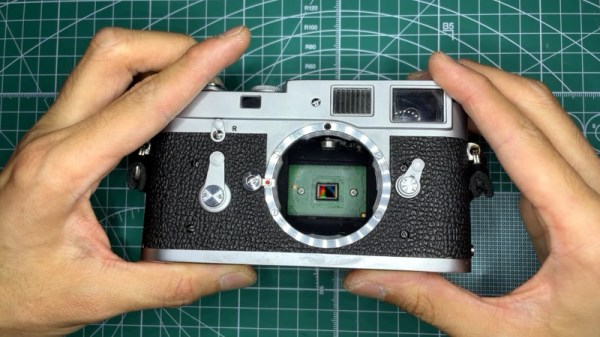
Perhaps the best thing about this conversion, and something which should propagate forward into other builds, is the way it does not hack or modify the original camera beyond the replacement of the already-removable back. A vintage Leica is a pricey item, so it would be a foolhardy hacker who would proceed to gut it for a digital conversion. Instead he’s mounted everything that makes a digital camera, the sensor, Pi Zero, and screen board, behind the camera body. The Pi shutter trigger comes from the Leica’s flash terminal, meaning that there’s plenty of time for it to take a photo while the shutter is open.

He’s admirably preserved the usage and properties of the Leica, and his photographs as can be seen in the video below the break bear testament to what is possible with the camera. He still has to work with the tiny sensor size though, meaning that all photographs are at a much higher zoom level than on the original. We would love to see a camera conversion like this one that incorporates appropriate lenses to bring the picture to focus on this small sensor.

We won’t own a Leica any time soon, but we like this conversion. It’s by far the most sympathetic, but it’s not the first rangefinder conversion we’ve seen.

Continue reading “A Non-Destructive Digital Back For A Classic Leica”

What Is A Schumann Resonance And Why Am I Being Offered A 7.83Hz Oscillator?

Something that probably unites many Hackaday readers is an idle pursuit of browsing AliExpress for new pieces of tech. Perhaps it’s something akin to social media doomscrolling without the induced anger, and it’s certainly entertaining to see some of the weird and wonderful products that can be had for a few dollars and a couple of weeks wait. Every now and then something pops up that deserves a second look, and it’s one of those that has caught my attention today. Why am I being offered planar PCB coils with some electronics, described as “Schumann resonators”? What on earth is Schumann resonance, anyway? Continue reading “What Is A Schumann Resonance And Why Am I Being Offered A 7.83Hz Oscillator?”