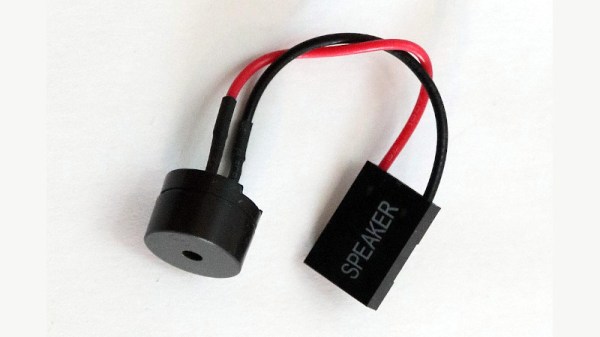
Every year in the month of June, someone by the unlikely name of [R.F. Burns] posts a question to the Linux Kernel Mailing List asking whether a Linux kernel module is possible that would blow the PC speaker. It’s fairly obviously a joke, which is why the UK-based anti-virus company Sophos have devoted a light-hearted blog post to it.
The post is an interesting diversion into early PC sounds, when the only hardware guaranteed to be present was a small speaker hooked up to a bit on an output port. The bit could be cycled for square wave beeps, or with a lot of clever manipulation could put out a low-bitrate PWM that delivered almost intelligible sounds including music and voice. They conclude that since the speaker would have been designed to be at the full amplitude of the 5-volt output bit all the time it should be impossible to blow it from software, and we’d be inclined to agree. There’s a remote possibility that some speakers might have a resonant frequency that could be found in software, but we’re not entirely convinced.
Your Hackaday scribe might have spent a while in a university computer lab back in the day trying and failing to write C code that would produce a usable PWM on an XT speaker, but those with long memories might recall the PC speaker driver for Windows 3.1. If you’re a fan of chiptune music there are even entire albums written for this most basic of instruments.
Header image: MKFI, Public domain.
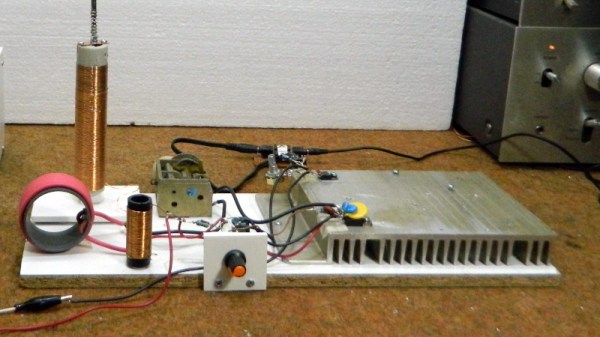
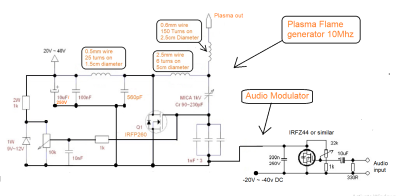 A look at the circuit diagram and construction will probably elicit the response from most of you that it looks a lot like a Tesla coil, and in fact that’s exactly what it is without the usual large capacitor “hat” on top. This arrangement has been used for commercial plasma tweeters using both tubes and semiconductors, and differs somewhat from the singing Tesla coils you may have seen giving live performances in that it’s designed to maintain a consistent small volume of discharge rather than a spectacular lightning show to thrill an audience.