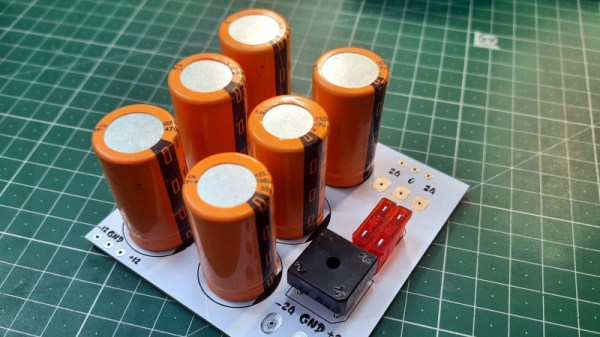
When reaching for a power supply design it’s normal here in 2022 to reach for a switching design. They’re lightweight, very efficient, and often available off-the-shelf at reasonable prices. Their benefits are such that it’s become surprisingly rare to see a traditional linear power supply with a mains-frequency transformer and rectifier circuit, so [ElectroBoy]’s dual voltage PSU board for audio amplifiers is worth a second look.
This type of linear power supply has an extremely simple circuit consisting of a transformer, bridge rectifier, and capacitors. The transformer isolates and steps down the AC voltage, the rectifier turns it into a rough DC, and the capacitors filter the DC to remove as much AC ripple as possible. In an audio power supply the capacitors have the dual role of filtering and providing an impulse reservoir for the supply in the event of a peak in demand imposed by the music being played. Careful selection is vital, with in this case a toroidal mains transformer and good quality capacitors being chosen.
The choice between a linear power supply such as this one and a switching design for high quality audio is by no means clear-cut, and may be something we’ll consider in our Know Audio series. The desirable properties are low noise and that impulse reservoir we mentioned, and it’s probably fair to say that while both types of power supply can satisfy them. With the extra expense of a toroidal transformer a linear supply is unlikely to be the cheaper of the two, but we suspect the balance tips in its favour due to a good linear supply being the easier to design.
When we go to the cinema and see a film in 2022, it’s very unlikely that what we’re seeing will in fact be a film. Instead of large reels of transparent film fed through a projector, we’ll be watching the output of a high-quality digital projector. The advantages for the cinema industry in terms of easier distribution and consistent quality are obvious. There was a period in the 1990s though when theatres still had film projectors, but digital technology was starting to edge in for the sound. [Nava Whiteford] has found some 35mm trailer film from the 1990s, and analysed the Dolby Digital sound information from it.
The film is an interesting exercise in backward compatibility, with every part of it outside the picture used to encode information. There is the analogue sound track and two digital formats, but what we’re interested in are the Dolby Digital packets. These are encoded as patterns superficially similar to a QR code in the space between the sprocket holes.
Looking at the patent he found that they were using Reed-Solomon error correction, making it relatively easy to decode. The patent makes for fascinating reading, as it details how the data was read using early-1990s technology with each line being scanned by a linear CCD, before detailing the signal processing steps followed to retrieve the audio data. If you remember your first experience of Dolby cinema sound three decades ago, now you know how the system worked.
The film featured also had an analogue soundtrack, and if you’d like to know how they worked, we’ve got you covered!
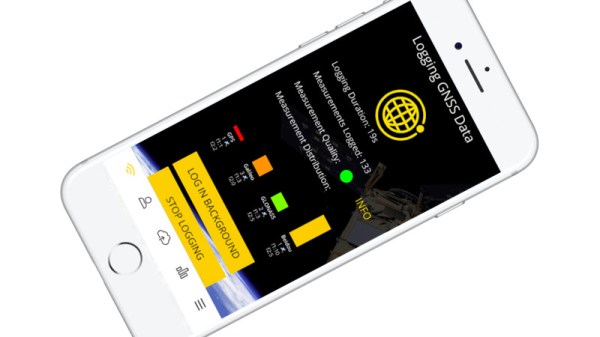
Above our heads, the atmosphere is a complex and unpredictable soup of gasses and charged particles subject to the influence of whatever the Sun throws at it. Attempting to understand it is not for the faint-hearted, so it has for centuries been the object of considerable research. A new project from the European Space Agency and ETH Zurich gives the general public the chance to participate in that research in a small way, by crowdsourcing atmospheric data gathering to a mobile phone app. How might a mobile phone observe the atmosphere? The answer lies in their global positioning receivers, which can track minute differences in the received signals caused by atmospheric conditions. By gathering as much of this data as possible, the ESA scientists will gain valuable insights into atmospheric conditions as they change across the globe.
The app requires an Android phone equipped with a dual frequency satnav receiver, and having been duly installed on the trusty Hackaday Motorola it in turn started picking up all the different constellations of satellites. The instructions are to leave it somewhere such as a windowsill with an unobstructed view of the sky and move it as little as possible, to which we’d add clicking the “Log in background” button and connectign a charger. There’s a promise that uploaders can win prizes, so aside from contributing to scientific discovery there might be an unexpected benefit. More details on the app can be found here, meanwhile many readers will know that this isn’t the only crowdsourced atmospheric data gathering effort.
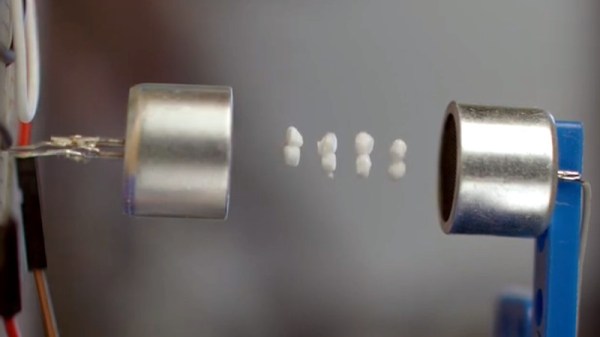
Ultrasonic levitation — the practice of creating a standing wave between two ultrasonic sources and positioning lightweight objects such that they can float in the pressure minimums between them — has been a source of fascination to more than one experimenter. [Peter Lin] demonstrated this in the video below the break, by creating an ultrasonic levitation system using only the trusted chip of all true experimenters, the NE555. (Video, embedded below.)
The circuit is simplicity itself, just an astable of the type that has made a billion beepers and flashing LEDs. It drives two ultrasonic transducers in parallel, and with them pointing towards each other and a bit of gap adjustment work it can successfully levitate pieces of polystyrene. There was some work in adjusting the frequency to the transducer resonance, but that’s not a huge challenge given the right instrumentation. We can see that it would make a great demonstration of standing waves, and also a fantastic desk toy for not a lot.
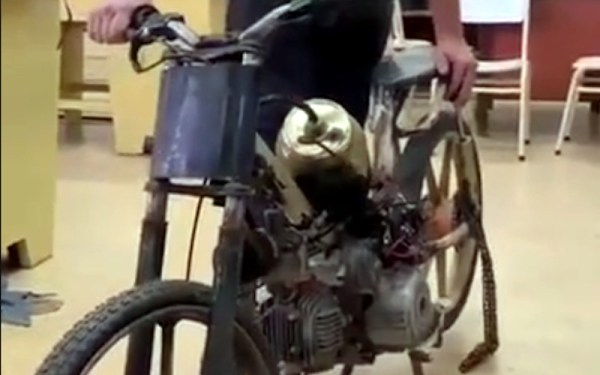
Doing the rounds among motorcycle enthusiasts for the last week has been a slightly unusual machine variously portrayed as running on water or sea water. This sounds like the stuff of the so-called “Free energy” fringe and definitely not the normal Hackaday fare, but it comes alongside pictures of a smiling teenager and what looks enough like a real motorcycle to have something behind it. So what’s going on? The answer is that it’s the student project of an Argentinian teenager [Santiago Herrera], and while it’s stretching it a bit to say it runs on sea water he’s certainly made a conventional motorcycle run on the oxygen-hydrogen mix produced from the electrolysis of water. The TikTok videos are in Spanish, but even for non-speakers it should be pretty clear what’s going on.
It’s obvious that the bike is more of a student demonstrator than a road machine, as we’re not so sure a glass jar is the safest of receptacles. But the interesting part for us lies not in the electrolysis but in the engine. it appears to be a fairly standard looking motorcycle engine, a typical small horizontal single. It’s running on a stoichiometric mix of oxygen and hydrogen, something that packs plenty of punch over a similar mix using air rather than oxygen. It would be fascinating to know the effect of this mixture on an engine designed for regular gasoline, for example does it achieve complete combustion, does it burn hotter than normal fuel, and does it put more stress on the engine parts?
As the world begins to slowly pull itself out of the economic effects of the pandemic, there’s one story that has been on our minds for the past couple of years, and it’s probably on yours too. The chip shortage born during those first months of the pandemic has remained with us despite the best efforts of the industry. Last year, pundits were predicting a return to normality in 2022, but will unexpected threats to production such as the war in Ukraine keep us chasing supplies? It’s time to delve into the root of the issue and get to the bottom of it for a Hackaday report.
The Chips Are Down
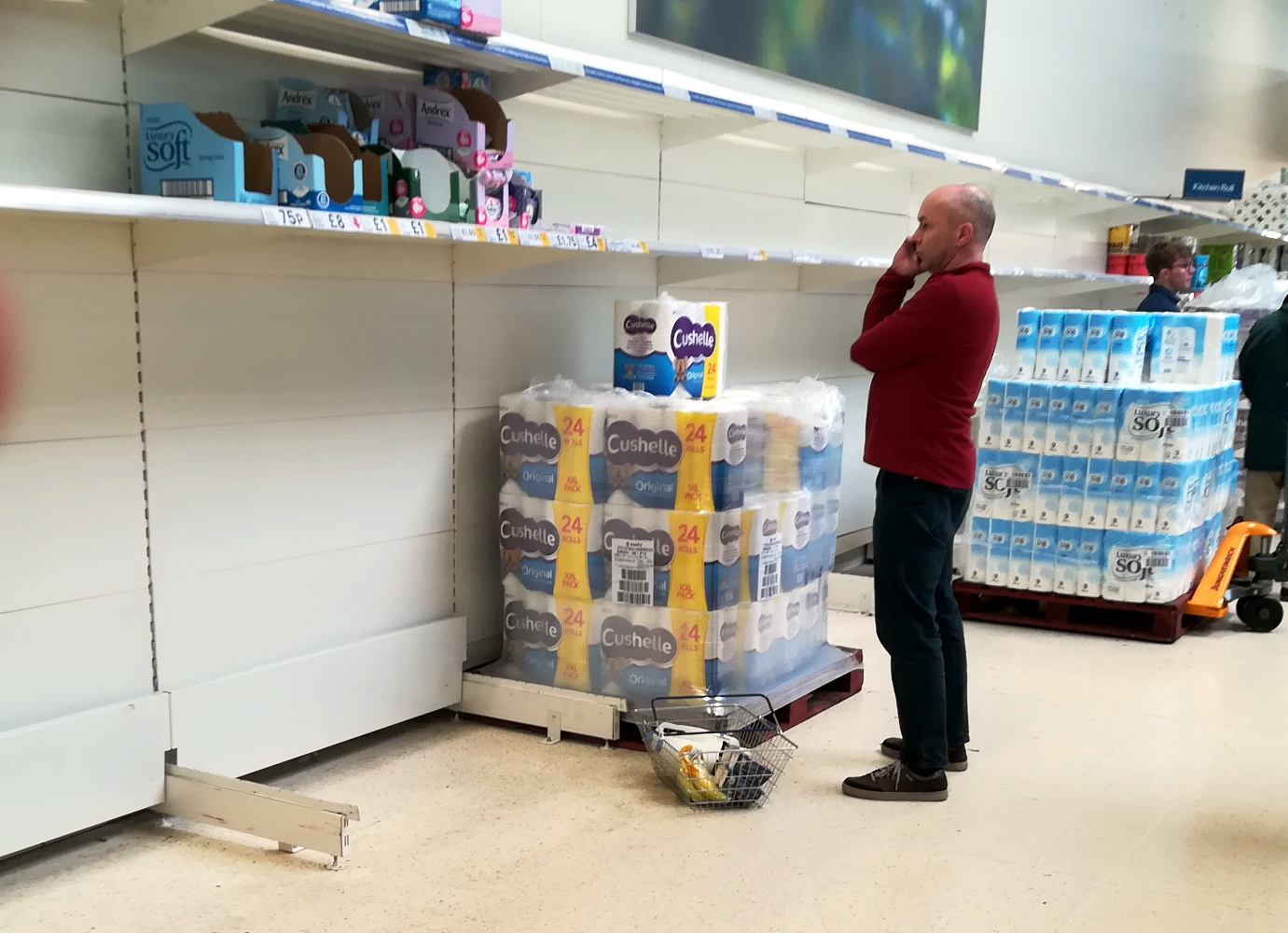
Consumers were more interested in toilet paper than chip supply during the lockdown.
Going back to 2020, and as global economies abruptly slowed down in the face of stringent lockdowns it’s clear that both chipmakers and their customers hugely underestimated the effect that the pandemic would have on global demand for chips.
As production capacity was reduced or turned to other products in response to the changed conditions, it was soon obvious that the customers’ hunger for chips had not abated, resulting in a shortfall between supply and demand.
We’ve all experienced the chaos that ensued as the supply of popular varieties dried up almost overnight, and as fresh pandemic waves have broken around the world along with a crop of climate and geopolitical uncertainties it’s left many wondering whether the chip situation will ever be the same again.
Green Shoots In Idaho
Idaho leads the way in a chip shortage recovery! inkknife_2000, CC BY-SA 2.0
Amidst all that gloom, there are some encouraging green shoots to be seen. While it’s perhaps not quite time to celebrate, there’s a possibility for some cautious optimism. This month brought the hope that Potato Semiconductor might be cutting the sod on a new production capacity for their ultra-fast digital logic in Idaho, and with other manufacturers following suit it could be that we’ll once again have all the chip capacity we can eat.
But the other side of the chip business coin lies with the customer: we all see the chip shortage from our own semi-insider perspective, but have the tastes of the general public returned towards chips? Early signs are that as consumer confidence returns there are encouraging trends in chip consumption taking root, so we’d be inclined to advise our readers to have cautious optimism. If all goes well, you’ll be having your chips by summer.
The prospects for a new dawn in chip production capacity in 2022 look rosy, but there’s a further snag on the horizon courtesy of the Russian invasion of Ukraine. Like so many industries in a globalised economy, the chip industry depends heavily on supplies, consumables, and machinery from beyond the borders of wherever the plants themselves may lie.
In the case of Ukraine there’s a particular raw material whose supply has been severely interrupted, and though we hope for a speedy resolution of the conflict and a consequent resumption of production, the knock-on effect on the production of chips in the rest of the world can not be underestimated. Despite the ramp-up in output led by Idaho, the production of chips globally still relies heavily on Ukrainian sunflower oil. There’s a possibility that an acceptable substitute might be found in canola oil, but it will remain to be seen whether the chip-eating consumers will notice the taste difference.
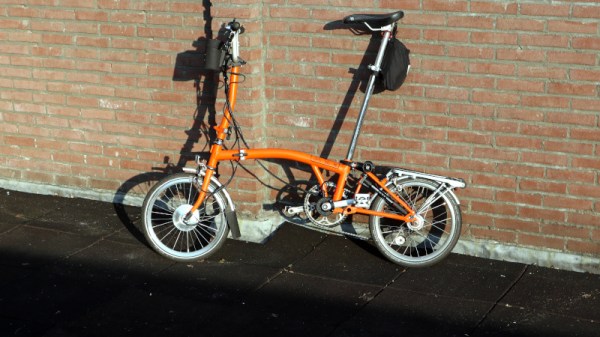
A decade ago I was lucky enough to work for an employer that offered a bicycle loan scheme to its employees, and I took the opportunity to spend on a Brompton folding bike. This London-made machine is probably one of the more efficiently folding cycles on the market, and has the useful feature of being practical for longer journeys rather than just a quick run from the train. A 3-speed hub gearbox is fine for unhurried touring, but sadly my little folder has always been a bit of a pain on the hills. Thus around the start of the pandemic I splashed out again and bought a Swytch electric upgrade kit for it, and after a few logistical and life upheavals I’ve finally fitted it to the bike. I’ve ridden a few electric bikes but never had my own, so it’s time to sit down and analyse the experience. Is an electric bike something you should have, or not?
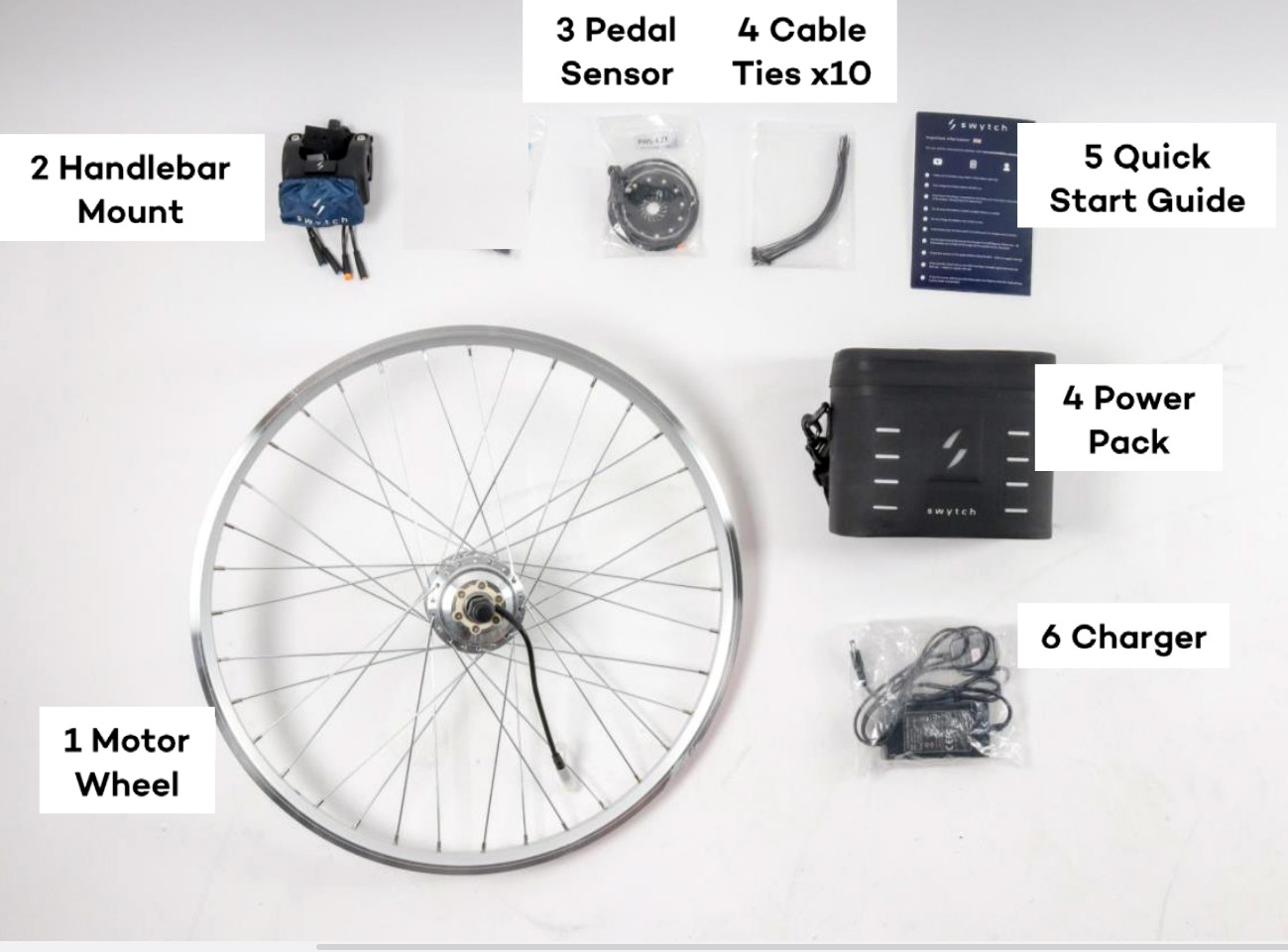
Swytch sell their kits via crowdfunding rounds, so I’d been on a waiting list for a while and got an early-bird price on my kit. It took quite a while to arrive, much longer than the expected time in mid-2020 because of the pandemic, finally being delivered some time in February last year. It came in a modestly-sized cardboard carton which would be an easy carry on the Brompton’s luggage rack, containing neatly packed a new front wheel with motor, as well as the battery and all sundry parts.
Fitting the kit shouldn’t stretch the capabilities of a Hackaday reader, with probably the trickiest part being the positioning of a Hall-effect sensor near the crank. The kit works by providing a motor assist when you pedal, so part of it is a set of magnets on a plastic disk with various attachments for different cranks and pedal sets. The Brompton front wheel is removed and its tyre and tube transferred to the Swytch one, which is then put on the bike. Once the magnet disk and Hall sensor are attached, the cables follow the existing ones and emerge at the handlebars where a sturdy bracket for the battery box is fitted. Continue reading “Converting Your Bike To Electric: Why You Should, And When You Shouldn’t”→