Double The RAM Of A Dreamcast Console For A Cool 32 MB

The Sega Dreamcast is the forgotten orphan of the console wars, an extremely capable machine never able to escape the shadow of its PlayStation rivals and because it marked the end of Sega’s console line, never redeemed in reputation by a more popular successor. It retains a significant following a couple of decades after its heyday though, and still sees hardware hacks such as [Tsowell]’s doubling of its available RAM to 32 MB.

The console shipped with 16 MB of memory in two banks, but while the SH4 processor can address twice that figure the designers at Sega never brought the required address line out from under the BGA. So it should be impossible to give it a memory expansion, but when hardware hackers are at work nothing should be ruled out. The hack involves manipulation of the bank switching addressing, and took several careful readings for us to fully understand. The new RAM chips have two address lines tied together and wired to another, a job for some fine but ultimately not impossible soldering. To take advantage of the extra RAM there are a set of patched BIOS images.

So, if you either have a spare Dreamcast you care little enough about to risk, or you consider your console hacking skills to be so advanced that it will be a piece of cake, you can now double the platform’s RAM. Extra points if you also make it portable.

Thanks [John Little] for the tip.

Header: Evan-Amos / CC BY-SA 3.0

Ask Hackaday: Is Our Power Grid Smart Enough To Know When There’s No Power?

Just to intensify the feeling of impending zombie apocalypse of the COVID-19 lockdown in the British countryside where I live, we had a power cut. It’s not an uncommon occurrence here at the end of a long rural power distribution network, and being prepared for a power outage is something I wrote about a few years ago. But this one was a bit larger than normal and took out much more than just our village. I feel very sorry for whichever farmer in another village managed to collide with an 11kV distribution pole.

What pops to mind for today’s article is the topic of outage monitoring. When plunged into darkness we all wonder if the power company knows about it. The most common reaction must be: “of course the power company knows the power is out, they’re the ones making it!”. But this can’t be the case as for decades, public service announcements have urge us to report power cuts right away.

In our very modern age, will the grid become smart enough to know when, and perhaps more importantly where, there are power cuts? Let’s check some background before throwing the question to you in the comments below.

Continue reading “Ask Hackaday: Is Our Power Grid Smart Enough To Know When There’s No Power?”

Vulkan For The Older Raspberry Pi

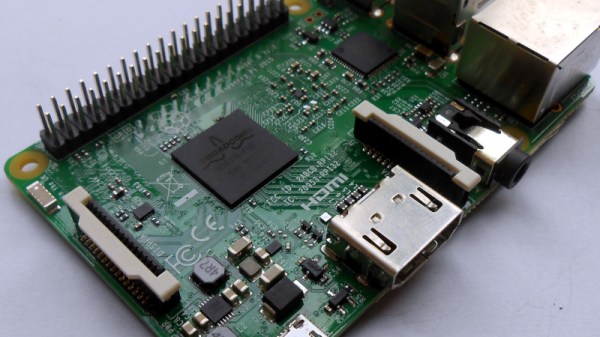
You’d be forgiven for thinking that the newer Raspberry Pi 4 gets all the love. For instance, the Raspberry Pi Foundation is working on drivers for the GPU to  support the Vulkan 3D graphics API.

But those of you with crusty old Pi boards shouldn’t despair. [Martin Thomas], a  developer working for Nvidia has produced a driver in his spare time that brings Vulkan to the Broadcom VideoCore IV. He’s hailed it as the first low-level driver for this GPU, and shown it running Quake III on a Pi 3.

Technically it’s not officially Vulkan as it doesn’t have all the required standards conformance, but it’s as near as possible given the limitations of the hardware. Full instructions for building the driver and for installing the Vulkan loader are given in the repository, so it should be possible for tinkerers to have a try. This is likely to be of most interest to gamers as many game engines support Vulkan.

The Pi 4 might be about to take the family further in a 64-bit direction, but this proves that there’s life in the old dogs yet.

Just How Do Aircraft Transponders Work Anyway?

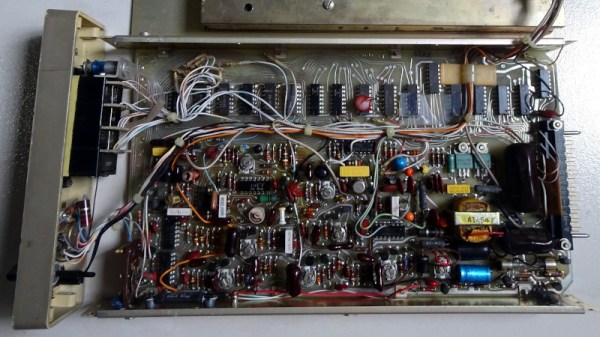
Most of us will have a hazy idea of how radar works to detect aircraft by listening for reflected radio waves. And we’ll probably also know that while radar can detect aircraft, it’s not the most efficient or useful tool in the hands of an air traffic controller. Aircraft carry transponders so that those on the ground can have a clearer picture of the skies, as each one reports its identity, altitude, and position. [Yeo Kheng Meng] was lucky enough to secure a non-functioning aircraft transponder and do a teardown, and his write-up makes for interesting reading as he explains their operation before diving into the hardware.

The 1978 and 1979 date codes on the various integrated circuits and transistors identify it as having been made in 1979, so not having a CPU is not entirely unsurprising given its age. Instead this is a straightforward device that responds to pulse lengths of different timings with sequential bursts of data.

[Yeo Kheng] is mystified by the RF strip and associated components, which look to us like a typical crystal oscillator and frequency multiplier strip from that era, along with some screened boxes that probably contain cavity filters and given that there is also a high voltage power supply present, a tube RF power amplifier. GHz-capable semiconductors were quite exotic in the 1970s, while high-frequency tubes had by then a long history.

It’s evident that the tech behind aircraft transponders has moved on since this unit was built, but one thing’s certain. Hackers in 1978 would have had to go to a lot of work to listen to them and interpret the results, while here in the 21st century it’s something we do routinely.

Help Thrust Open Source Satellites To The Next Level

To place a satellite in orbit satisfactorily it is necessary not only to hitch a ride on a rocket, but also to put it in the right orbit for its task, and once it is there, to keep it there. With billions of dollars or roubles of investment over six decades of engineering behind them the national space agencies and commercial satellite builders solved these problems long since, but replicating those successes for open source microsatellites still represents a significant engineering challenge. One person working in this field is [Michael Bretti], who is doing sterling work with a shoestring budget on open source electric thrusters for the smallest of satellites, and he needs your help in crowdfunding a piece of equipment.

Beware suspiciously cheap eBay vacuum pumps!

As part of his testing he has a vacuum chamber, and when he places a thruster inside it he has to create a space-grade vacuum . This is no easy task, and to achieve it he has two pumps. The first of these, a roughing pump, is a clapped-out example that has clearly reached the end of its days, and it is this that he needs your help to replace. His GoFundMe page has a modest target of only $4,200 which should be well within the capabilities of our community in reaching, and in supporting it you will help the much wider small satellite community produce craft that will keep giving us interesting things from space for years to come.

We’ve mentioned his work before here at Hackaday, and we hope that in time we’ll have a chance to look in more detail at his thrusters. Meanwhile you can follow along on Twitter.

Thanks [Bruce Perens K6BP] for the tip.

Chasing A Long-Obsolete Tube

Regular readers will know that here at Hackaday we have a penchant for poking fun at the more silly end of the audiophile world, with its dubious accessories and purple prose. It’s worth remembering though that this is not representative of the whole discipline of audio design, indeed the quest for perfect audio reproduction contains plenty of complex engineering problems.

We’re indebted to [macsimski] then for sending us a link to a page from Phaedrus Audio from a year or two ago, in which they discuss the history of an unusual pentode tube used as an impedance converter in a series of legendary post-war microphones. It’s unlikely that you’ll have a Neumann U47 or U48 broadcast microphone on your bench, but even so the story behind their design is one that should fascinate anyone.

It takes us back to the period immediately following the Second World War, when German electricity supplies were varied and unreliable, and radio receivers designed for them required new tubes from the manufacturers. Among these was the VF14, with an unusual high-voltage heater designed such that two of them could be connected in series across the supply. This and its compact shape prompted its selection for the professional microphones, even though its performance was so poor that only  a third of the production passed the performance test.

Since it passed out of production in the early 1950s the remaining components are extremely rare, and the majority of those surviving do not meet the performance characteristics of the microphone. The Phaedrus write-up goes into significant technical detail which should be of note to anyone with an interest in tubes, and ends up with their reason for it all, a plug-in hardware simulation of the original tube’s properties. Vintage capacitor microphones may be out of the ordinary for Hackaday, but it’s still a good read.

For a bit more on capacitor microphones it’s worth a look at our dive into electrets.

Header image: JacoTen / CC BY-SA 3.0

Key That Morse With Little More Than Your Laptop

If you look at the computer in front of you, it will have an array of input devices. A keyboard and mouse, a touch screen, maybe a microphone, or even a gamepad. Each of them will have its moment to shine, and you’ll probably have put some effort into their selection. But when it comes to a computer, almost anything connected to it can be an input device in some form, as long as it provides some form of machine readable parameter.

Consider your laptop: it knows when its lid is closed such that it can put itself to sleep. Even that can be used as an input device with a little ingenuity, as [veggiedefender] has done with “open and shut“, a Morse keyer using opening and closing the laptop lid as its key.

The software for GNU/Linux distributions is a surprisingly accessible set of shell scripts that attach themselves to ACPI events surrounding the lid switch. In use it seems a little cumbersome, but we suspect its real value is not in repeatedly slammin the lid to produce Morse text input. Instead with many lid switches being magnetic reed switches an operator could simply wear a ring with a magnet and tap out their text every bit as quickly as they could using a traditional key.

We like the idea, and could see it being popular among radio amateurs. It’s a theme we’ve visited before with a more traditional key, and if you’d love to try but don’t know any Morse then perhaps this may help you learn.

Thanks [Kickaxe] for the tip.

Header image: Raimond Spekking / CC BY-SA 4.0.