How Germany’s Troubled Pebble Bed Reactor Came Of Age In China

Although the concept of nuclear fission is a simple and straightforward one, the many choices for fuel types, fuel design, reactor configurations, coolant types, neutron moderator or reflector types, etc. make that nuclear fission reactors have blossomed into a wide range of reactor designs, each with their own advantages and disadvantages. The story of the pebble bed reactor (PBR) is among the most interesting here, with its development winding its way from the US Manhattan Project over the Atlantic to Germany’s nuclear power industry during the 1960s, before finding a welcoming home in China’s rapidly growing nuclear power industry.

As a reactor design, PBRs do not use fuel rods like most other nuclear reactors, but rather spherical fuel elements (‘pebbles’) that are inserted at the top of the reactor vessel and extracted at the bottom, allowing for continuous refueling, while helium acts as coolant. With a strong negative temperature coefficient, the design should be extremely safe, while providing high-temperature steam that can be used for applications that otherwise require a coal boiler or gas turbine.

With China recently having put its twin-PBR HTR-PM plant into commercial operation, why is it that it was not the US, Germany or South Africa to first commercialize PBRs, but relative newcomer China?

Continue reading “How Germany’s Troubled Pebble Bed Reactor Came Of Age In China”

5Ghoul: The 14 Shambling 5G Flaws Used For Disruptive Attacks On Smartphones

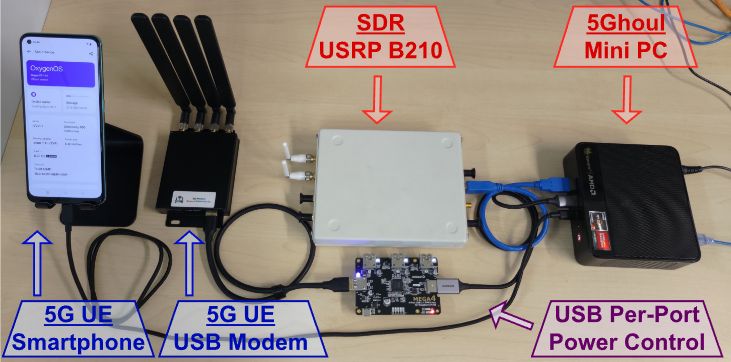
A team of researchers from the ASSET Research Group in Singapore have published the details of a collection of vulnerabilities in the fifth generation mobile communication system (5G) used with smartphones and many other devices. These fourteen vulnerabilities are detailed in this paper and a PoC detailing an attack using a software defined radio (SDR) is provided on GitHub. The core of the PoC attack involves creating a malicious 5G base station (gNB), which nearby 5G modems will seek to communicate with, only for these vulnerabilities to be exploited, to the point where a hard reset (e.g. removal of SIM card) of the affected device may be required.

Hardware Setup for 5Ghoul PoC testing and fuzzer evaluation. (Credit: Matheus E. Garbelini et al., 2023)

Another attack mode seeks to downgrade the target device’s wireless connection, effectively denying the connection to a 5G network and forcing them to connect to an alternative network (2G, 3G, 4G, etc.). Based on the affected 5G modems, the researchers estimate that about 714 smartphone models are at risk of these attacks. Naturally, not just smartphones use these 5G modem chipsets, but also various wireless routers, IoT devices, IP cameras and so on, all of which require the software these modems to be patched.

Most of the vulnerabilities concern the radio resource control (RCC) procedure, caused by flaws in the modem firmware. Android smartphones (where supported) should receive patches for 5Ghoul later this month, but when iPhone devices get patched is still unknown.

Voyager 1 In Trouble As Engineers Scramble To Debug Issue With Flight Data System

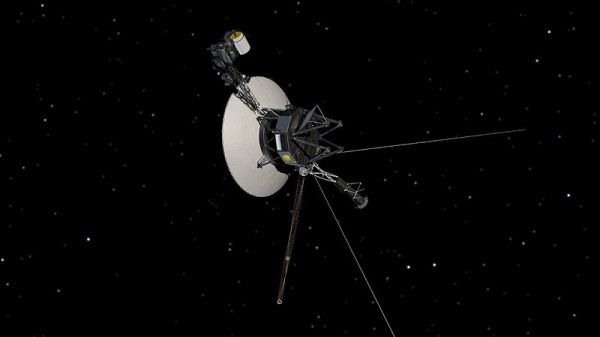
Recently the team at JPL responsible for communication with the Voyager 1 spacecraft noticed an issue with the data it was returning from the Flight Data System (FDS). Although normally the FDS is supposed to communicate with the other subsystems via the telecommunications unit (TMU), this process seems to have broken down, resulting in no payloads from the scientific instruments or engineering sensors being returned any more, just repeating binary patterns. So far the cause of this breakdown is unknown, and JPL engineers are working through potential causes and fixes.

This situation is not unlike a similar situation on Voyager 2 back in 2010 when the returned data showed a data pattern shift. Here resetting the memory of the FDS resolved the garbled data issue and the engineers could breathe a sigh of relief. This time the fix does not appear so straightforward, as a reset of the FDS on Voyager 1 did not resolve the issue with, forcing the team to consider other causes. What massively complicates the debugging is that each transmission to and from the spacecraft takes approximately 22.5 hours each way, making for an agonizing 45 hour wait to receive the outcome of a command.

We wish the JPL engineers involved all the luck in the world and keep our collective appendages crossed for Voyager 1.

Make Carbon Fiber Tubes With An Open Source Filament Winder

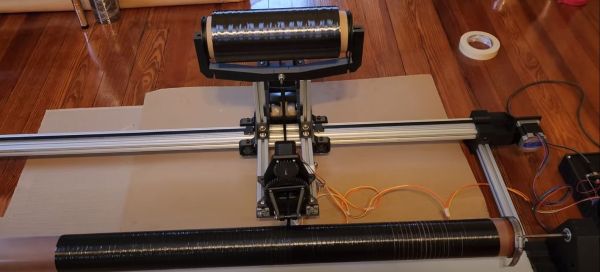
Result of winding a carbon fiber tube. (Credit: Andrew Reilley)

Carbon fiber (CF) is an amazing material that provides a lot of strength for very little weight, making it very useful for a lot of applications, ranging from rods in CoreXY 3D printers to model- and full-sized rockets. The model rocketry hobby is the reason why [Andrew Reilley] developed his own CF tube winding machine called Contraption. A tutorial video (also embedded below) shows how this machine is prepped for a winding run, followed by the winding progress and finalizing before admiring the result.

The entire machine’s design with 3D printed parts and off-the-shelf components is open source, as is the TypeScript and NodeJS-based Cyclone software that creates the toolpath specifying the parameters of the tube, including number of layers and the tow angle.

As a wet winding tow machine, the carbon fiber strands are led through the liquid resin before being wound onto the prepared mandrel. During winding some excess resin may have to be removed, and after the winding has been finished the tube is wound with shrink tape. This is followed by a heat gun session to shrink the tape and letting the resin cure. Following curing, the tape and mandrel are removed, resulting in a rather fancy looking CF tube that can find a loving home in a lot of applications, except perhaps ones that involving crushing outside pressures like those found deep below the ocean surface.

Continue reading “Make Carbon Fiber Tubes With An Open Source Filament Winder”

Qantas Flight 32: When A Few Millimeters Of Metal Invite Disaster

A common saying is that every disaster is caused by a chain of events, some of which can stretch back by years. Airplane disasters and near-disasters are no exception here, with all too often a small mechanical issue worsening until suddenly everything goes south. In the best case the flight crew is still able to work through the problems and figure out a way to put the aircraft down on firm soil in a single piece. This was the situation that the crew of Qantas Flight 32 (QF32) found themselves forced to deal with, as detailed in a recent article by [Kyra Dempsey], aka [Admiral Cloudberg].

When QF32 started its flight from London Heathrow in early November of 2010, everything seemed normal, but a mere four minutes after take-off from a layover at Singapore on its way to its final destination of Sydney, the #2 engine on the left wing of the Airbus A380 essentially exploded, launching shrapnel through the wing and fuselage. Although the A380 has four engines (numbered 1-4 from the left wing tip) and normally a single engine failure is not a major deal, the loss of systems that got destroyed in the explosion left the crew scrambling to diagnose the damage and implement a solution.

Continue reading “Qantas Flight 32: When A Few Millimeters Of Metal Invite Disaster”

The Sol-1: A 16-bit Computer In 74HC Logic With C Compiler And Unix-like OS

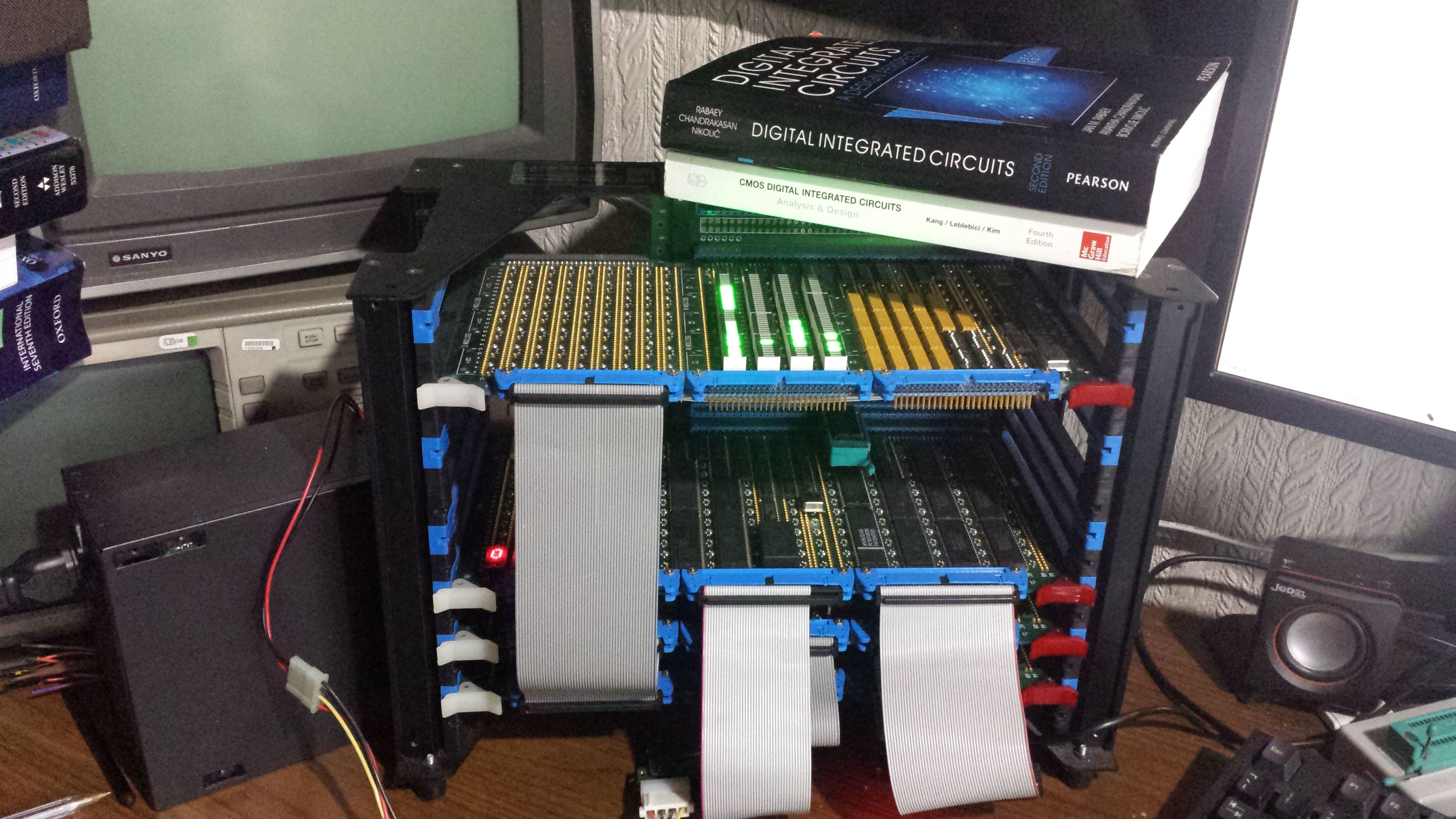
Sol-1 system pictured from the front. {Credit: Paulo Constantino)

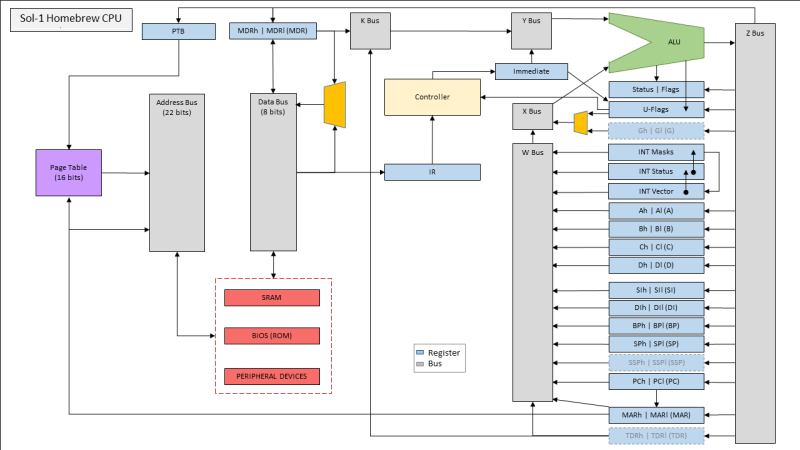
While the concept of a computer system implemented in discrete logic ICs is by itself not among the most original ideas, the way some machines are executed certainly makes them stick out. This is the case with [Paulo Constantino]’s Sol-1, which not only looks extremely professional, but also comes with a lot of amenities that allow for system development, including a C compiler and assembler, a Unix-like OS (in development), DMA, and a whole host of interfaces to interact with the system and peripherals (serial, parallel, IDE, etc.). Not to mention a SystemVerilog model and an emulator, all of which can be found on [Paulo]’s GitHub.

More photos and videos can be found on [Paulo]’s YouTube channel, as well as the Sol-1 website, which shows off the intricate wire wrap work on the back of each PCB. In terms of the ISA, there are 5 general purpose registers (one scratch) which can also be used as two 8-bit registers each. Most operations are supported, except for floating point. For future improvements and additions, Sol-1’s OS will get more features added, and the first major software to be ported to the Sol-1 should be Colossal Cave Adventure and similar text-based adventure (dungeon) games.

Impact Of Imperfect Timekeeping On Quantum Control And Computing

In classical control theory, both open-loop and closed-loop control systems are commonly used. These systems are well understood and rather straightforward, controlling everything from washing machines to industrial equipment to the classical computing devices that make today’s society work. When trying to transfer this knowledge to the world of quantum control theory, however, many issues arise. The most pertinent ones involve closed-loop quantum control and the clocking of quantum computations. With physical limitations on the accuracy and resolution of clocks, this would set hard limits on the accuracy and speed of quantum computing.

The entire argument is covered in two letters to Physical Review Letters, by Florian Meier et al. titled Fundamental Accuracy-Resolution Trade-Off for Timekeeping Devices (Arxiv preprint), and by Jake Xuereb et al. titled Impact of Imperfect Timekeeping on Quantum Control (Arxiv preprint). The simple version is that by simply increasing the clock rate, accuracy suffers, with dephasing and other issues becoming more frequent.

Solving the riddle of closed-loop quantum control theory is a hard one, as noted by Daoyi Dong and Ian R Peterson in 2011. In their paper titled Quantum control theory and applications: A survey, the most fundamental problem with such a closed-loop quantum control system lies with aspects such as the uncertainty principle, which limits the accuracy with which properties of the system can be known.

In this regard, an accurately clocked open-loop system could work better, except that here we run into other fundamental issues. Even though this shouldn’t phase us, as with time solutions may be found to the timekeeping and other issues, it’s nonetheless part of the uncertainties that keep causing waves in quantum physics.

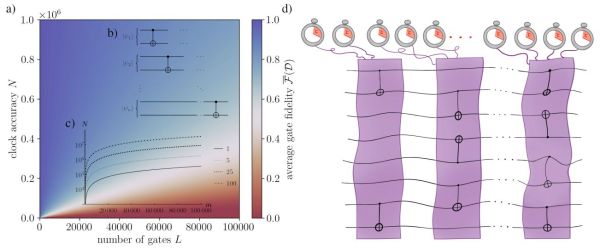
Top image: Impact of timekeeping error on quantum gate fidelity & independent clock dephasing (Xuereb et al., 2023)