Metamaterial Enables Topological Pumping Of Elastic Surface Waves

Although it is generally assumed that surface elastic waves (vibrations) — such as those of earthquakes — will travel mostly unimpeded until their energy dissipates, there are ways to ‘steer’ this energy using metamaterials.
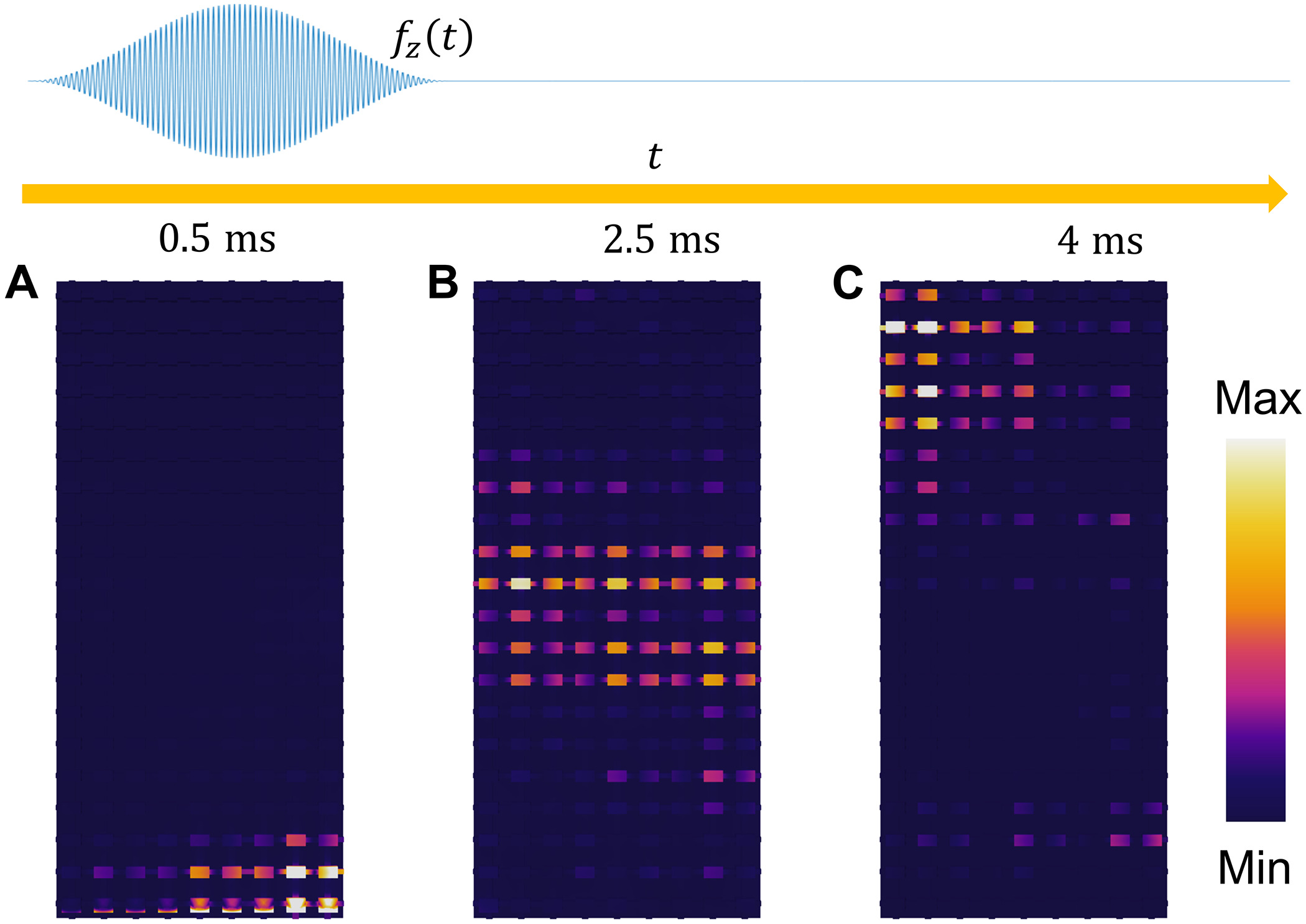
Time response of the topological surface wave transport.(A to C). The magnitude of total displacement field at 0.5 ms, 2.5 ms, and 4 ms, respectively. A 50-cycle tone burst signal centered at 41.88 kHz is simulated on the bottom supercell. (Wang et al., 2023)
Time response of the topological surface wave transport.
(A to C). The magnitude of total displacement field at 0.5 ms, 2.5 ms, and 4 ms, respectively. A 50-cycle tone burst signal centered at 41.88 kHz is simulated on the bottom supercell. (Wang et al., 2023)

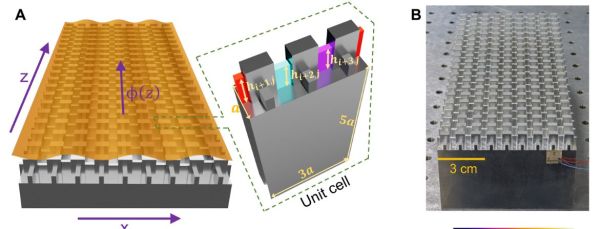
A recent study by [Shaoyun Wang] and colleagues in Science Advances details how a carefully modelled grouping of columns creates what is termed a synthetic dimension. In their experimental setup, it is demonstrated how an applied wave is guided across the metamaterial, rather than spreading out the way which we would expect to see in conventional materials.

Interestingly, in the paper it is also demonstrated how the same technique can be used to create a wave-splitter that diverts the wave energy in two distinct directions. Due to the innate resistance of this type of structure to defects, manufacturing it is not too complicated.

In this experiment the metamaterials were milled out of a block of aluminium on a CNC mill, which makes it seem eminently realistic that it could be scaled up and translated to other applications. Conceivably annoyances like vibrations from road traffic and heavy machinery, all the way up to the destructive energies of earthquakes could one day be reduced, redirected or even extinguished using structures as demonstrated here.
Femtosecond Laser Clones Itself In Glass

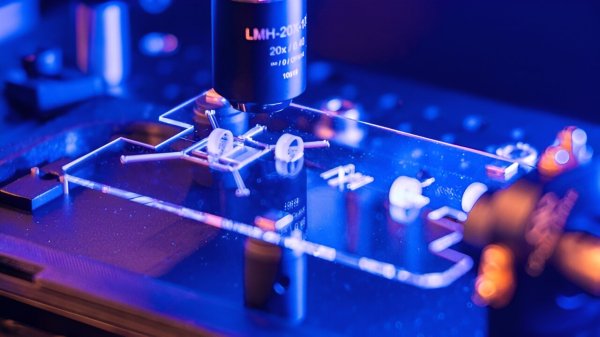
When researchers at the Galatea laboratory in Switzerland set out to create a femtosecond laser in glass they weren’t certain it was going to work. To be precise, their goal was to create a femtosecond laser cavity using carefully aligned optics. Rather than using the traditional, discrete method, they used a commercial femtosecond laser to carve out the elements of the optical cavity in glass. The choice for glass came down to the low thermal expansion of this material, and it being transparent for the optical frequencies being targeted.

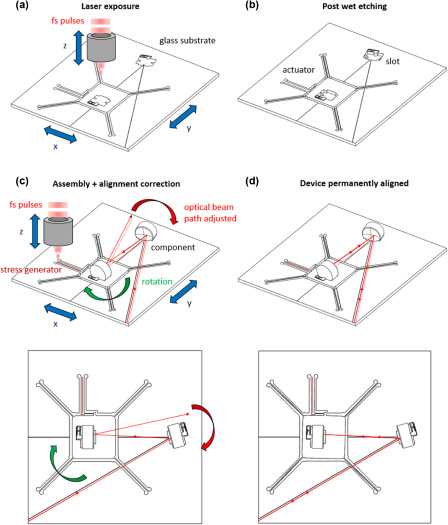
Generic concept of an “all-glass” optical device, with the various stages of fabrication. (Credit: Antoine Delgoffe et al., 2023)

Even after using the existing laser to create the rough laser cavity, the resulting optical mirrors were not aligned properly, but this was all part of the plan.

By also adding slots that created a flexure mechanism, brief laser pulses could be used to gradually adjust the mirrors to create the perfect alignment. During subsequent testing of the newly created laser cavity it was found to be operating as expected. The original femtosecond laser had successfully created a new femtosecond laser.

Perhaps the most tantalizing aspect of this research is that this could enable much faster and ultimately cheaper production of such laser systems, especially once the tedious and currently completely manual mirror alignment procedure is automated. In addition, it raises the prospect of producing other types of optics including splitters and guides in a similar manner.

The Path To Profiling Extraterrestrial Atmospheres With Astrophotonics

A major part of finding extraterrestrial life is to be able to profile the atmosphere of any planets outside of our solar system. This is not an easy task, as these planets are usually found through the slight darkening of their star as they pass in front of it (transition). Although spectroscopy is the ideal way to profile the chemical composure of such a planet, having a massive, extremely bright star right next to the planet is more than enough to completely overpower the faint light reflecting off the planet’s surface and through its atmosphere. This is a major issue that the upcoming Habitable Exoplanet Imaging Mission (HabEx, also called the Habitable Worlds Observatory, or HWO) hopes to address using a range of technologies, including a coronagraph that should block out most of the stellar glare.

While this solves much of the issue, there are still a range of issues which the new field of astrophotonics seeks to address, as detailed in a recent paper by Nemanja Jovanovic and colleagues. This involves not only profiling chemical compositions, but also increasing the precision when monitoring for planet transit events using e.g. semiconductors-based laser frequency combs. These are generally combined with a spectral flattener, which in experimental on-chip form are significantly less bulky than previous setups, to the point where they don’t necessarily have to be Earth-based.

Continue reading “The Path To Profiling Extraterrestrial Atmospheres With Astrophotonics”

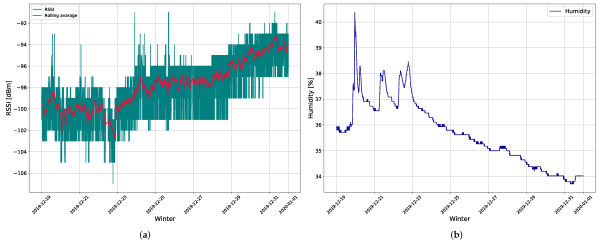
The measurement results of: (a) RSSI in dBm collected from gateway 2 and (b) soil moisture during the winter period. (Credit: Maja Škiljo et al., 2022)

Using LoRa Nodes As Soil Moisture Sensing Antennas

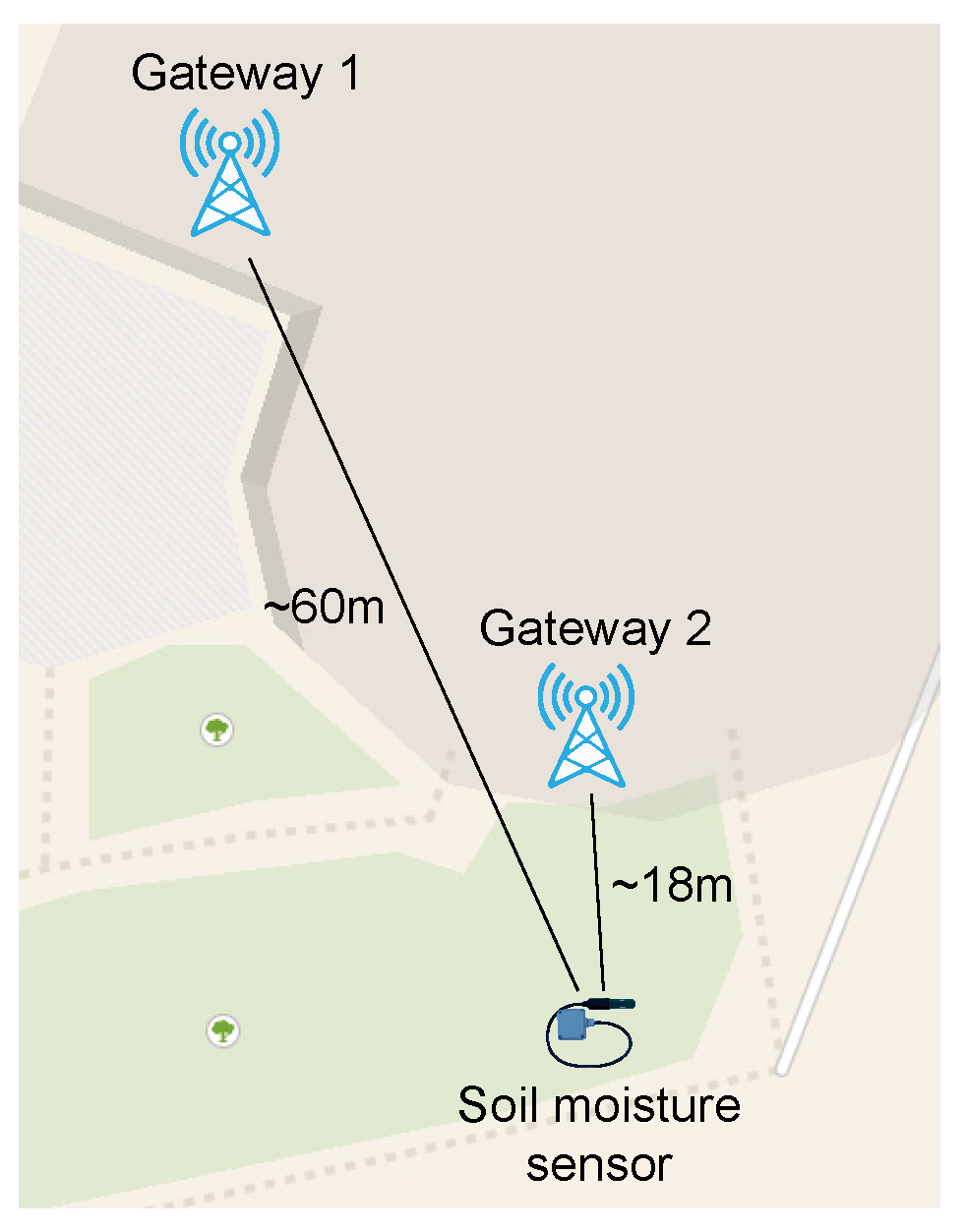
Implementation of LoRaWAN-based soil moisture sensing device. (Credit: Maja Škiljo et al., 2022)

Although we generally think of Internet of Things (IoT) and similar devices as things that are scattered around above ground, there are plenty of reasons to also have such devices underground. These so-called IoUT devices are extremely useful when it comes to monitoring underground structures, but communication via radiowaves is obviously impacted when soil is in the way. Although there are ways to get around this, a 2022 paper by Maja Škiljo and colleagues in Sensors covers an interesting way to make use of this signal attenuation property of changing moisture levels in soil.

By quantifying the exact attenuation of the signal received at the gateways, they were able to determine the soil moisture levels around the LoRa node which had been buried at a depth of approximately 14 centimeters. This LoRa node used off-the-shelf components consisting of an ATmega328P-based Arduino Pro Mini and SX1276-based RFM95W LoRa module with a spring antenna.

During experimentation in- and outdoors it was determined that a narrowband, printed (PCB) antenna was optimal for soil moisture sensing purposes. Other than the interesting question of how to keep soil moisture sensing nodes like this powered up over long periods of time (perhaps periodic retrieval to replenish the battery), this would seem to be a very interesting way to monitor the soil moisture levels in something like a field, where each node can provide its own ID and the received signal providing the relevant data in the form of the SNR and other parameters recorded by the gateway.

(Heading image: The measurement results of: (a) RSSI in dBm collected from gateway 2 and (b) soil moisture during the winter period. (Credit: Maja Škiljo et al., 2022) )

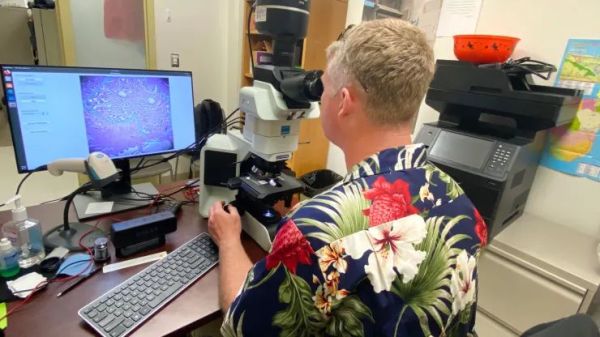
Dr. Niels Olson uses the Augmented Reality Microscope. (Credit: US Department of Defense)

Google’s Augmented Reality Microscope Might Help Diagnose Cancer

Despite recent advances in diagnosing cancer, many cases are still diagnosed using biopsies and analyzing thin slices of tissue underneath a microscope. Properly analyzing these tissue sample slides requires highly experienced and skilled pathologists, and remains subject to some level of bias. In 2018 Google announced a convolutional neural network (CNN) based system which they call the Augmented Reality Microscope (ARM), which would use deep learning and augmented reality (AR) to assist a pathologist with the diagnosis of a tissue sample. A 2022 study in the Journal of Pathology Informatics by David Jin and colleagues (CNBC article) details how well this system performs in ongoing tests.

For this particular study, the LYmph Node Assistant (LYNA) model was investigated, which as the name suggests targets detecting cancer metastases within lymph node biopsies. The basic ARM setup is described on the Google Health GitHub page, which contains all of the required software, except for the models which are available on request. The ARM system is fitted around an existing medical-grade microscope, with a camera feeding the CNN model with the input data, and any relevant outputs from the model are overlaid on the image that the pathologist is observing (the AR part).

Although the study authors noted that they saw potential in the technology, as with most CNN-based systems a lot depends on how well the training data set was annotated. When a grouping of tissue including cancerous growth was marked too broadly, this could cause the model to draw an improper conclusion. This makes a lot of sense when one considers that this system essentially plays ‘cat or bread’, except with cancer.

These gotchas with recognizing legitimate cancer cases are why the study authors see it mostly as a useful tool for a pathologist. One of the authors, Dr. Niels Olsen, notes that back when he was stationed at the naval base in Guam, he would have liked to have a system like ARM to provide him as one of the two pathologists on the island with an easy source of a second opinion.

(Heading image: Dr. Niels Olson uses the Augmented Reality Microscope. (Credit: US Department of Defense) )

Overclocking Raspberry Pi 5’s SoC To 3 GHz And 1 GHz GPU

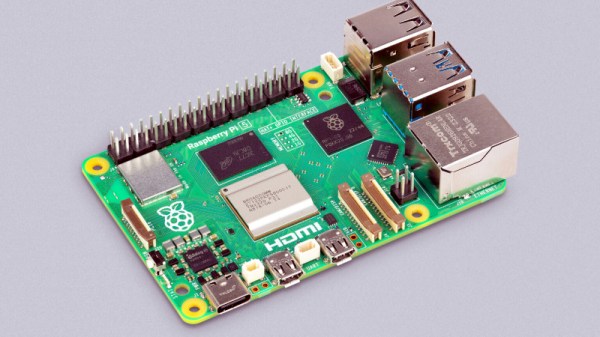
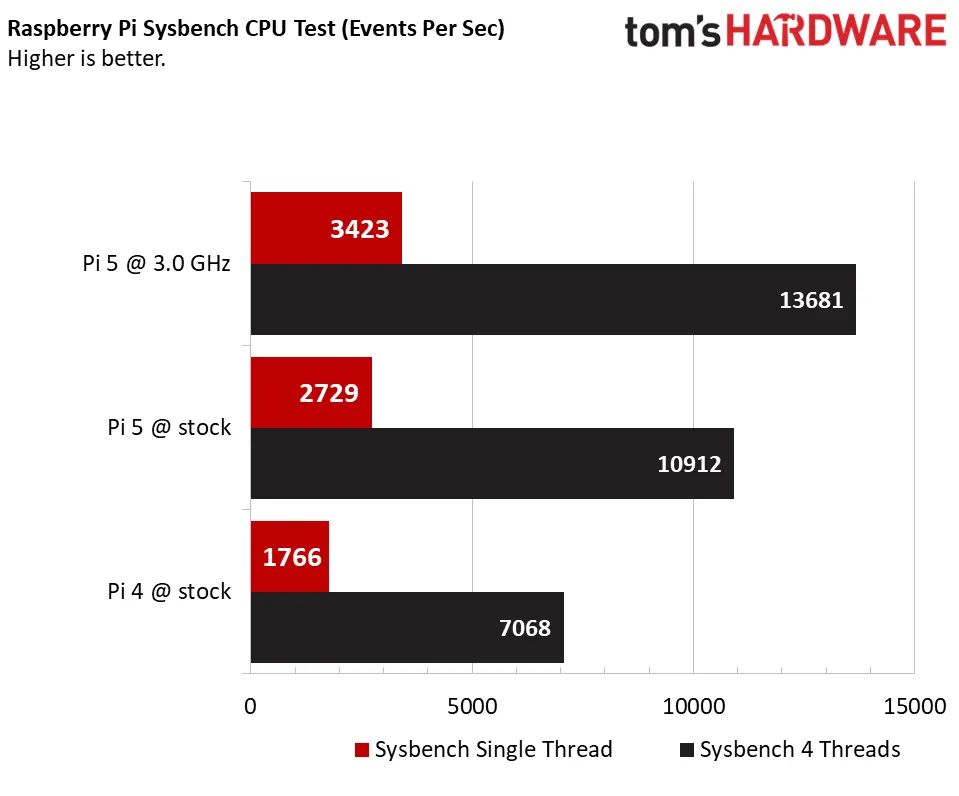
Overclocking computer systems is a fun way to extract some free performance, or at least see how far you can push the hardware before you run into practical limitations. The newly released Raspberry Pi 5 with BCM2712 SoC is no exception here, with Tom’s Hardware having a go at seeing how far both the CPU and GPU in the SoC can be pushed. The BCM2712’s quad Cortex-A76 CPU is normally clocked at 2.4 GHz and the VideoCore VII GPU at 800 MHz. By modifying some settings in the /boot/config.txt configuration file these values can be adjusted.

In order to verify that an overclock was stable, the Stressberry application was used, which fully loads the CPU cores. Here something like a combination of stress-ng and glxgears could also be used, to stress both the CPU and GPU. With the official actively cooled heatsink the CPU reached a temperature of 74°C with a whole board power usage of about 10 Watts. At idle this dropped to 3 Watts at 46°C. At these speeds, the multiple Raspberry Pi 5 units OCed by Tom’s Hardware were mostly stable, though one of the team’s boards experienced a few crashes. This suggests that this level of OCing could still be subject to luck of the draw, and long-term stability would have to be investigated as well.

As for the practical use cases of OCing your Raspberry Pi 5, benchmarks showed a marked uplift in compression and Sysbench benchmark scores, but OCing the GPU had no real positive impact on YouTube or 3D performance, leading even to a massive increase in dropped frames with video playback. This probably means that increasing the CPU clock may be beneficial, but OCing the GPU could be futile without also OCing the RAM frequency, if at all possible.

Realistically, the Raspberry Pi SoCs never were speed monsters, with even the Raspberry Pi 4B’s SoC being beaten handily in 2020 by a budget dual-core Intel CPU.  The current Intel Alder-Lake-N-based N100 SoC has a 6 Watt TDP and boosts up to 3.4 GHz while its Xe-LP-based iGPU (with AV1 decoding support) makes for a decent gaming experience within a ~16 Watt power envelope. Clearly, any OCing of the Raspberry Pi boards is more for the challenge of it, but then so is running the latest Intel CPU at 10 GHz with liquid nitrogen cooling.

Turing Complete Programming On ARM With Two Instructions

There are many questions that can be asked for software projects, with most of these questions starting with ‘Why…?’. This is true for the challenge of proving that cascading stylesheets are Turing-complete, or that you don’t need all those fancy ISA bits of an ARM processors when you already got the LDM and STM commands in the 32-bit ISA. What originally started off as a bit of a running gag in a group of developers led to [Kellan Clark] implementing a Turing-complete computer and a functioning interpreter using nothing but these two opcodes.

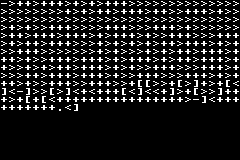
Adding some Brainfsck to your ARM, inside your GBA.
Adding some Brainf**k to your ARM, inside your GBA.

These two opcodes essentially allow the storing or reading of data into memory from any combination of the 16 general-purpose registers (GPRs). This makes them both extremely versatile and also extremely open to ‘abuse’ like in this example. For a straightforward implementation that could prove the concept, [Kellan] decided to pick one of everyone’s favorite esoteric programming languages: Brainf**k, creating the charmingly titled Armf**k that allows anyone to write BF programs for any suitable ARM processor, like the ARM7TDMI in the Game Boy Advance that [Kellan] targeted.

As a proof of concept it’s unquestioningly intriguing, and a great example of how the most powerful parts of any ISA are those that move data around. After all, as anyone who writes ASM and C knows, computers are just machines that can copy bytes around really fast to make stuff happen. Mind-blowing examples like these serve to illustrate that point quite well.

Tip kindly provided by [eeucalyptus].