The Questionable Benefits Of Paying More For Air Quality Monitors

Does paying more for air quality monitors (AQMs) make sense? This was the question which [Achim Haug] at the Air Gradient project sought to answer, with the answer being a rather revealing ‘not at all’. Using data from the independent South Coast Air Quality Management District agency (South Coast AQMD), a plot was created of a range of commercially available AQMs for PM2.5 pollutants and their performance against a reference monitor. Here a value of 1.00 would mean performance equal to the (expensive, calibrated) reference.
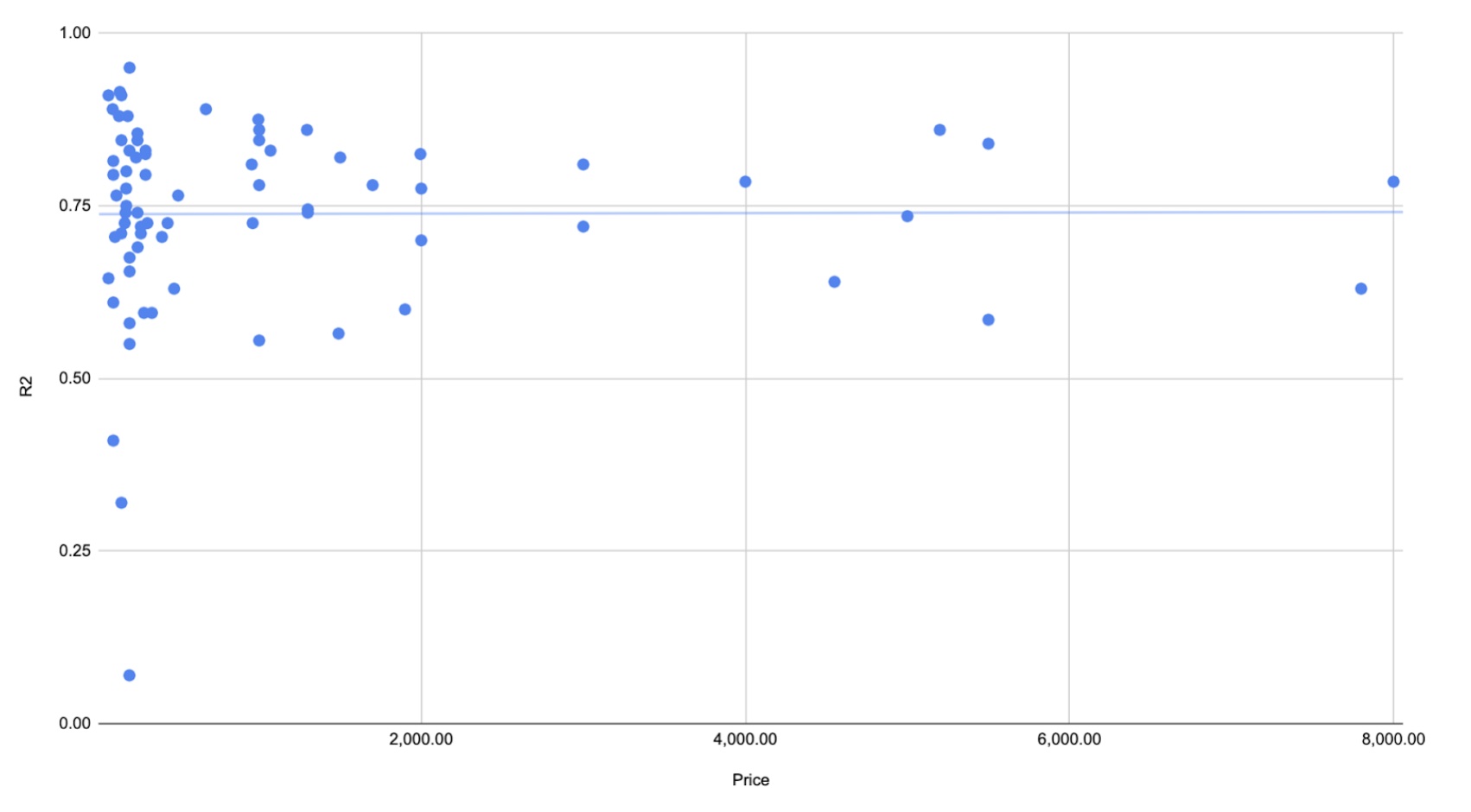
R2 vs Price. Data Source: South Coast AQMD Data

This plot shows clearly that paying more for an AQM does not get you better performance, with the reason for this explored in a follow-up article by [Achim], where a range of AQMs are checked for which PM2.5 sensors they actually use. Perhaps unsurprisingly, most AQMs use the same PM2.5 sensors, with the sensor module not really affecting the cost of the AQM as they all cost about $10-20 in bulk.

Rather it seems that the other sensors (for CO2, NO2 and other measurements) along with features such as WiFi, LoRa determine much of the price tag. For getting good measurements, properties such as airflow over the sensors, the implemented compensation algorithms are probably the main things you want to look at when purchasing (or building)  an AQM.

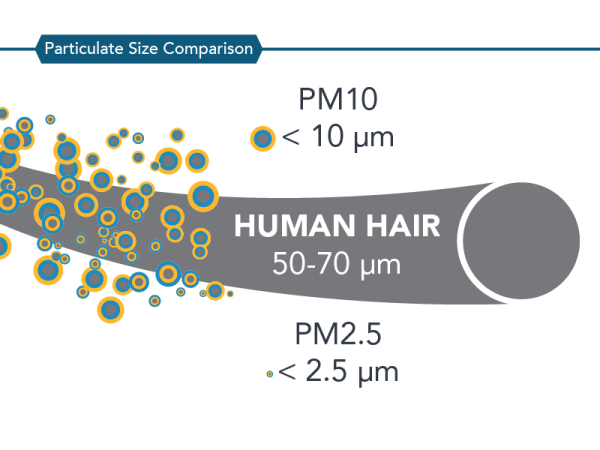
(Heading image: particulate matter sizes, relative to a human hair. Credit: California ARB)
The Robot That Lends The Deaf-Blind Community A Hand

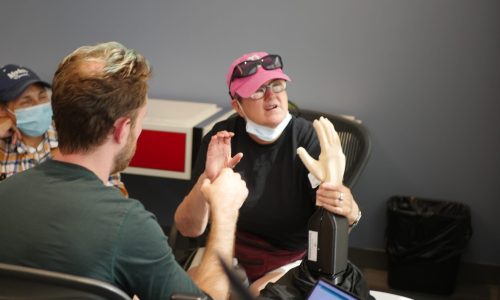
The loss of one’s sense of hearing or vision is likely to be devastating in the way that it impacts daily life. Fortunately many workarounds exist using one’s remaining senses — such as sign language — but what if not only your sense of hearing is gone, but you are also blind? Fortunately here, too, a workaround exists in the form of tactile signing, which is akin to visual sign language, except that it uses one’s sense of touch. This generally requires someone who knows tactile sign language to translate from spoken or written forms to tactile signaling. Yet what if you’re deaf-blind and without human assistance? This is where a new robotic system could conceivably fill in.

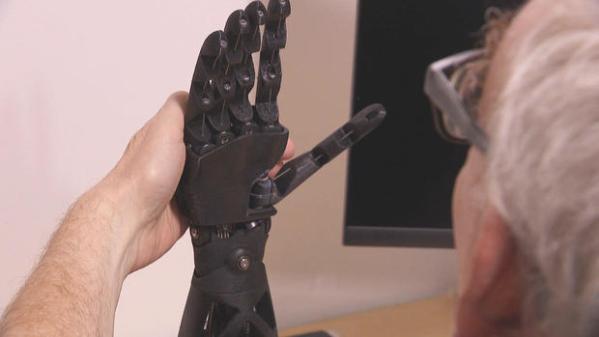
The Tatum T1 in use, with a more human-like skin covering the robot. (Credit: Tatum Robotics)

Developed by Tatum Robotics, the Tatum T1 is a a robotic hand and associated software that’s intended to provide this translation function, by taking in natural language information, whether spoken, written or in some digital format, and using a number of translation steps to create tactile sign language as output, whether it’s the ASL format, the BANZSL alphabet or another. These tactile signs are then expressed using the robotic hand, and a connected arm as needed, ideally using ASL gloss to convey as much information as quickly as possible, not unlike with visual ASL.

This also answers the question of why one would not just use a simple braille cell on a hand, as the signing speed is essential to keep up with real-time communications, unlike when, say, reading a book or email. A robotic companion like this could provide deaf-blind individuals with a critical bridge to the world around them. Currently the Tatum T1 is still in the testing phase, but hopefully before long it may be another tool for the tens of thousands of deaf-blind people in the US today.

Do Bounties Hurt FOSS?

As with many things in life, motivation is everything. This also applies to the development of software, which is a field that has become immensely important over the past decades. Within a commercial context, the motivation  to write software is primarily financial, in that a company’s products are developed by individuals who are being financially compensated for their time. This is often different with Free and Open Source Software (FOSS) projects, where the motivation to develop the software is in many cases derived more out of passion and sometimes a wildly successful hobby rather than any financial incentives.

Yet what if financial incentives are added by those who have a vested interest in seeing certain features added or changed in a FOSS project? While with a commercial project it’s clear (or should be) that the paying customers are the ones whose needs are to be met, with a volunteer-based FOSS project the addition of financial incentives make for a much more fuzzy system. This is where FOSS projects like the Zig programming language have put down their foot, calling FOSS bounties ‘damaging’.

Continue reading “Do Bounties Hurt FOSS?”

Beating Apple’s Secret Lid Angle Sensor Calibration With Custom Tool

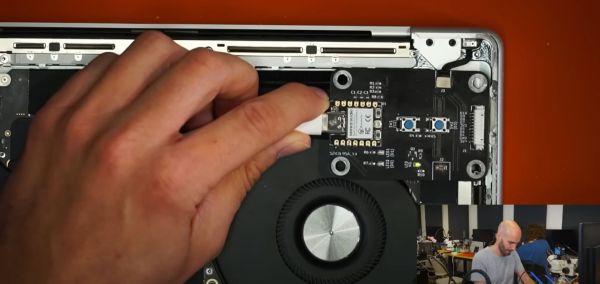
Among the changes made by Apple to its laptops over the years, the transition from a Hall sensor-based sleep sensor to an angle sensor that determines when the lid is closed is a decidedly unpopular one. The reason for this is the need to calibrate this sensor after replacement, using a tool that Apple decided to keep for itself. That is, until recently [Stephan Steins] created a tool which he creatively called the ‘nerd.tool.1‘. This widget can perform this calibration procedure with the press of its two buttons, as demonstrated on [Louis Rossmann]’s YouTube channel.

This new angle sensor was first introduced in late 2019, with Apple’s official reason being an increased level of ‘precision’. As each sensor has to be calibrated correctly in order to measure the magnetic field and determine the associated lid angle, this means that third-party repair shops and determined MacBook owners have to transplant the chip containing the calibration data to a replacement sensor system. Until now, that is. Although the nerd.tool.1 is somewhat pricey at €169 ($179 USD), for a third-party MacBook repair shop this would seem to be a steal.

It is however unfortunate that Apple persists in such anti-repair methods, with recently [Hugh Jeffreys] also calling Apple out on this during a MacBook Pro M1/M2 teardown video. During this teardown [Hugh] came across this angle sensor issue by swapping parts between two otherwise identical MacBook Pros, indicating just how annoying this need to calibrate one tiny lid angle sensor is.

Continue reading “Beating Apple’s Secret Lid Angle Sensor Calibration With Custom Tool”

Reviving An Old Lime-E Beta Rideshare E-Bicycle

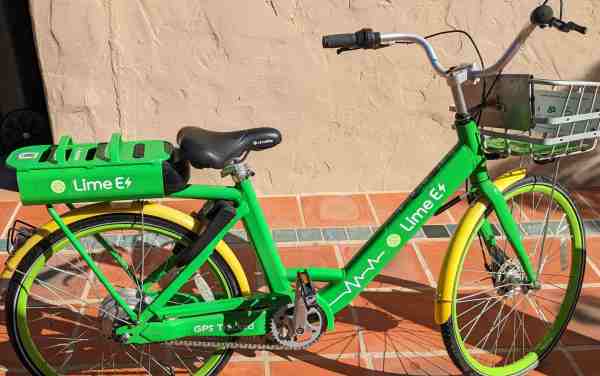
What do you do when you come across a cheap electric bicycle on Facebook Marketplace from a seller who has a few hundred of the same ones available? If you’re someone like [Max Helmetag], you figure that it’s probably legit since nobody would be reselling hundreds of Lime ridesharing e-bikes. Thus, it makes for an excellent project to see how usable an old ridesharing bicycle is. According to the information on the e-bike’s frame, it was manufactured in 2017, and based on the plastic still covering parts of the bike, it had barely been used, if at all.

Continue reading “Reviving An Old Lime-E Beta Rideshare E-Bicycle”

Exploring Ground-Effect With A Quadcopter

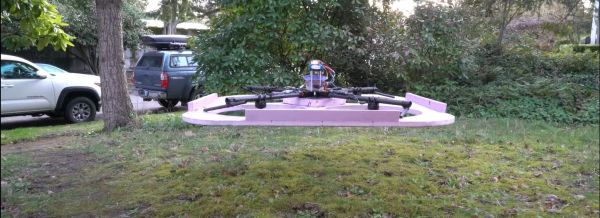
The ground-effect (GE) refers to the almost mystical property where the interaction of the airflow around an aircraft’s wing and the ground massively increases efficiency due to the reduction of lift-dependent drag, perhaps best demonstrated by the Soviet Lun-class “ekranoplans” of the 1980s and 90s. Interestingly, this principle also applies to rotary aircraft, which led the [rctestflight] YouTube channel to wonder what would happen if a quadcopter were to be adapted for GE.

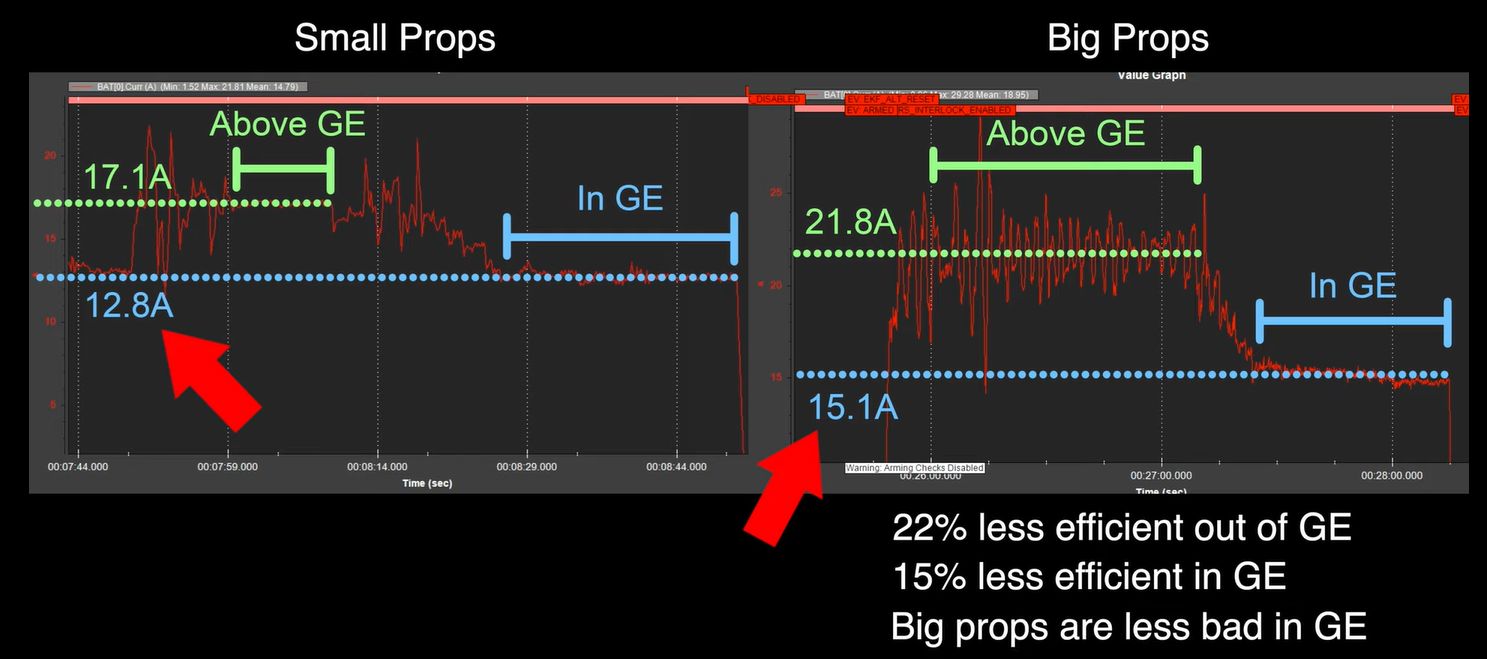
As noted on the Wikipedia entry for Ground-effect vehicle (GEV), it’s essential to have some kind of forward motion. With a rotorcraft like a helicopter or quadcopter this motion is already provided by the spinning propeller, which makes it noticeably easier to get the aircraft into the ground-effect. operating mode. Following the notion that the GE becomes noticeable at an altitude that’s dependent on the length of the aircraft’s wings, this got translated into putting the largest propellers available on the custom inverted-prop (to put them lower to the ground) quadcopter, to see what effect this would have on the quadcopter’s performance. As demonstrated by the recorded current drawn (each time with a fully charged battery), bigger is indeed better, and the GE effect is indeed very noticeable for a quadcopter.

Getting a usable GEV out of the basic inverted-prop quadcopter required some more lateral thinking, however, as it was not very easy to control this low to the ground. Here following design cues from skirtless hovercraft designs helped a lot, essentially drawing on the Coandă effect. Although this improved performance, at this point the quadcopter had been fitted with a fifth propeller for propulsion and was skidding about more like a skirtless hovercraft and less of a quadcopter.

Although great for scaring the living daylights out of unsuspecting water-based wildlife, what this unfortunately demonstrates is that GEVs are still hard, no matter which form they take. At the very least it does make for an excellent introduction into various aspects of aerodynamics.

Continue reading “Exploring Ground-Effect With A Quadcopter”

Implementing MegaTextures On Real Nintendo 64 Hardware

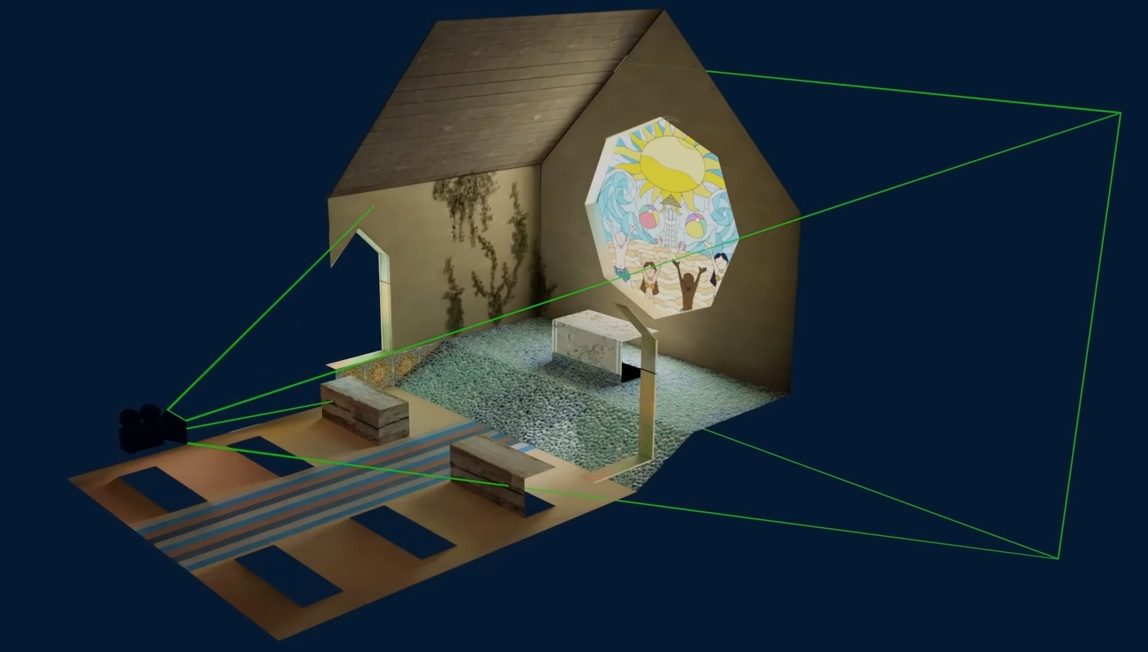
As amazing and groundbreaking as the Nintendo 64 was, over the years it has also become synonymous with blurry textures and liberal use of Gouraud shading as its most strongly defining visual features. In a recent video, [James Lambert] covers how the system’s minuscule 4 kB texture memory (TMEM) can be circumvented using mipmapping. By loading progressively more detailed textures (each in 4 kB chunks) in a level-of-detail (LoD), the visual fidelity can be maximized while keeping rendering speeds relatively zippy, as the real-time demo proves.

Determining which textures are visible to the player.

This project was made for the N64brew 2023, with the source code available on [James]’s GitHub account. Although impressive, it bears noting that mipmapping was not an unknown approach in 1996, and many approaches were used to work around the N64’s physical limitations.

In the case of mipmapping, [James]’s demo perfectly demonstrates the problematic nature of mipmapping, as it dramatically increases the storage requirements for the textures, hitting 40 MB just for this one single room, for a system that supports up to 64 MB cartridges.

Ultimately, this shows that the 4 kB TMEM was not the only issue with the N64, with the limited (and expensive) mask ROMs for the cartridges proving to be an insurmountable obstacle that systems like Sony’s PlayStation largely did not have to contend with. With roomy 650 MB+ optical storage, the PS1 got instead tripped up by the glacial access and loading speeds of optical media and its soggy-potato-powered GPU.

Seeing demonstrations like these manage to wonderfully highlight the bottlenecks in these old consoles, and makes one wonder about what could have been, even in an era before 1 TB solid-state drives and direct resource streaming between GPU and said storage.

Continue reading “Implementing MegaTextures On Real Nintendo 64 Hardware”