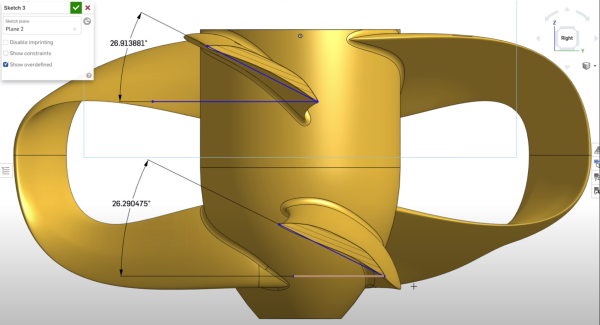
The toroidal propeller's details in the CAD software. (Credit: rctestflight))

Testing Futuristic Propeller Designs With A 3D Printer And A Solar-Powered Boat

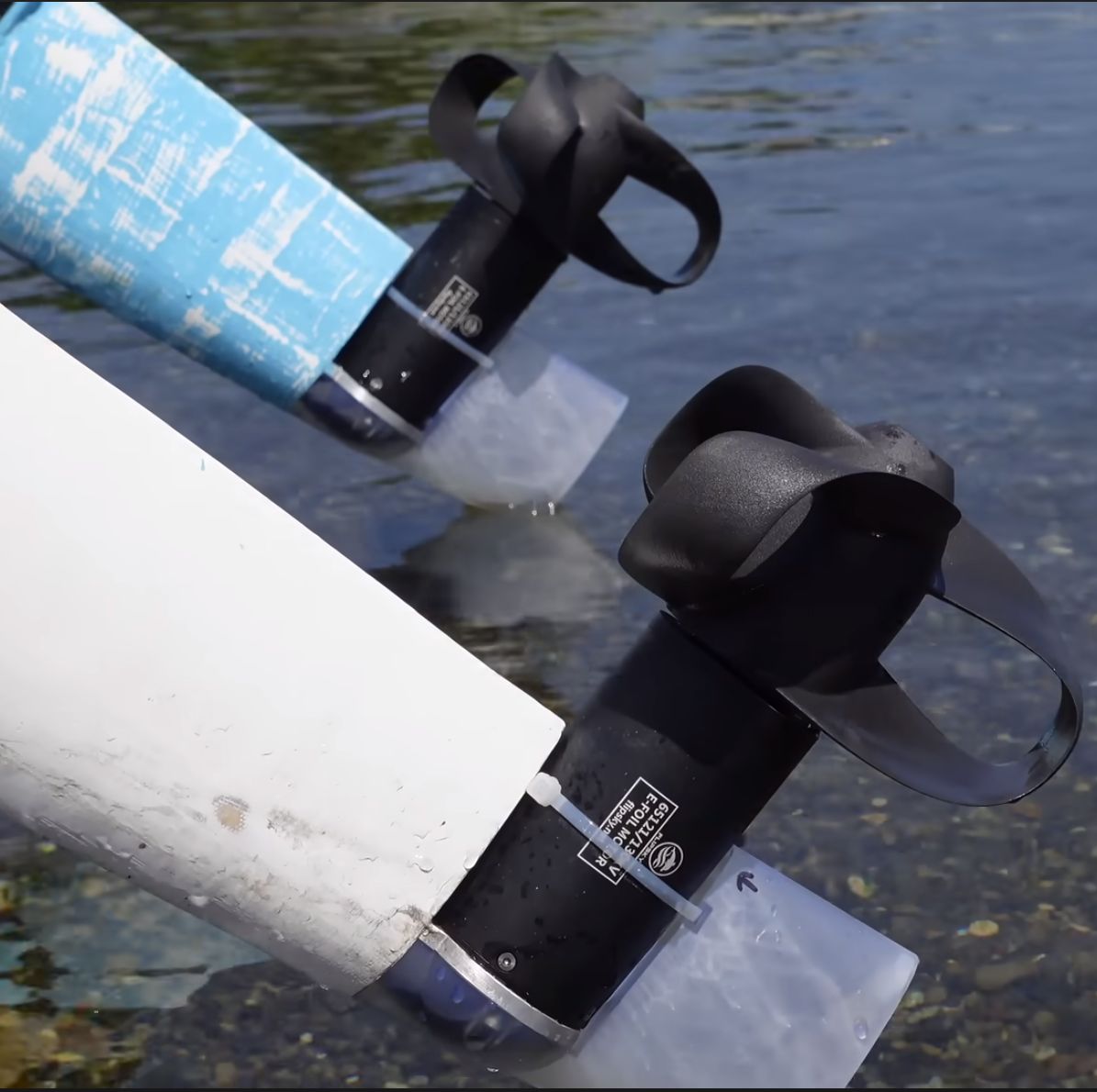
The toroidal boat propeller pair installed. (Credit: rctestflight)

As boring as propeller designs may seem to the average person, occasionally there’s a bit of a dust-up in the media about a ‘new’ design that promises at least a few percent improvement in performance, decreased noise profile, or any combination of such claims. Naturally, if you’re [Daniel Riley] of RCTestFlight, then you have to 3D print a few of them, and make a video covering a handful. Most famous of these is probably the toroidal propeller that made waves a while ago, mostly in the field of flying drones, but commercial toroidal boat props exist too.

Test results of the different boat propeller designs. (Credit: rctestflight)

Interestingly, the 2-blade FDM-printed propeller ended up performing the best, while the bi-blade design (with two sets of blades positioned one after the other) performed worse — but better than the toroidal design. Here the last two designs were professionally printed in nylon, rather than printed at home in a standard FDM printer with all of the surface sanding and treatment required. Even so, the surface treatment did not seem to noticeably affect the results in further testing.

Hints at the root cause of the problem came from the bubble tests. In a bubble test, air is blown in front of the spinning propeller to visualize the flow of the water. This revealed some stalling on the bi-blade and the toroidal design too, which would explain some of the performance loss. Going back between the CAD model and the design in the patent by Sharrow Marine didn’t provide any obvious hints.

Considering that this latter company claims a performance uplift over regular boat propellers, the next steps for [Daniel] would appear to involve some careful navigating between fluid dynamic modeling and claims made in glossy marketing material to figure out exactly how close someone at home with a 3D printer and some spare time can get to those claimed numbers.

(Heading image: The toroidal propeller’s details in the CAD software. (Credit: rctestflight) )

Continue reading “Testing Futuristic Propeller Designs With A 3D Printer And A Solar-Powered Boat”
Creating A Commodore 64 Cartridge On Single-Sided Stripboard

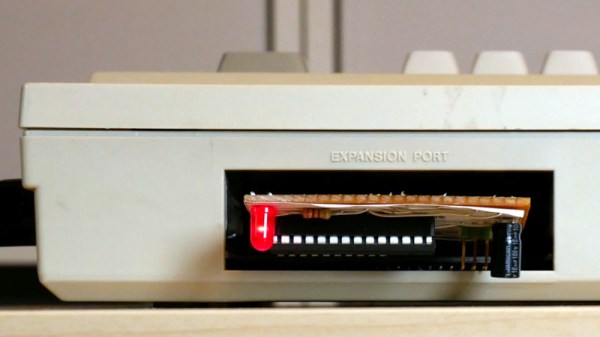
The DIY Commodore 64 cartridge. (Credit: Linus Åkesson)

When you want to write software for a system like the Commodore 64, the obvious and safe choice is to create an image that can be used with a tape or floppy drive emulator. Yet these come with the obvious disadvantage of loading time and manual steps, much like with the original hardware. Unfortunately, if you crave that instant-on experience that cartridges offer – courtesy of them being plugged directly into the system’s CPU bus – you better get an EE diploma to figure it all out. Or maybe not, as [Linus Åkesson] found out when he created a custom cartridge to boot his Commodordian project from.

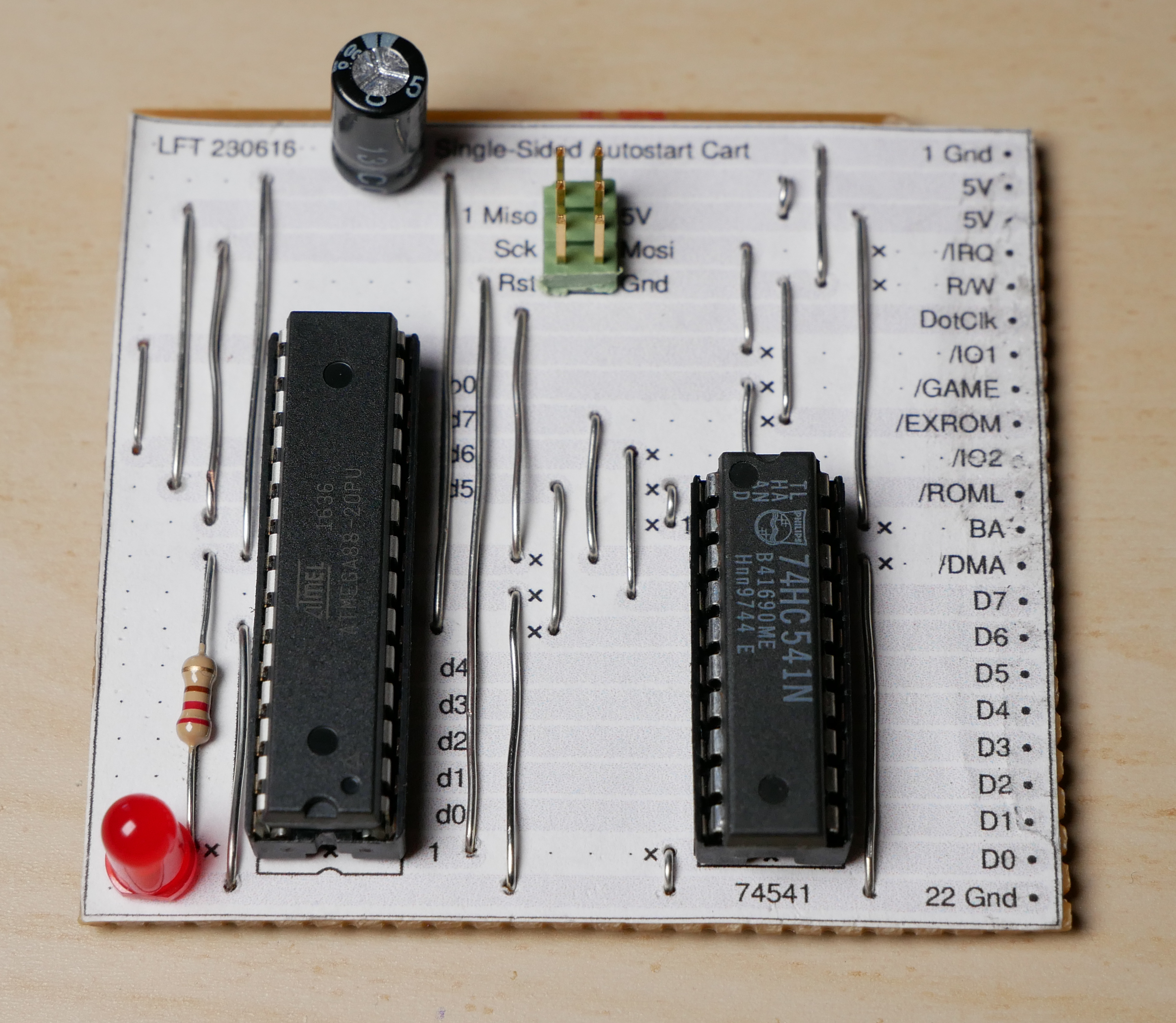
For the core of the cartridge a bit of stripboard was sufficient to interface with the C64’s cartridge slot. Despite being single-sided, all the required signals were on one side of the slot. These include the EXROM line that informs the system that a cartridge is present, the ROML line that informs the cartridge when the system is trying to read from it, and of course the data bus. After this the interaction gets somewhat interesting, due to the use of the single-sided stripboard, as the address bus and other signals are on the non-connected side.

Working around this was the biggest challenge, but by creatively using the ROML and DotClk lines and by disabling the display output, the ATmega88 and 74HC541-based cartridge a working solution was created. There is still room for improvement here, naturally, but it would appear that if the goal is simply to autoload software on boot, this is definitely a workable solution. One could also splurge on double-sided stripboard, but that would strip away most of the fun of this solution.

Earth’s Final Frontier: Exploring The Alien Depths Of The Earth’s Oceans

Despite how hostile to life some parts of the Earth’s continents are, humanity has enthusiastically endeavored over the course of millennia to establish at least a toehold on each of them. Yet humanity has barely ventured beyond the surface of the oceans which cover around three-quarters of the planet, with human activity in these bodies of water dropping off quickly along with the fading of light from the surface.

Effectively, this means for all intents and purposes we have to this day not explored the vast majority of the Earth’s surface, due to over 70% of it being covered by water. As an ocean planet, much of Earth’s surface is covered by watery depths of multiple kilometers, with each 10 meters of water increasing the pressure by one atmosphere (1.013 bar), so that at a depth of one kilometer we’re talking about an intense 101 atmospheres.

Over the past decades, the 1985 discovery of Titanic’s wreck approximately 3.8 kilometer below the surface of the Atlantic, the two year long search for AF447’s black boxes, and the fruitless search for the wreckage of MH370 despite washed-up remnants have served as stark reminders of just how alien and how hostile the depths of the Earth’s oceans are. Yet with both tourism and mining efforts booming, will we one day conquer the full surface of Earth?

Continue reading “Earth’s Final Frontier: Exploring The Alien Depths Of The Earth’s Oceans”

Bluetooth Battery Monitors That Also Monitor Your Position, Without Asking

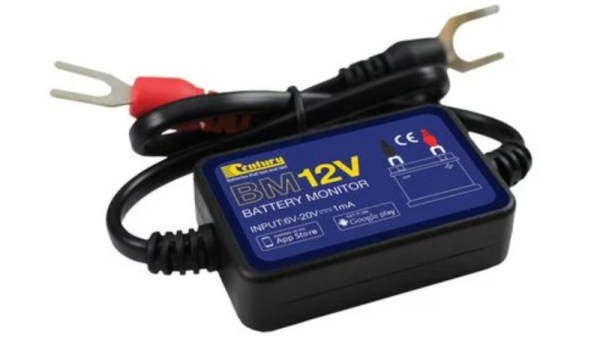
These days Bluetooth-based gadgets are everywhere, including for car and solar batteries. After connecting them up to the battery, you download the accompanying app on your smartphone, open it up and like magic you can keep tabs on your precious pile of chemistry that keeps things ticking along. Yet as [haxrob] discovered during an analysis, many of these devices will happily pass your location and other information along to remote servers.

The device in question is a Bluetooth 4.0 Battery Monitor that is resold under many brands, and which by itself would seem to do just what it is said to do, from monitoring a battery to running crank tests. Where things get unpleasant is with the Battery Monitor 2 (BM2) mobile app that accompanies the device. It integrates a library called AMap which is “a leading provider of digital map in China” and part of Alibaba. Although the app’s information page claims that no personal information is collected, the data intercepted with Wireshark would beg to differ.

In part 2 of this series, the BM2 app is reverse-engineered, decompiling the Java code. The personal information includes the latitude and longitude, as well as GPS, cell phone tower cell IDs and WiFi beacon data, which understandably has people rather upset. In addition to leaking your personal info, the BM2 app seems to be also good at running constantly in the background, which ironically drains your phone’s battery at an alarming rate.

Cases like these should be both a warning to not just install any app on your smartphone, as well as a wake-up call to Google and others to prevent such blatant privacy violations.

(Thanks to [Drew] for the tip)

Honda Headunit Reverse Engineering, And The Dismal State Of Infotainment Systems

These days the dozen or so ECUs in an average car are joined by an infotainment system of some type, which are typically a large touch screen on the dashboard (the headunit) and possibly a couple of auxiliary units for the rear seats. These infotainment systems run anything from QNX to (Yocto) Linux or more commonly these days some version of Android. As [Eric McDonald] discovered with his 2021 Honda Civic, its headunit runs an archaic Android dating back to roughly 2012.

While this offers intriguing options with gaining root access via decade-old exploits that the car manufacturer never fixed, as [Eric] notes, this is an advantage that anyone who can gain access to the car’s CAN buses via e.g. the headlights, a wireless access point, or even inject an exploit via ADB radio can use to their advantage. Essentially, these infotainment systems are massive attack surfaces with all of their wired and wireless interfaces, combined with outdated software that you as the vehicle owner are forbidden to meddle with by the manufacturer.

Naturally taking this ‘no’ as a challenge as any civilized citizen would, [Eric] set out to not only root the glorified Android tablet that Honda seeks to pass off as a ‘modern infotainment system’, but also reverse-engineer the system as far as possible and documenting the findings on GitHub. As [Eric] also explains in a Hacker News discussion, his dream is to not only have documentation available for infotainment systems in general as a community effort, but also provide open source alternatives that can be inspected by security researchers rather than being expected to lean on the ‘trust me bro’ security practices of the average car manufacturer.

Although a big ask considering how secretive car manufacturers are, this would seem to be an issue that we should tackle sooner rather than later, as more and more older cars turn into driving security exploits just waiting to happen.

Commodore Floppy Drive Fixing Chaos

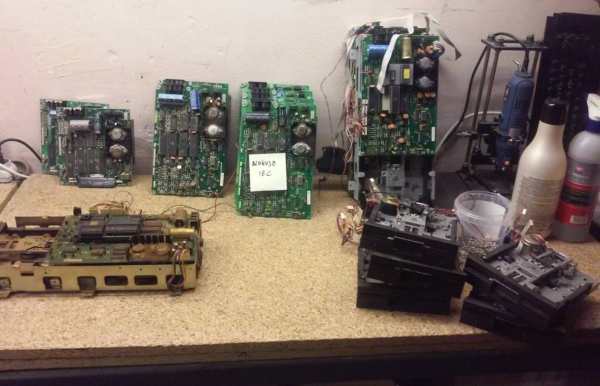
One of the best parts of retrocomputing is that you can obtain so many broken systems and peripherals for repairing and other assorted fun. This was the wholesome activity that [Drygol] embarked on recently with a gaggle of Commodore floppy disk drives that he obtained, involving a lot of cleaning, soldering, calibrating and other assorted entertainment. This follows cold on the heels of an earlier repair session of a stash of Commodore 1541 FDDs.

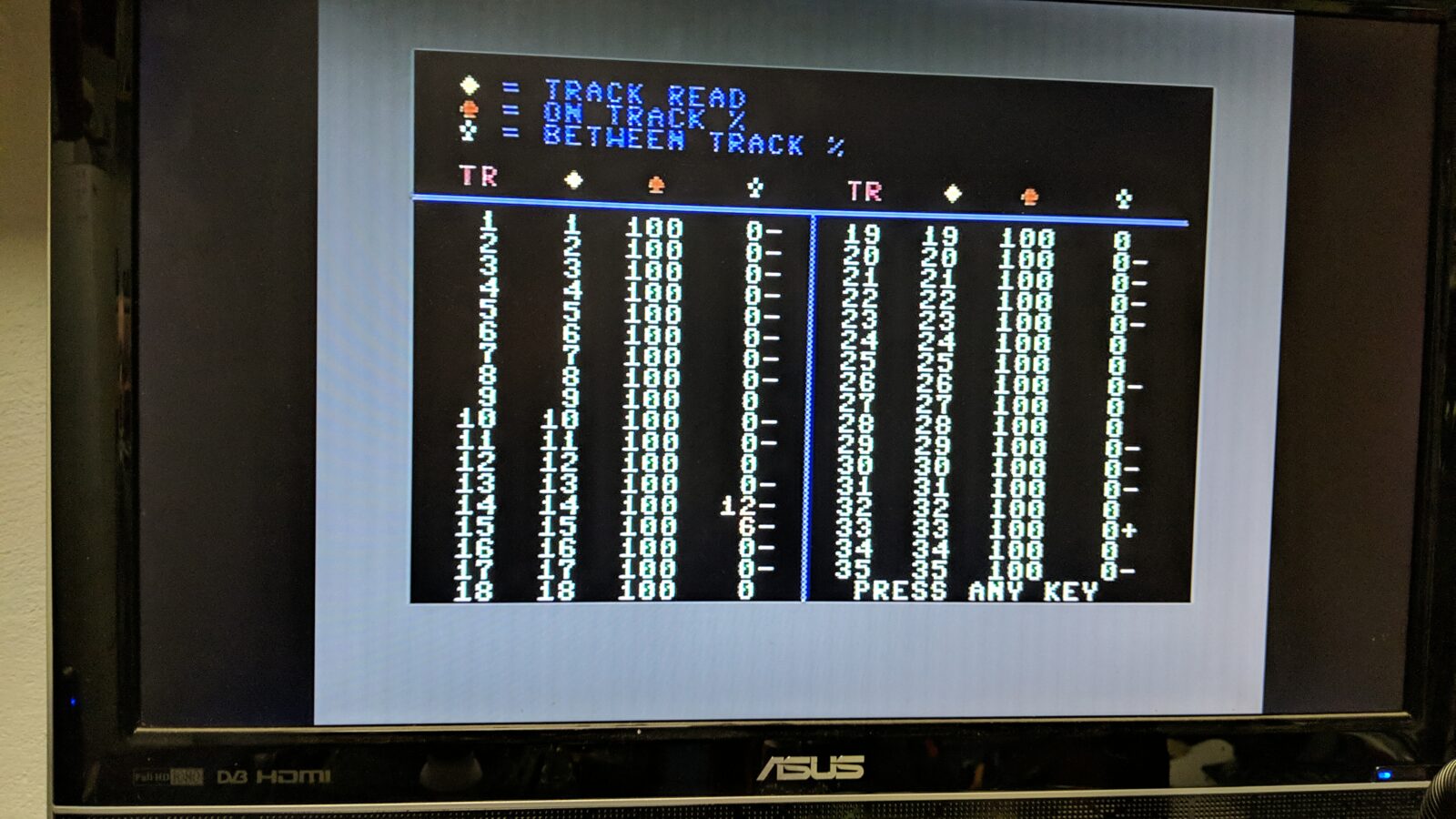
Testing Commodore FDD head alignment using the 1541 diagnostic cartridge.

As with any such devices, the first thing to do is to clean the heck out of them, to remove forty-odd years of dust and other debris, followed by testing of functionality, replacing dead ICs and the usual round of (electrolytic) capacitor replacement. Retrobrighting gives it that fresh-out-of-packaging look, which leaves just the calibrating of these drives. This procedure is essential to make sure the read/write head is aligned with the tracks on the disks, and is the most fiddly part of the process.

What helps a lot here is the 1541 diagnostic cartridge by [World of Jani] that displays real-time information on the drive while you are tweaking its speed and head alignment. All you have to do is tweak the speed potentiometer, and adjust the position of the drive motor, which takes a bit of patience and a steady hand. After this repair session a few Mitsumi drives unfortunately remained dead due to busted coils. Despite a valiant repair attempt on the heads by manually rewinding the coils, this remains a topic for a potential part III.

Will The Lilium Jet Work? A Deep-Dive Into The Physics Behind EVTOL Aircraft

The Lilium Jet is a proposed eVTOL (electric Vertical Take Off and Landing) aircraft that the German company Lilium GmbH has claimed it will bring to the market ‘soon’, which would made it the first eVTOL aircraft in the world to enter into commercial service. As anyone who has any experience with VTOL knows, it’s a tricky subject to engineer, let alone when you want to do it fully electric. In a deep-dive video on the Lilium Jet and eVTOL in general, [John Lou] goes through the physics behind VTOL take-off, landing and flight, as well as range and general performance.

It is clear that Lilium’s presented aircraft concept has many issues, some of which are due to new and unproven technologies, while others seem to be founded in over-promising and likely under-delivering. With Lilium having signed a number of contracts to deliver the first Pioneer Edition Lilium Jets and commercial service promised by 2025, it’s hard to ignore that the first full prototype of the 7-seater Lilium Jet is supposed to fly this year.

Although as [John] points out in the video, eVTOL is not an impossible concept, it is important to remain realistic about what is physically possible, and not seek to push the boundaries. When the UK introduced its first mass-produced VTOL jet in the form of the Harrier, it too faced an uncomfortable time as bugs got ironed out. As these eVTOL aircraft would be carrying real human passengers, it’s a good place to realize that although you can pick a fight with physics, you will never come out on the winning side.

Hopefully Lilium realizes this too, and these sleek, battery-powered aircraft will truly take to the skies in a few years.

Continue reading “Will The Lilium Jet Work? A Deep-Dive Into The Physics Behind EVTOL Aircraft”