Hackaday Links Column Banner

Hackaday Links: May 31, 2026

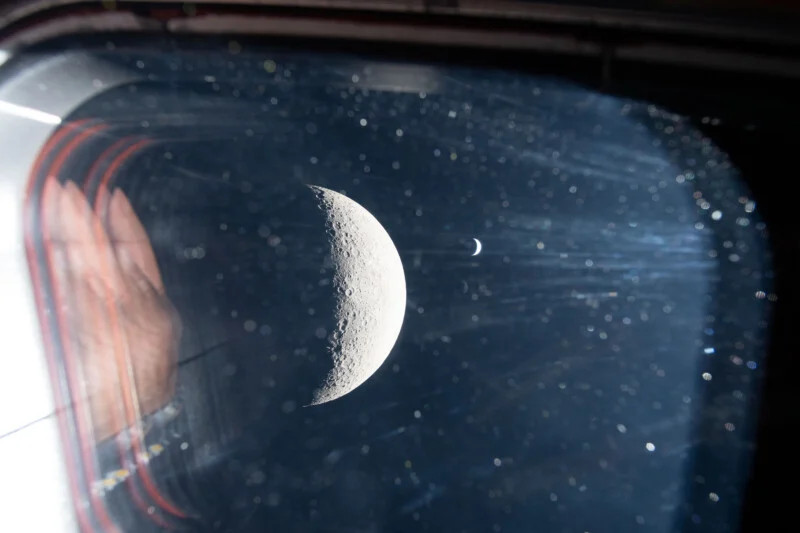
If you’re located in the Northeast United States and thought you heard an explosion yesterday afternoon, it wasn’t just your imagination — multiple sources have now confirmed that a 1 meter (3 foot) meteor entered the Earth’s atmosphere and broke up in the air off the coast of Massachusetts, releasing the energy equivalent of 300 tons of TNT.

Well, maybe. The latest update from NASA says it might actually qualify as a meteorite, with radar data indicating that debris from the space rock may have fallen into Cape Cod Bay. For those unfamiliar, the difference between a meteor and a meteorite is whether or not any of the object survived its encounter with the atmosphere and made it down to the surface.

There’s an argument to be made that a larger asteroid would have likely set off some alarm bells as it approached the planet, but the fact that this deep space interloper showed up unannounced is a sobering reminder that our ability to detect incoming threats isn’t nearly as robust as we’d like. Fortunately, it looks like the event didn’t result in any serious damage or injury.

Continue reading “Hackaday Links: May 31, 2026”

Hackaday Podcast Episode 371: Space Computers, Spy Phones, And So Long CHU

Elliot Williams is out where the deer and the antelope play for the next week, so it’s up to Tom Nardi and Al Williams to wrangle this episode of the Hackaday Podcast. They’ll start off by reading some listener messages before talking about the slow extinction of time broadcasts, Linux on cheap smartphones, microcontroller VPNs, and the computers of Spacelab.

You’ll also hear about using a video game’s “Photo Mode” to capture 3D imagery, strange red lights in deep space, and ASCII fish that you don’t need to feed. The episode wraps up with a discussion of WWII spy tech and the revelation that modern smartphones and powerful magnets don’t always mix.

Check out the links if you want to follow along, and as always, tell us what you think about this episode in the comments!

Direct download in DRM-free MP3.

Continue reading “Hackaday Podcast Episode 371: Space Computers, Spy Phones, And So Long CHU”

Hackaday Links Column Banner

Hackaday Links: May 24, 2026

If your first-generation Chromecast was acting a little wonky this week, don’t worry. Contrary to fears online, the 2014 device hasn’t been excommunicated by Google. In a statement to Ars Technica, a rep for the search giant explained that the issue, which was keeping the devices from being able to stream video from services like Netflix, was temporary and should now be resolved. That said, the OG Chromecast hasn’t officially been supported since 2023, so it’s not clear how much longer they will remain operational. Google be Google, after all.

After resisting for years, this week, Mozilla finally relented and brought Web Serial to Firefox. While there’s been some debate about the wisdom of letting the Internet directly talk to hardware gadgets, anyone who’s flashed Meshtastic or configured their Betaflight-powered drone from the browser can attest to how convenient it is. In the announcement, Mozilla acknowledges that “most folks won’t use this API”, but points out that the “community of builders and tinkerers” (that’s us!) is sure to be excited about the news. They’ve even teamed up with Adafruit to ensure their web-based microcontroller workflows are compatible in Firefox 151 and beyond. If you give it a shot, let us know how it goes.

Speaking of hardware support, the Linux Vendor Firmware Service (LVFS) recently picked up a couple of big-name sponsors. As reported by It’s FOSS, this week, Lenovo, Dell, and HP have signed on as Premier-level sponsors to the tune of $100,000 per year. For those unfamiliar, LVFS offers a central repository where hardware vendors can upload firmware updates. On the client side, fwupd can be used to pull these updates down automatically without having to hunt around on each vendor’s website. The experienced players don’t need a service like LVFS, but it’s certainly one of those quality-of-life improvements that make the desktop experience a bit more accessible.

Continue reading “Hackaday Links: May 24, 2026”

Hackaday Links Column Banner

Hackaday Links: May 17, 2026

To start things off, we’d like to extend a special thanks to everyone who joined us for Hackaday Europe this weekend in Lecco, Italy. It was 48 hours of fascinating talks, incredible badge hacks, and some of the greatest company you could hope for. For those who couldn’t make it in person, we didn’t forget you — expect to hear more about what went down once we get a chance to catch our collective breath.

That’s not the only thing to keep an eye out for in the coming days. This is your reminder that Amazon will be officially ending support for older Kindles in a few days. After May 20th, any of the megacorp’s e-readers that were introduced before 2012 will be persona non grata, so you should plan accordingly.

The biggest change is that these older devices won’t be able to buy digital books from Amazon, but you can still use them offline, and the fantastic Calibre makes it a breeze to load up content from other sources. To be perfectly honest, we’d advise any Kindle user to decouple their device from the Amazon mothership by using Calibre or even jailbreaking it and installing KOReader, so the end of official support is fine by us. In fact, if a surge of unsupported Kindles brings more attention and users to those projects, that suits us just fine.

Continue reading “Hackaday Links: May 17, 2026”

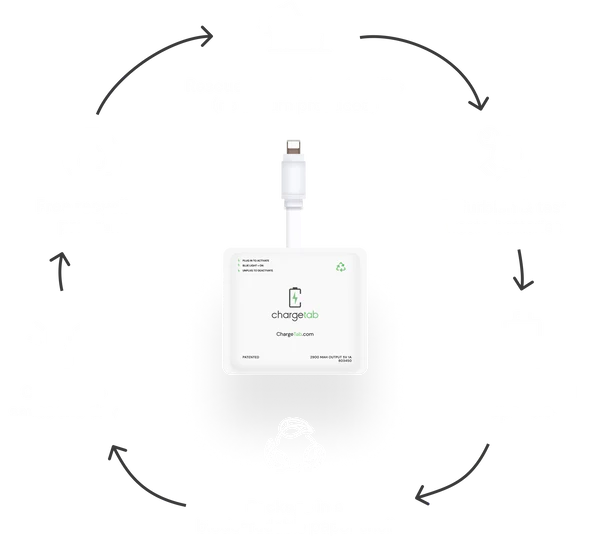
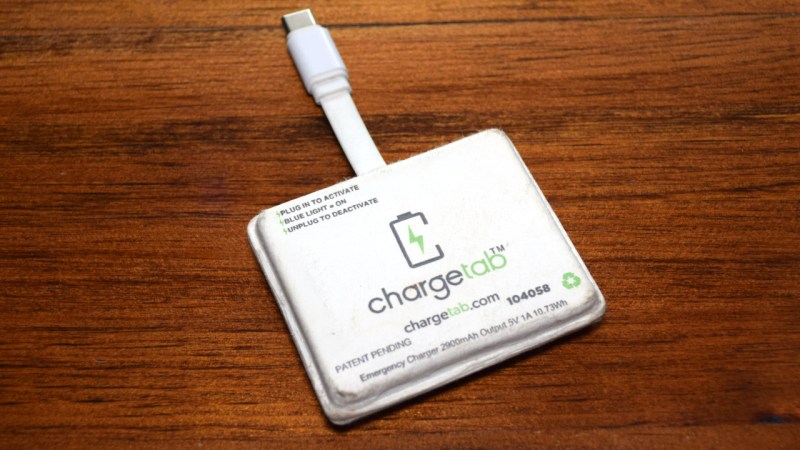
Teardown: ChargeTab Emergency Phone Charger

If you own a modern smartphone, there’s an excellent chance that its battery has run dangerously low on you at least a few times. Murphy’s Law dictates that this will naturally occur at the worst possible moment, say when you need to make an important phone call or when you’re lost and need to navigate home.

With this in mind, it’s not hard to see how a product like the ChargeTab would have a certain appeal. A small $10 USD device that you can keep in the car or pack in a bag that’s always available to charge your phone in an emergency.

Because it’s not meant to be used regularly — indeed it may never get used at all — it’s not completely unreasonable that such a device would only be good for one or two charges before its spent and must be replaced. It’s a bit like keeping a road flare in the car; it’s unlikely you’ll ever use the thing, but if you do, it only needs to work once.

But then what? According to ChargeTab, once the gadget has depleted its internal ~3,000 mAh battery it cannot be recharged and is no longer usable. Now to be fair, they specifically tell you to not throw it in the trash. They’ll send you a free return label to ship it back to them, at which point it will be refurbished and put back into circulation. The company argues that this recycling program, combined with the fact that the batteries inside the ChargeTabs were supposedly diverted from landfills in the first place, makes their entire operation eco-friendly.

Yet here we have a pair of ChargeTabs that were thrown in the regular garbage and would have taken a one-way trip to the local landfill if it wasn’t for the fact that I habitually dig through garbage cans like a raccoon. So let’s take a look at what’s inside one of these emergency phone chargers and if the idea is as green as the company claims.

Continue reading “Teardown: ChargeTab Emergency Phone Charger”

Hackaday Links Column Banner

Hackaday Links: May 10, 2026

While Artemis II was primarily a demonstration flight of the architecture NASA plans to use for future lunar missions, it was also an excellent excuse for the crew to snap some photos of the Moon and Earth with the benefit of modern camera technology. If you’ve been looking forward to seeing more of the crew’s images, you’re in luck, as thousands of new images have recently been released.

Now we don’t mean to beat up on the folks at NASA, but browsing through these images, we couldn’t help but be reminded of an article we saw on PetaPixel that discussed the space agency’s haphazard approach to sharing images online.

It’s really more like an unsorted file dump than anything, made worse by the fact that you have to access it through a government website that looks and performs like it was designed in the early 2000s. There’s even a prominent button that attempts to load a gallery feature that relies on the long-deprecated Adobe Flash. It would be nice to see the situation improved by the time astronauts actually touch down on the lunar surface, but we wouldn’t count on it.

Speaking of old tech, we’ve been following the resurgence of keyboard-equipped smartphones with great interest, as we imagine many of you have been. A recent CNBC article addresses the trend, although it didn’t quite take the nerd contingent into account. We want physical keys so we can work in the terminal and write code without fighting an on-screen keyboard, but of course, that’s not exactly what your average consumer is looking for.

It’s quite the opposite, in fact. A 20-something user referenced in the article explained how the younger generations see the physical keyboard as a way to be less connected to their phones, describing it as “an extra barrier of inconvenience that adds more steps into the thinking process.” If you need us, we’ll be collecting dust in the corner.

Continue reading “Hackaday Links: May 10, 2026”

Hackaday Podcast Episode 369: IR, E-Ink, And Avgas

In this episode, Hackaday Editors Elliot Williams and Tom Nardi start things off by discussing the latest reason that cheap PCB fabrication isn’t quite as cheap as it once was. The conversation will then move on to hacking electronic shelf labels, stylish e-ink status displays, cutting metal at home with high current and a bit of water, a solarpunk message board hiding in a IKEA-style lantern, and pushing NFC out of its comfort zone. From there you’ll hear about a matching transistors, taking pictures of the International Space Station, and Linux on the PS5. They’ll wrap up this week’s episode by going over the surprisingly simple concept behind flow batteries, and learn who’s still using leaded gasoline and why.

Check out the links if you want to follow along, and as always, tell us what you think about this episode in the comments!

Direct download in DRM-free MP3.

Continue reading “Hackaday Podcast Episode 369: IR, E-Ink, And Avgas”