What You Can See With A SEM?

The last time we used a scanning electron microscope (a SEM), it looked like something from a bad 1950s science fiction movie. These days SEMs, like the one at the IBM research center, look like computers with a big tank poised nearby. Interestingly, the SEM is so sensitive that it has to be in a quiet room to prevent sound from interfering with images.

As a demo of the machine’s impressive capability, [John Ott] loads two US pennies, one facing up and one face down. [John] notes that Lincoln appears on both sides of the penny and then proves the assertion correct using moderate magnification under the electron beam.

Continue reading “What You Can See With A SEM?”

Linux Fu: Kernel Modules Have Privileges

I did something recently I haven’t done in a long time: I recompiled the Linux kernel. There was a time when this was a common occurrence. You might want a feature that the default kernel didn’t support, or you might have an odd piece of hardware. But these days, in almost all the cases where you need something like this, you’ll use loadable kernel modules (LKM) instead. These are modules that the kernel can load and unload at run time, which means you can add that new device or strange file system without having to rebuild or even restart the kernel.

Normally, when you write programs for Linux, they don’t have any special permissions. You typically can’t do direct port I/O, for example, or arbitrarily access memory. The kernel, however, including modules, has no such restriction. That can make debugging modules tricky because you can easily bring the system to its knees. If possible, you might think about developing on a virtual machine until you have what you want. That way, an errant module just brings down your virtual machine. Continue reading “Linux Fu: Kernel Modules Have Privileges”

Lindroid Promises True Linux On Android

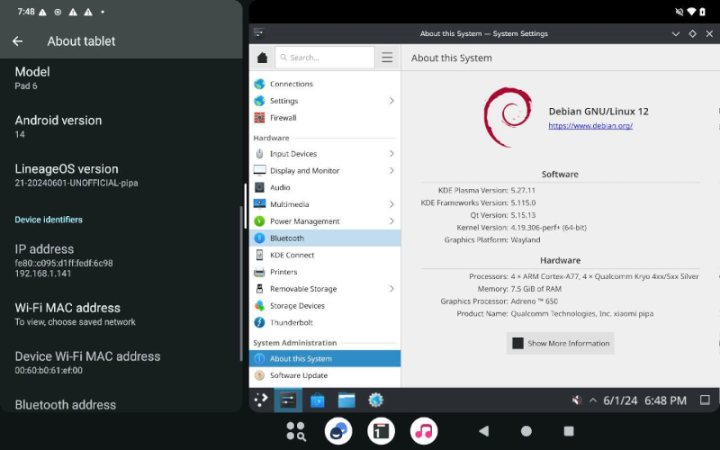
Since Android uses Linux, you’d think it would be easier to run Linux apps on your Android phone or tablet. There are some solutions out there, but the experience is usually less than stellar. A new player, Lindroid, claims to provide real Linux distributions with hardware-accelerated Wayland on phones. How capable is it? The suggested window manager is KDE’s KWIN. That software is fairly difficult to run on anything but a full-blown system with dbus, hardware accelerations, and similar features.

There are, however, a few problems. First, you need a rooted phone, which isn’t totally surprising. Second, there are no clear instructions yet about how to install the software. The bulk of the information available is on an X thread. You can go about 4 hours into the very long video below to see a slide presentation about Lindroid.

Continue reading “Lindroid Promises True Linux On Android”

TDK Claims Solid State Battery With 100X Energy Density

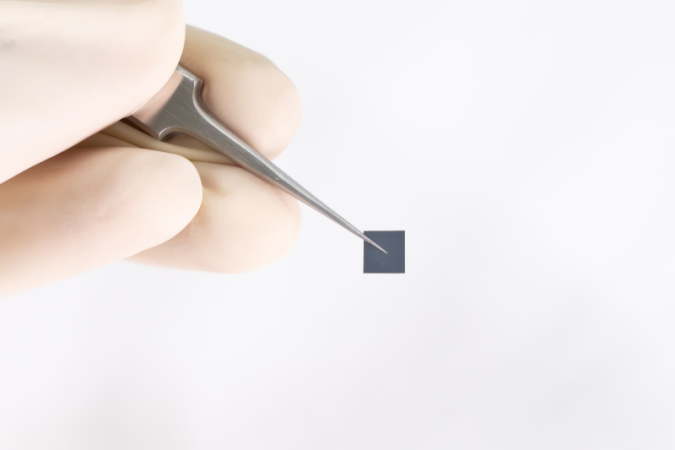
Regulations surrounding disposable batteries have accelerated a quiet race to replace coin cells, which on the whole are not readily rechargeable. TDK produces solid-state batteries and has announced a new material that claims an energy density of about 100 times that of their conventional batteries.

Energy density measures how much energy a system contains relative to its volume. The new battery has 1000 Wh/L. For comparison, old nickel-cadmium cells had about 150 Wh/L. A typical lithium-ion battery usually turns in about 200 – 250 Wh/L.

There aren’t many technical details, but a few things caught our interest. For one, it uses an oxide-based solid electrolyte and lithium alloy anodes. However, what really caught our eye was that it is “intended for use in wearables… that come in direct contact with the human body.” We don’t know if that means the material is safe for your skin or if it depends on being next to your body to operate.

While the energy density is high, keep in mind that the batteries of this type are usually tiny, so the total actual power available is probably not very high. Tiny batteries are definitely a thing. We are always hearing about breakthroughs, but we always wonder if and when we’ll see actual products.

Raspberry Pi Saves Printer From Junk Pile

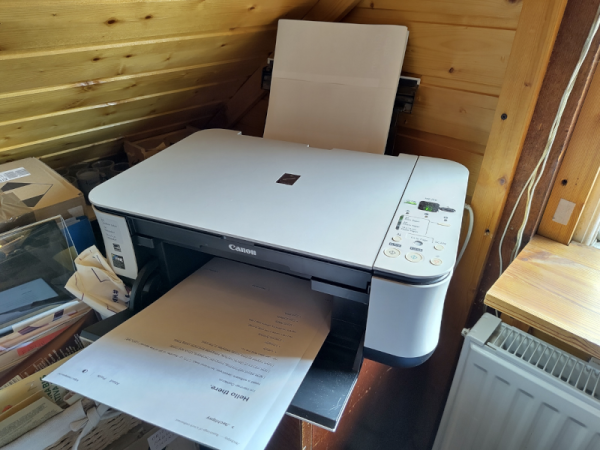
Around here, printers have a life expectancy of about two years if we are lucky. But [techtipsy] has a family member who has milked a long life from an old Canon PIXMA printer. That is, until Microsoft or Canon decided it was too old to print anymore. With Windows 10, it took some hacking to get it to work, but Windows 11 was the death knell. Well, it would have been if not for [techtipsy’s] ingenuity with a Raspberry Pi.

The Pi uses Linux, and, of course, Linux will happily continue to print without difficulty. If you are Linux savvy, you can probably see where this is going.

Continue reading “Raspberry Pi Saves Printer From Junk Pile”

A LEGO Orrery

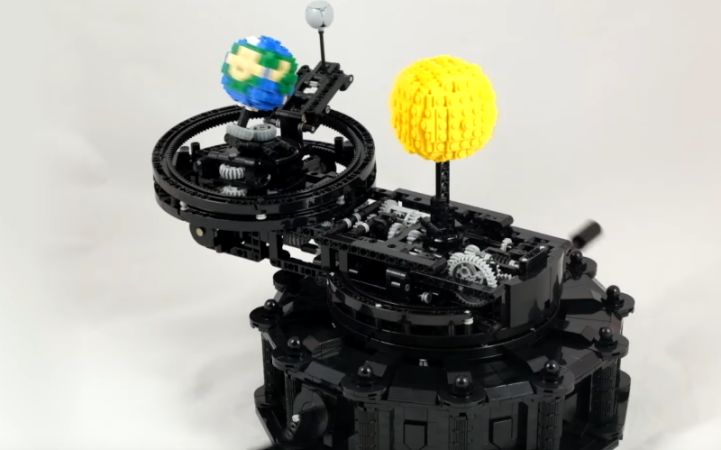
We aren’t sure how accurate you can get with LEGO, but a building block orrery looks cool, if nothing else. [Marian42] saw one done a few years ago and decided to build a version with a different mechanism. At first, the plan was to use some 3D printed fixtures, but the final product is made entirely from LEGO bricks. Very impressive. The video below shows that it has been complete for awhile, but the write-up that goes into great detail has only just arrived and it was worth the wait.

This is one of those things that seems simple if you don’t think too hard about it. However, when you sit down to actually do it, there are a number of challenges. For one thing, the Earth tilts at 23.5 degrees, and as the planet rotates, the tilt stays in the same direction, making it tricky to model mechanically.

The moon also has a 5.15 degree inclination, but since that’s hard to notice at this scale, the LEGO orrery exaggerates it. So, the Moon’s track has its own set of design problems. The whole thing has to rotate on a concentric shaft, which is also tricky to get right with kids’ building blocks.

Compared to the last orrery we saw, this one is huge. We’ve always been partial to ones that you have to look up to.

Continue reading “A LEGO Orrery”

What If The Matrix Was Made In The 1950s?

We’ve noticed a recent YouTube trend of producing trailers for shows and movies as if they were produced in the 1950s, even when they weren’t. The results are impressive and, as you might expect, leverage AI generation tools. While we enjoy watching them, we were especially interested in [Patrick Gibney’s] peek behind the curtain of how he makes them, as you can see below. If you want to see an example of the result first, check out the second video, showing a 1950s-era The Matrix.

Of course, you could do some of it yourself, but if you want the full AI experience, [Patrick] suggests using ChatGPT to produce a script, though he admits that if he did that, he would tweak the results. Other AI tools create the pictures used and the announcer-style narration. Another tool produces cinematographic shots that include the motion of the “actors” and other things in the scene. More tools create the background music.

Continue reading “What If The Matrix Was Made In The 1950s?”