Building Circuits Flexibly

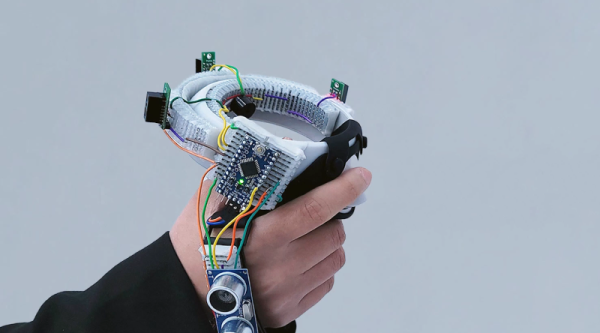
You think of breadboards as being a flexible way to build things — one can easily add components and wires and also rip them up. But MIT researchers want to introduce an actual flexible breadboard called FlexBoard. The system is like a traditional breadboard, but it is literally flexible. If you want to affix your prototype to a glove or a ball, good luck with a traditional breadboard. FlexBoard makes it easy. You can see a short video below and a second video presentation about the system, also.

The breadboard uses a plastic living hinge arrangement and otherwise looks more or less like a conventional breadboard. We can think of about a dozen projects this would make easier.

What’s more, it doesn’t seem like it would be that hard to fabricate using a 3D printer and some sacrificial breadboards. The paper reveals that the structures were printed on an Ender 3 using ePLA and a flexible vinyl or nylon filament. Want to try it yourself? You can!

We know what we will be printing this weekend. If you make any cool prototypes with this, be sure to let us know. Sometimes we breadboard virtually. Our favorite breadboards, though, have more than just the breadboard on them.
Continue reading “Building Circuits Flexibly”

Network Programming

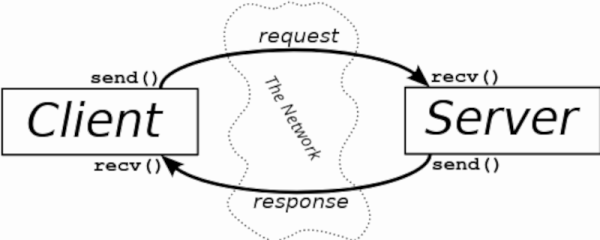
If you want a book on network programming, there are a few classic choices. [Comer’s] TCP/IP books are a great reference but sometimes is too low level. “Unix Networking Programming” by [Stevens] is the usual choice, but it is getting a little long in the tooth, as well. Now we have “Beej’s Guide to Network Programming Using Internet Sockets.” While the title doesn’t exactly roll off the tongue, the content is right on and fresh. Best part? You can read it now in your browser or in PDF format.

All the topics you’d expect are there in ten chapters. Of course, there’s the obligatory description of what a socket is and the types of sockets you commonly encounter. Then there’s coverage of addressing and portability. There’s even a section on IPV6.

Continue reading “Network Programming”

Handheld PC Looks Great

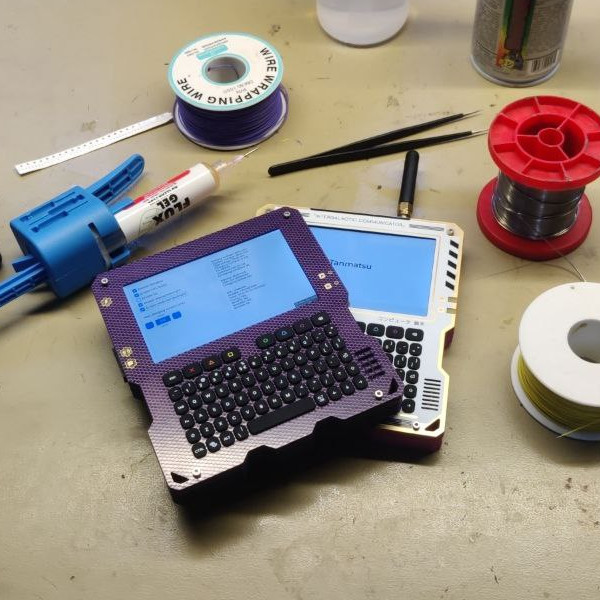
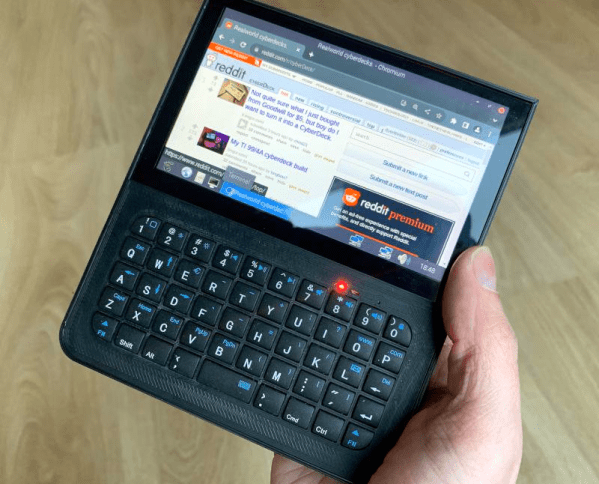
[Bytewelder] fondly remembers the Palm III and Sharp HC-4500, so taking on the design of Decktility, a custom handheld cyberdeck , was a natural next step. The blog post goes into much detail about the design decisions and challenges throughout the project. The end result, though, looks great.

The device uses a Raspberry Pi CM4 and an IPS touchscreen. The bulk of the design work was to get the power system working. There is a custom FET board and an Arduino that manages charging and battery state.

Continue reading “Handheld PC Looks Great”

ChatGPT Rules The World… Or, At Least, The Home

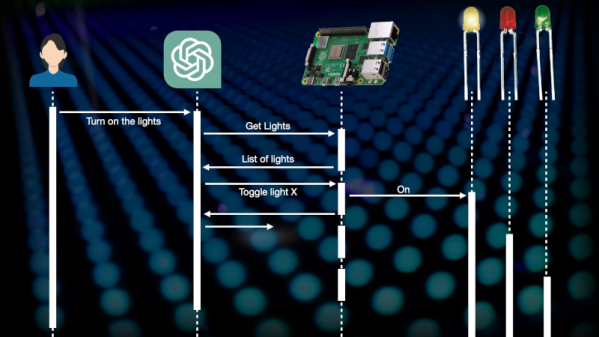
With all the hype about ChatGPT, it has to have crossed your mind: how can I make it control devices? On the utopia side, you could say, “Hey, ChatGPT, figure out what hours I’m usually home and set the thermostat higher when I am away.” On the dysfunctional side, the AI could lock you in your home and torment you like some horror movie. We aren’t to either extreme yet, but [Chris] couldn’t resist writing a ChatGPT plugin to control a Raspberry Pi. You can see a video of how it turned out below.

According to [Chris], writing a ChatGPT plugin is actually much simpler than you think. You can see in the video the AI can intuit what lights to turn on and off based on your activity, and, of course, many more things are possible. It can even detect snoring.

Continue reading “ChatGPT Rules The World… Or, At Least, The Home”

The Wizard Of Semiconductors

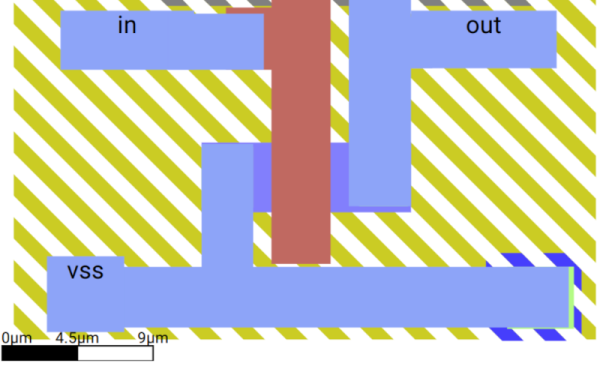
If you have three hours and you want to learn the fundamentals of semiconductors, [Tiny Tapeout] has something for you: An introduction to SiliWiz. You’ll also need the SiliWiz software (or use it online), which resembles the kind of tools that chip designers use but is meant for students to use as a learning tool

Using SiliWiz, you create layers on a virtual device, and you can use Spice to view the results. The tutorial is meant to be high-level and is suggested for students aged 14 or over (but we liked it and we are quite a bit older than that). Some more advanced material is also available at the same site.

Continue reading “The Wizard Of Semiconductors”

A Look Back At Computer Displays

These days, our video cards are actually as powerful as yesterday’s supercomputer and our monitors are bigger than the TVs most of us had as kids. But how did we get there? [RetroBytes] covers computer displays starting with the Colossus computer to today.

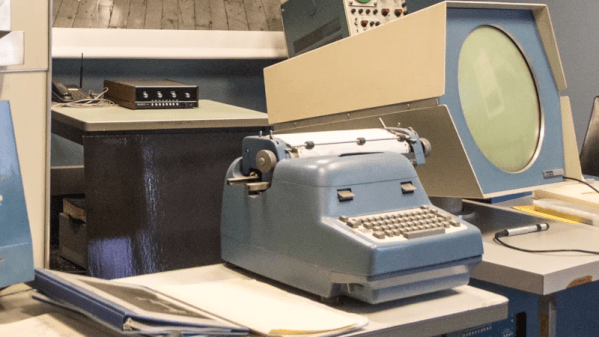
Back in the days of Colossus, of course, a display was actually a TeleType-like device printing on a roll of paper. The Manchester Baby actually had a crude display which was actually a Williams tube (no relation) that used phosphor persistence to store data. You could physically see memory on the tube or monitor it on a parallel tube — an early form of memory-mapped display.

Continue reading “A Look Back At Computer Displays”

Easy Graphene Production With A Laser Engraver

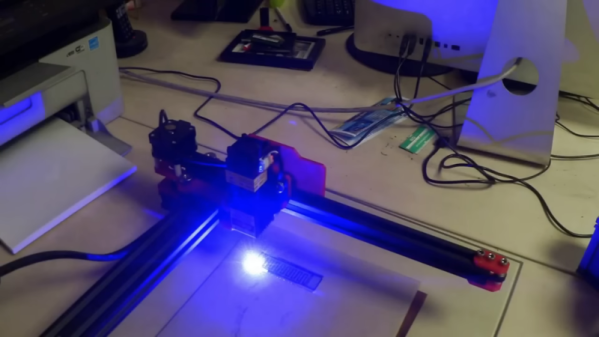
Graphene isn’t easy to produce at scale. But making small batches of graphene is doable in a few ways. [Robert Murray-Smith] decided to try producing “flash graphene.” This requires a big capacitor bank that is moderately expensive, so he decided to explain a different technique he read about using an ordinary laser cutter. Check it out in the video below.

We were a little disappointed that he didn’t actually make any graphene this time. He has, however, used other methods in other videos to create some type of graphene. In fact, he has many similar videos going back quite a ways as well as applications with concrete, capacitors, and more. We understand that this method doesn’t produce monolayer graphene, but actually creates a graphene “foam” with interesting properties. [Robert] talks about recent papers that show you can grow graphene on things other than Kapton tape using this method.

Continue reading “Easy Graphene Production With A Laser Engraver”