Packing Heat With A Homemade Portable Soldering Iron

Small portable soldering irons are all the rage so [electronoobs] decided to build one on his own. While the design isn’t quite as sleek as a commercial unit, considering it holds its own batteries, it looks pretty good.

Of course, the question is: does it work? You can see in the video below that it does, melting solder in about ten seconds. The weight is about 100 g, so it should be very comfortable to use.

Continue reading “Packing Heat With A Homemade Portable Soldering Iron”

WWII Hydrogen Peroxide Rocket 3D Print

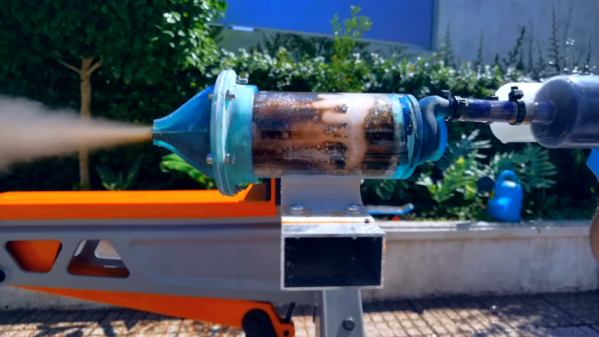
[Integza] was reading about a World War II-era rocket plane created near the end of the war by the Germans. The Heinkel He-176 wasn’t very practical, but he was intrigued when he read the rocket was cold and combustionless. He did a little research and found the engine was a monopropellent engine using hydrogen peroxide. This led to some interesting experiments and a 3D printed rocket engine, as you can see in the video below.

Usually, liquid-fueled rocket engines have a fuel and an oxidizer that mix and are either ignited or, in a hypergolic rocket, spontaneously combust on contact. With a monopropellent, the thrust comes from a chemical reaction between the propellant — hydrogen peroxide, in this case, and a catalyst.

Continue reading “WWII Hydrogen Peroxide Rocket 3D Print”

Tesla Automatic Driving Under Scrutiny By US Regulators

The US National Highway Traffic Safety Administration (NHTSA) has opened a formal investigation about Tesla’s automatic driving features (PDF), claiming to have identified 11 accidents that are of concern. In particular, they are looking at the feature Tesla calls “Autopilot” or traffic-aware cruise control” while approaching stopped responder vehicles like fire trucks or ambulances. According to the statement from NHTSA, most of the cases were at night and also involved warning devices such as cones, flashing lights, or a sign with an arrow that, you would presume, would have made a human driver cautious.

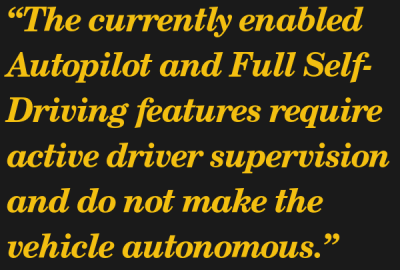
Qote from Tesla support page: "The currently enabled Autopilot and Full Self-Driving features require active driver supervision and do not make the vehicle autonomous."There are no details about the severity of those accidents. In the events being studied, the NHTSA reports that vehicles using the traffic-aware cruise control “encountered first responder scenes and subsequently struck one or more vehicles involved with those scenes.”

Despite how they have marketed the features, Tesla will tell you that none of their vehicles are truly self-driving and that the driver must maintain control. That’s assuming a lot, even if you ignore the fact that some Tesla owners have gone to great lengths to bypass the need to have a driver in control. Tesla has promised full automation for driving and is testing that feature, but as of the time of writing the company still indicates active driver supervision is necessary when using existing “Full Self-Driving” features.

We’ve talked a lot about self-driving car safety in the past. We’ve also covered some of the more public accidents we’ve heard about. What do you think? Are self-driving cars as close to reality as they’d like you to believe? Let us know what you think in the comments.

Linux Fu: Walk, Chew Gum

If you ever think about it, computers are exceedingly stupid. Even the most powerful CPU can’t do very much. However, it can do what it does very rapidly and repeatably. Computers are so fast, they can appear to do a lot of things at once, too and modern computers have multiple CPUs to further enhance their multitasking abilities. However, we often don’t write programs or shell scripts to take advantage of this. However, there’s no reason for this, as you’ll see.

Bash Support

It is surprisingly easy to get multiple processes running under Bash. For one thing, processes on either side of a pipe run together, and that’s probably the most common way shell scripts using multiprogramming. In other words, think about what happens if you write ls | more.

Under the old MSDOS system, the first program would run to completion, spooling its output to a temporary file. Then the second program will run, reading input from the same file. With Linux and most other modern operating systems, both programs will run together with the input of the second program connected to the first program’s output. Continue reading “Linux Fu: Walk, Chew Gum”

3D Printed Fabric Stiffens On Demand

Researchers in Singapore and at CalTech have developed a 3D printed fabric with an interesting property: it is generally flexible but can stiffen on demand. You can see a video about the new fabric, below.

The material consists of nylon octahedrons interlocked. The cloth is enclosed in a plastic envelope and vacuum-packed. Once in a vacuum, the sheet becomes much stiffer and can hold many times its own weight.

Continue reading “3D Printed Fabric Stiffens On Demand”

Making Ferroelectric Solar Cells Better

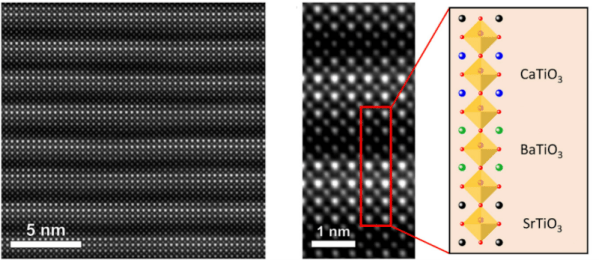
Researchers claim that using several very thin layers of ferroelectric crystals can lead to significantly better ferroelectric solar cell efficiency. But don’t pull the panels off your roof yet. Conventional cells are still much more efficient than ferroelectric devices — at least, for now.

Unlike conventional silicon-based solar cells, ferroelectric cells don’t depend on a PN junction and — in theory — can be cheaper and easier to produce. However, they typically don’t absorb as much sunlight as other materials.

Continue reading “Making Ferroelectric Solar Cells Better”

Google’s Periodic Table

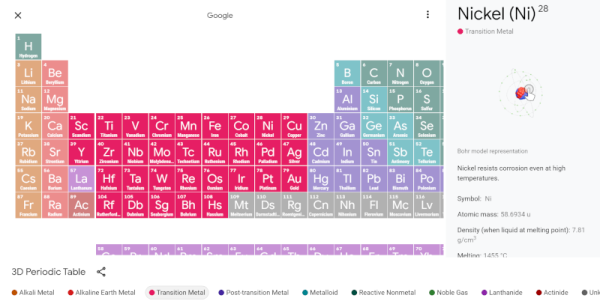
One of the nice things about the Internet is that you don’t need huge reference books anymore. You really don’t need big wall charts, either. A case in point: what science classroom didn’t have a periodic table of the elements? Now you can just look up an interactive one from Google. They say it is 3D and we suppose that’s the animations of the Bohr model for each atom. You can debate if it is a good idea to show people Bohr models or not, but it is what most of us learned, after all.

While the website is probably aimed more at students, it is a handy way to look up element properties and it is visually attractive, too. You probably remember, the columns are no accident in a periodic table, so the actual format doesn’t vary from one instance of it to another. However, we liked the col coding and the information panel that appears when you click on an element.

Continue reading “Google’s Periodic Table”