A 3-6-9 Antenna Pulls In The Signals

Every time we see a dispatch from [Mr. Carlson], we imagine it is being beamed from his orbital station packed full of vintage radio gear. We are certain the reality is more terrestrial, but if we were going to build an orbiting lab, it might look like [Carlson’s] shack. In his latest communique, he shares his progress working on a high-performance 3-6-9 receiving antenna design and you can see it in the video below.

Although the antenna isn’t done, it is already working and looks impressive. There’s a lot of wire, so this probably isn’t a condo-friendly solution. The name of the antenna derives from the three wires, one tuned for 3 MHz, one for 6 MHz, and the other for 9 MHz.

Continue reading “A 3-6-9 Antenna Pulls In The Signals” →

3D Printed Scooter Zips Around

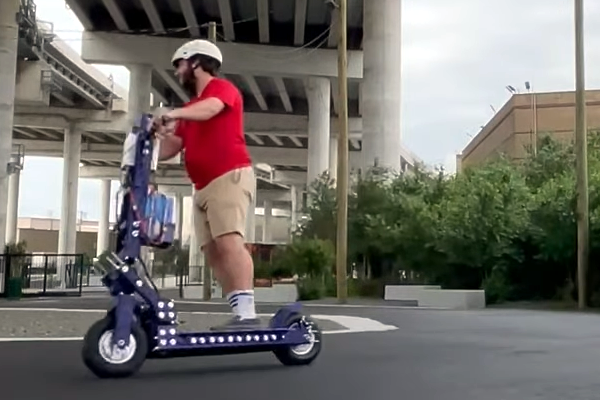
Tooling around downtown on a personal electric vehicle is a lot of fun, but it is even better when you do like [James Dietz] and ride on your own 3D-printed electric scooter. As one of the entries for the Hackaday Prize, RepRaTS (Replicable Rapid prototyper Transportation System) has a goal of doing for scooters what the original RepRap project did for 3D printing: provide a user-friendly design base that you can extend, modify, and maintain. It doesn’t even require power tools to build, other than, of course, your 3D printer.

The design uses threaded rods and special plastic spacers made to hold a large load. The prototype is deliberately oversized with large hub motors, with the understanding that most builds will probably be smaller. As you can see in the video below, the scooter seems to go pretty fast and handles well.

Continue reading “3D Printed Scooter Zips Around” →

Hacking The Wooly Mammoth

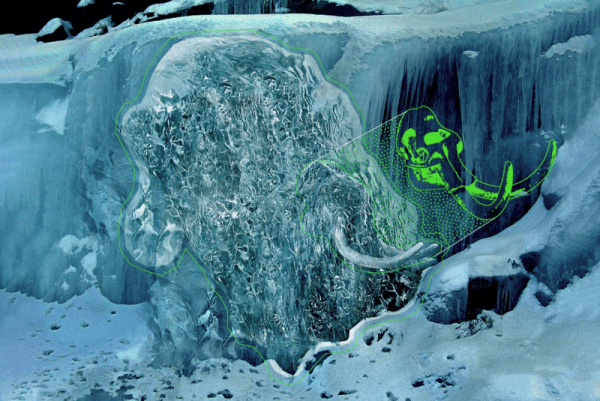
In case you can’t get enough Jurassic Park movies, you can look forward to plans a biotech company has to hybridize endangered Asian elephants with long-extinct wooly mammoths using gene splicing and other exotic techniques.

Expect a long movie, the team hopes to have calves after six years and we don’t think a theme park is in the making. The claim is that mammoth traits will help the elephants reclaim the tundra, but we can’t help but think it is just an excuse to reanimate an extinct animal. If you read popular press reports, there is some question if the ecological mission claimed by the company is realistic. However, we can’t deny it would be cool to bring an animal back from extinction — sort of.

We aren’t DNA wizards, so we only partially understand what’s being proposed. Apparently, skin cells from a modern elephant will serve as a base to accept extracted mammoth DNA. This might seem far-fetched but turns out the mammoth lived much more recently than we usually think. When they die in their natural deep-freeze environment, they are often well preserved.

Once the gene splicing is set up, a surrogate elephant will carry the embryo to term. The hope is that the improved breed would be able to further interbreed with natural species, although with the gestation and maturity times of elephants, this will be a very long time to bear fruit.

So how do you feel about it? Will we face a movie-level disaster? Will we get some lab curiosity creatures? Will it save the tundra? Let us know what you think in the comments.

DNA manipulation has gone from moon-shot-level tech to readily accessible in a very short amount of time. In particular, CRISPR, changes everything and is both exciting and scary on what it puts in the hands of nearly anyone.


Harp Uses Frikin’ Lasers

We aren’t sure if you really need lasers to build [HoPE’s] laser harp. It is little more than some photocells and has an Arduino generate tones based on the signals. Still, you need to excite the photocells somehow, and lasers are cheap enough these days.

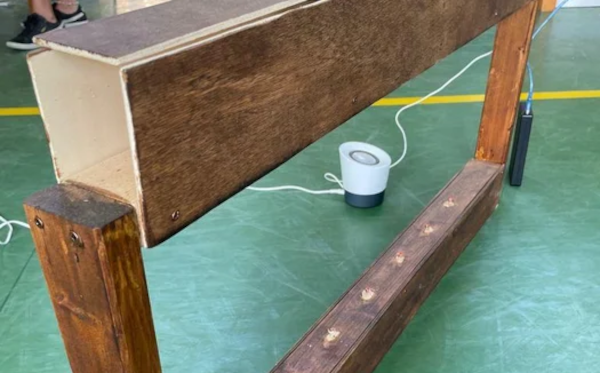
Mechanically, the device is a pretty large wooden structure. There are six lasers aligned to six light sensors. Each sensor is read by an analog input pin on an Arduino armed with a music-generation shield. We’ve seen plenty of these in the past, but the simplicity of this one is engaging.

Continue reading “Harp Uses Frikin’ Lasers” →

3D Objects Without Scanning

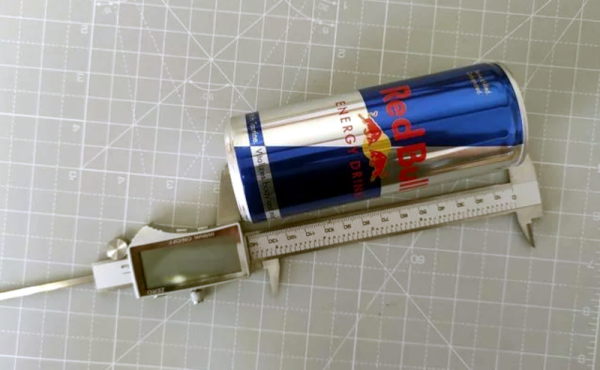
There are many scanners — both commercial and homemade — that can take a variety of scans or images of a 3D object and convert it into something like a 3D printable file. When the process works, it works well, but the results can be finicky at best and will require a lot of manual tuning. According to [Samuel Garbett], you might as well just draw your own model using Blender. He shows you how using a Red Bull can which, granted, isn’t exactly the most complicated thing ever, but it isn’t the simplest either.

He does take one photo of the can, so there is a camera involved at some point. He also takes measurements using calipers, something you probably already have laying around.

Since it is just a can, there aren’t many required pictures or measurements as, say, a starship model. Once you have the measurements, of course, you could use the tool of your choice and since we aren’t very adept with Blender, we might have used something we think is easier like FreeCAD or OpenSCAD. However, Blender has a lot of power, so we suspect making the jump from can to the USS Enterprise might be more realistic for a Blender user.

Besides, it is good to see how other tools work and we were surprised that Blender could be relatively simple to use. Every time we see [Jared’s] channel, we think we should learn more about Blender. But if you have your heart set on a real scanner, there are plenty of open source designs you can print.

Ray Casting 101 Makes Things Simple

[SSZCZEP] had a tough time understanding ray tracing to create 3D-like objects on a 2D map. So once he figured it out, he wrote a tutorial he hopes will be more accessible for those who may be struggling themselves.

If you’ve ever played Wolfenstein 3D you’ll have seen the technique, although it crops up all over the place. The tutorial borrows an animated graphic from [Lucas Vieira] that really shows off how it works in a simplified way. The explanation is pretty simple. From a point of view — that is a camera or the eyeball of a player — you draw rays out until they strike something. The distance and angle tell you how to render the scene. Instead of a camera, you can also figure out how a ray of light will fall from a light source.

There is a bit of math, but also some cool interactive demos to drive home the points. We wondered if Demos 3 and 4 reminded anyone else of an obscure vector graphics video game from the 1970s? Most of the tutorial is pretty brute force, calculating points that you can know ahead of time won’t be useful. But if you stick with it, there are some concessions to optimization and pointers to more information.

Overall, a lot of good info and cool demos if this is your sort of thing. While it might not be the speediest, you can do ray tracing on our old friend the Arduino. Or, if you prefer, Excel.

GNU Radio Decodes Voyager Data

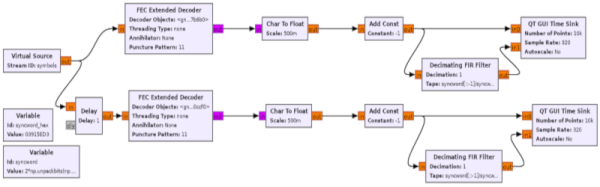
With the 44th anniversary of the launch of Voyager I, [Daniel] decided to use GNU Radio to decode Voyager data. The data isn’t live, but a recording from the Green Bank Telescope. The 16 GB file is in GUPPI format which stores raw IQ samples.

The file contains 64 frequency channels of just under 3MHz each. The signal of interest is in one channel, so it is easy to just throw away the rest of the data.

Continue reading “GNU Radio Decodes Voyager Data” →