Build A Fun CPU In Your Browser

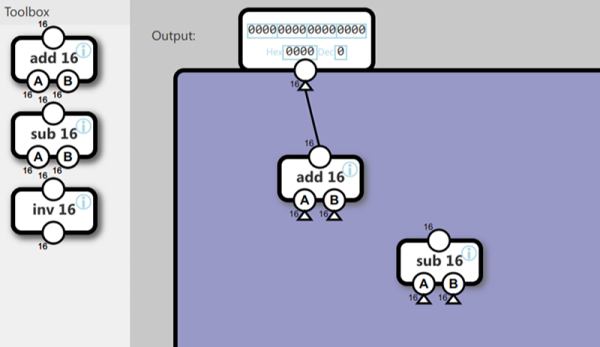
A rite of passage for a digital designer is to build a CPU. That may seem a formidable task and if you are thinking of building a modern CPU like the one in your PC, it is. However, a simple CPU is well within the reach of anyone who can sling some logic gates or HDL. We’ve even seen CPUs built in Minecraft. Now you can play nandgame and build a CPU step-by-step in your browser.

The game is based on the popular From NAND to Tetris site. True to the name you start out with a single NAND gate as a tool. From there you build an inverter, an AND gate, adders, flip flops, registers, and the like. You get a little help from the accompanying text and there are some blacked out hints if you get stuck.
Continue reading “Build A Fun CPU In Your Browser”

NASA Wants You… To Design Their Robot

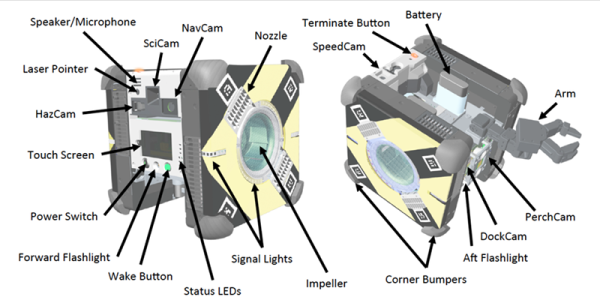
No one loves a good competition more than Hackaday. We run enough to keep anyone busy. But if you have a little spare time after designing your one inch PCB, you might check out the competition to develop a robotic arm for NASA’s Astrobee robot.

Some of the challenges are already closed, but there are quite a few still open for a few more months (despite the published closing date of and these look like great projects for a hacker. In particular, the software architecture and command, data, and power system are yet to start.

But don’t let the $25,000 fool you. That’s spread out over a number of awards for the entire series. Each task has an award that ranges from $250 to $5,000. However, you also have to win that award, of course. If you register, however, you do get a sticker that has flown on the space station.

If you haven’t seen Astrobee, it is a flying robot made to assist astronauts and cosmonauts on the International Space Station. The robot is really a floating sensor platform that can do some autonomous tasks but can also act as a telepresence robot for flight controllers. You might enjoy the second video below if you haven’t seen Astrobee, before.

We covered the Astrobee before. If you’d like to visit the space station yourself, it isn’t quite telepresence, but Google can help you out.

Continue reading “NASA Wants You… To Design Their Robot”

Radio Antenna Mismatching: VSWR Explained

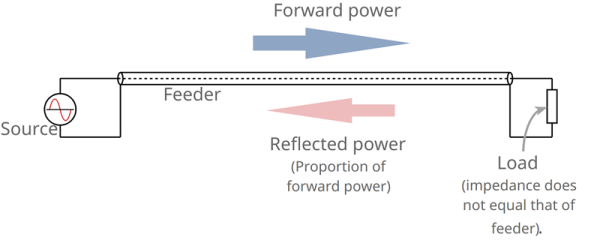
If you have ever operated any sort of transmitting equipment, you’ve probably heard about matching an antenna to the transmitter and using the right co-ax cable. Having everything match — for example, at 50 or 75 ohms — allows the most power to get to the antenna and out into the airwaves. Even for receiving this is important, but you generally don’t hear about it as much for receivers. But here’s a question: if a 100-watt transmitter feeds a mismatched antenna and only delivers 50 watts, where did the other 50 watts go? [ElectronicsNotes] has a multi-part blog entry that explains what happens on a mismatched transmission line, including an in-depth look at voltage standing wave ratio or VSWR.

We liked the very clean graphics showing how different load mismatches affect the transmission line. We also liked how he tackled return loss and reflection coefficient.

Continue reading “Radio Antenna Mismatching: VSWR Explained”

Circuit VR: A Tale Of Two Transistors

Last time on Circuit VR, we looked at creating a very simple common emitter amplifier, but we didn’t talk about how to select the capacitor values, or much about why we wanted them. We are going to look at that this time, as well as how to use a second transistor in an emitter follower (or common collector) configuration to stiffen the amplifier’s ability to drive an output load.

Several readers wrote to point out that I’d pushed the Ic value a little high for a 2N2222. As it turns out, at least one of the calculations in the comments was a bit high. However, I’ve updated the post at the end to explore what was in the comments, and talk a bit more about how you compute power dissipation with or without LTSpice. If you read that post, you might want to jump back and pick up the update. Continue reading “Circuit VR: A Tale Of Two Transistors”

Zener Diode Tutorial

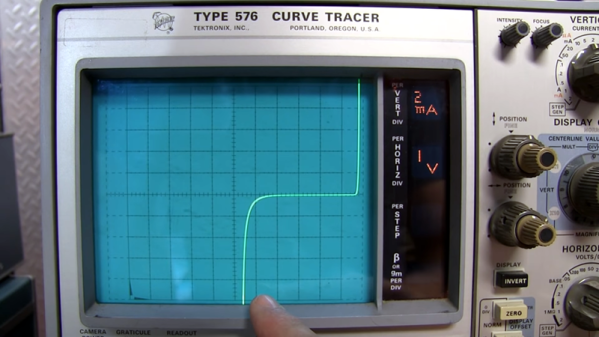
We always enjoy [w2aew’s] videos, and his latest on zener diodes is no exception. In it, he asserts that all Zener diodes are not created equal. Why? You’ll have to watch the video below to find out.

Zener diodes are one of those strange items that have several uses but are not as popular as they once were. There was a time when the Zener was a reasonable way to regulate a voltage inexpensively and easily. Unfortunately the regulation characteristics were not very good, and the power lost was very high. But that was sometimes a reasonable trade, compared to putting a pass transistor and the associated discrete circuitry in place to make a linear regulator. With the advent of chips like the 7800-series regulators, you can have a high-quality regulator with one extra wire and still keep your costs under $1. Even if you want to do better and go with a switching power supply, that’s easy now and not much more expensive.

Continue reading “Zener Diode Tutorial”

Reinforce Happy Faces With Marshmallows And Computer Vision

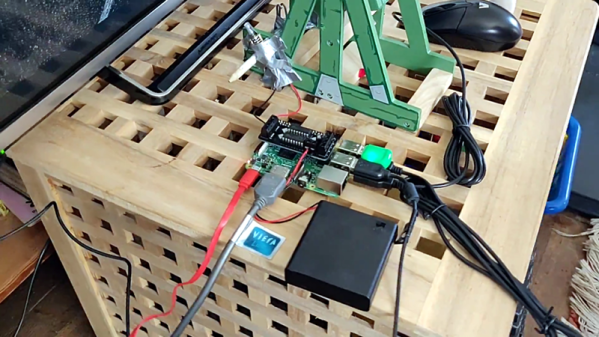
Bing Crosby famously sang “Just let a smile be your umbrella.” George Carlin, though, said, “Let a smile be your umbrella, and you’ll end up with a face full of rain.” [BebBrabyn] probably agrees more with the former and used a Raspberry Pi with Open CV to detect a smile, a feature some digital cameras have had for a long time. This project however doesn’t take a snapshot. It launches a marshmallow using a motor-driven catapult. We wondered if he originally tried lemon drops until too many people failed to catch them properly.

This wouldn’t be a bad project for a young person — as seen in the video below — although you might have to work a bit to duplicate it. The catapult was upcycled from a broken kid’s toy. You might have to run to the toy store or rig something up yourself. Perhaps you could 3D print it or replace it with a trebuchet or compressed air.

Continue reading “Reinforce Happy Faces With Marshmallows And Computer Vision”

Leather Working With A 3D Printer

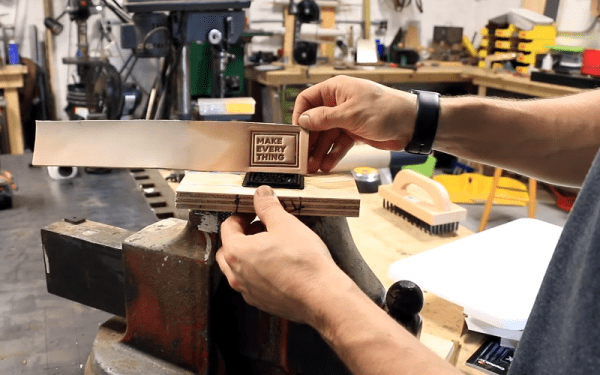
No, you can’t print in leather — at least not yet. But [Make Everything] has a tutorial about how to produce a custom leather embossing jig with a 3D printer. From a 3D printing point of view, this isn’t very hard to do and you might want to skip over the first six minutes of the video if you’ve done 3D printing before.

The real action is when he has the 3D print completed. He glues the stamp down to some wood and then fits the assembly to a vise that he’ll use as a press. After wetting the leather, the wood and 3D printed assembly sandwiches the piece and the vise applies pressure for ten minutes. He did make the leather a bit oversized to make alignment more forgiving. After the embossing is complete, he trims it out.

Continue reading “Leather Working With A 3D Printer”