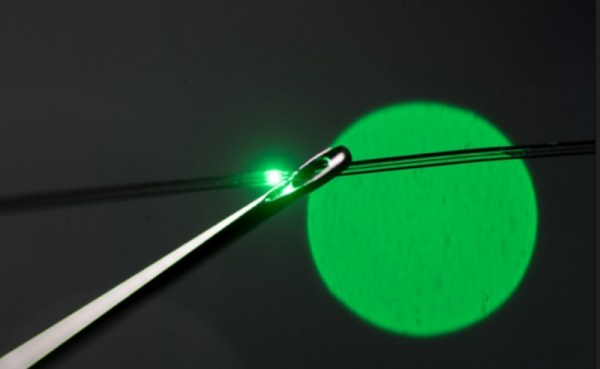
MIT Makes Washable LED Fabric

Let’s face it, one of the challenges of wearable electronics is that people are filthy. Anything you wear is going to get dirty. If it touches you, it is going to get sweat and oil and who knows what else? And on the other side it’s going to get spills and dirt and all sorts of things we don’t want to think about on it. For regular clothes, that’s not a problem, you just pop them in the washer, but you can’t say the same for wearable electronics. Now researchers at MIT have embedded diodes like LEDs and photodetectors, into a soft fabric that is washable.

Traditionally, fibers start as a larger preform that is drawn into the fiber while heated. The researchers added tiny diodes and very tiny copper wires to the preform. As the preform is drawn, the fiber’s polymer keeps the solid materials connected and in the center. The polymer protects the electronics from water and the team was able to successfully launder fabric made with these fibers ten times.
Continue reading “MIT Makes Washable LED Fabric”

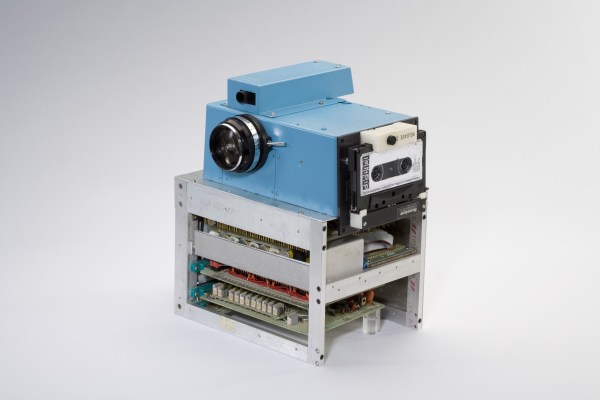
Dawn Of The First Digital Camera

Technology vanishes. It either succeeds and becomes ubiquitous or fails. For example, there was a time when networking and multimedia were computer buzzwords. Now they are just how computers work. On the other hand, when was the last time you thought about using a CueCat barcode reader to scan an advertisement? Then there are the things that have their time and vanish, like pagers. It is hard to decide which category digital cameras fall into. They are being absorbed into our phones and disappearing as a separate category for most consumers. But have you ever wondered about the first digital camera? The story isn’t what you would probably guess.

The first digital camera I ever had was a Sony that took a floppy disk. Surely that was the first, right? Turns out, no. There were some very early attempts that didn’t really have the technology to make them work. The Jet Propulsion Laboratory was using analog electronic imaging as early as 1961 (they had been developing film on the moon but certainly need a better way). A TI engineer even patented the basic outline of an electronic camera in 1972, but it wasn’t strictly digital. None of these bore any practical fruit, especially relative to digital technology. It would take Eastman Kodak to create a portable digital camera, even though they were not the first to commercialize the technology.

Continue reading “Dawn Of The First Digital Camera”

Signal Generator Uses FPGA

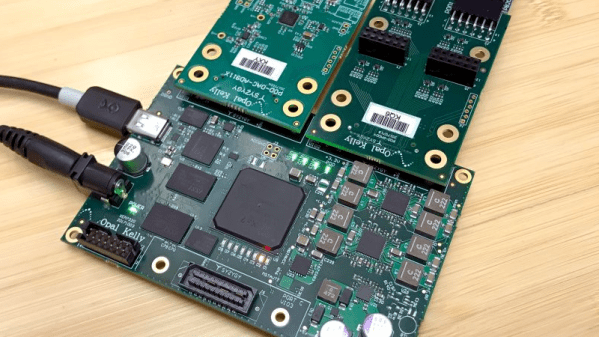
Although there are a few exceptions, FPGAs are predominantly digital devices. However, many FPGA applications process analog data, so you often see an FPGA surrounded by analog and digital converters. This is so common that Opal Kelly — a producer of FPGA tools — launched the SYZYGY open standard for interconnecting devices like that. [Armeen] — a summer intern at Opal Kelly — did a very interesting open source FPGA-based signal generator using a Xilinx FPGA, and a SYZYGY-compliant digital to analog converter.

As you might expect, [Armeen] used a lot of Opal Kelly hardware and software in the project. But the Verilog code (available on GitHub) shows a lot of interesting things including some very practical example code for using Xilinx CORDIC IP,  which is a great way to do high-order math using digital logic.

Continue reading “Signal Generator Uses FPGA”

Scanning Tunneling Microscope Packs The Bits

We don’t usually think of a microscope as an active instrument, but researchers in Canada have used a scanning tunneling microscope to remove or replace single hydrogen atoms from the surface of a hydrogen-passivated silicon wafer. If the scientific paper is too much to wade through, there’s an IEEE Spectrum article and a video that might run on the 6 o’clock news below.

As usual with these research projects, there is good news and there is bad news. The good news is that — in theory — a memory device made using hydrogen lithography could store 138 terabytes per square inch. That’s enough, apparently, to store the entire iTunes catalog on a quarter. The bad news? Well, right now this takes exotic lab equipment at very low temperatures and pressures.

Continue reading “Scanning Tunneling Microscope Packs The Bits”

Circuit VR: Starting An Amplifier Design

Sometimes I wish FETs had become practical before bipolar transistors. A FET is a lot more like a tube and amplifies voltages. Bipolar transistors amplify current and that makes them a bit harder to use. Recently, [Jenny List] did a series on transistor amplifiers including the topic of this Circuit VR, the common emitter amplifier. [Jenny] talked about biasing. I’ll start with biasing too, but in the next installment, I want to talk about how to use capacitors in this design and how to blend two amplifiers together and why you’d want to do that.

But before you can dive into capacitors and cascades, we need a good feel for how to get the transistor biased to start with. As always, there’s good news and bad news. The bad news it that transistors vary quite a bit from device to device. The good news is that we’ll use some design tricks to keep that from being a problem and that will also give us a pretty wide tolerance on component values. The resulting amplifier won’t necessarily be precise, but it will be fine for most uses. As usual, you can find all the design files on GitHub, and we’ll be using the LT Spice simulator.

Continue reading “Circuit VR: Starting An Amplifier Design”

High Tech Drone Scarecrows Can Make Airports Safer

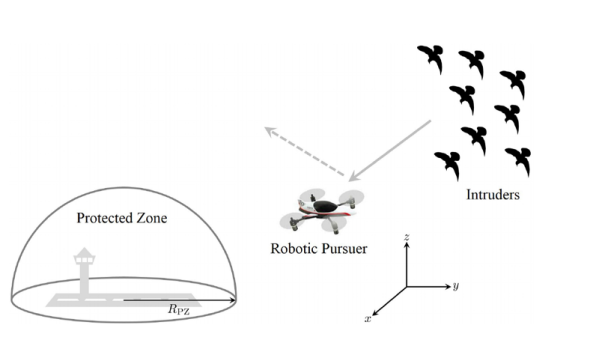
If you pay attention to airplane news — or you watched the film Sully — you know planes have problems with birds. Sully was about US Airways flight 1549 which struck a flock of geese and ditched in the Hudson river.  Engineers at Caltech say that was the inspiration for them to develop a control algorithm that enables a single drone scarecrow to herd flocks of birds away from airports.

Airports have tried a lot of things to discourage birds ranging from trained falcons to manually-piloted drones. Apparently, herding birds is harder than you would think. If you fly the drone too far from a flock, it will ignore the threat. If you get too close, the flock will scatter making it both threaten a larger area and harder to control.

Continue reading “High Tech Drone Scarecrows Can Make Airports Safer”

Python Resurrects Dot Matrix Printing

These days a printer — especially one at home — is likely to spray ink out of nozzles. It is getting harder to find home laser printers, and earlier printer technologies such as dot matrix are almost gone from people’s homes even if you’ll still see a few printing multipart forms in some offices.

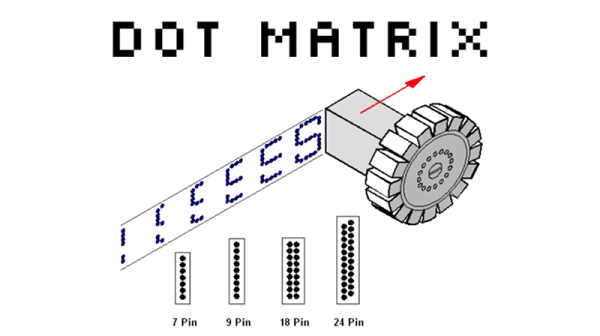
[Thomas Winningham] bought an old Commodore dot matrix printer in a fast food parking lot for $20. How hard could it be to get it working? How hard, indeed. Check out the video below to see the whole adventure. The principle behind the printer is simple enough. The head has one or two rows of pins each controlled by a solenoid. The head moves across the paper and your job — should you decide to accept it — is to make the pins push out at the right spot. An ink ribbon like a typewriter uses — oh yeah, more vanishing tech — leaves ink on the paper where it gets punched by the pin.

Continue reading “Python Resurrects Dot Matrix Printing”