Electric Shower Head Teardown Makes Us Wince

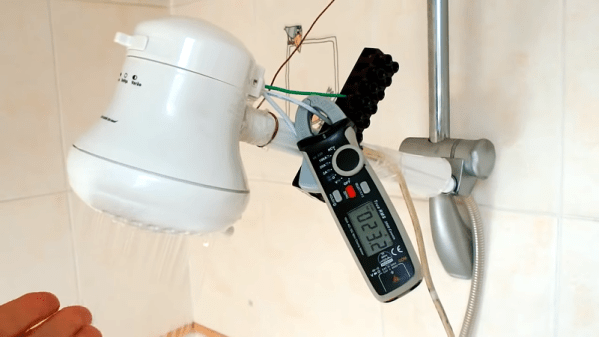
We have bought some really amazing stuff from the Chinese online shops. We’ve also bought stuff that was… less than satisfactory, let’s say. At the prices you pay, you usually just chalk up the bad stuff as a cost of doing business. But [DiodeGoneWild] has a teardown of something that could be very dangerous if it wasn’t up to snuff: an electrically heated shower head. He says they are common in Latin America and have the nickname “suicide showers.”

We’ve seen the cute showerheads that change color, but those take batteries. What we are talking about here connects to the 220V main and draws 30A to instantly heat your shower water. Environmentally, that’s great since you don’t have a tank of water you keep heating and reheating just in case you need hot water. But you wouldn’t throw an AC radio in the tub, so you have to wonder just how safely this thing’s built. Well, you don’t have to wonder, because the videos below are going to show us.

Continue reading “Electric Shower Head Teardown Makes Us Wince”

Circuit VR: Measuring With LTSpice

Usually, with Circuit VR we look at some circuit in detail with simulation — usually LTSpice. This one will be a little meta because I wanted to look at a capability in LTSpice which ironically is very useful, but not often used. Along the way, though, we’ll look at why you get maximum power transfer when your source impedance matches your load impedance. This is something you probably already know about, but it is interesting to look at in simulation if you know how to coax LTSpice — no pun intended — into showing you a meaningful graph.

The circuit is super simple. An AC source and a 50-ohm resistor stand-in for a 40-meter ham transmitter. With 100 volts into a 50-ohm load. So far, so good.

Continue reading “Circuit VR: Measuring With LTSpice”

Memristor May Be Fake News

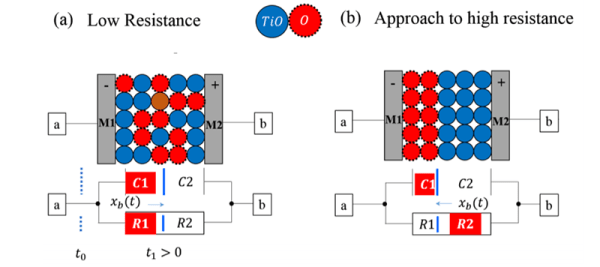
The fundamental passive components of electronics are the resistor, the capacitor, the inductor, and the oscillator, right? Actually, no, oscillators aren’t considered fundamental components because they aren’t linear. Resistors, capacitors, and inductors are also irreducible. That is, you can’t combine other passive components to model them unlike, say, a potentiometer. In the last few decades, though, we’ve heard of another fundamental component — the memristor. [Isaac Abraham] asserts, though, that the memristor isn’t a new fundamental component, but just an active device.

To support that premise [Isaac] builds a periodic table of devices showing how components map to changing voltages based on the time-varying property of charge. This shows that all the basic relationships are filled and that memristor actually covers a composition of passive components. This is similar in concept to [Strukov’s] diagram implying that a memristor is the fourth quadrant of a space defined by charge vs flux. However, using the properties of this periodic table [Isaac] argues against the fundamental nature of the memristor.

Continue reading “Memristor May Be Fake News”

Simulate PIC And Arduino/AVR Designs With No Cloud

I’ve always appreciated simulation tools. Sure, there’s no substitute for actually building a circuit but it sure is handy if you can fix a lot of easy problems before you start soldering and making PCBs. I’ve done quite a few posts on LTSpice and I’m also a big fan of the Falstad simulator in the browser. However, both of those don’t do a lot for you if a microcontroller is a major part of your design. I recently found an open source project called Simulide that has a few issues but does a credible job of mixed simulation. It allows you to simulate analog circuits, LCDs, stepper and servo motors and can include programmable PIC or AVR (including Arduino) processors in your simulation.

The software is available for Windows or Linux and the AVR/Arduino emulation is built in. For the PIC on Linux, you need an external software simulator that you can easily install. This is provided with the Windows version. You can see one of several videos available about an older release of the tool below. There is also a window that can compile your Arduino code and even debug it, although that almost always crashed for me after a few minutes of working. As you can see in the image above, though, it is capable of running some pretty serious Arduino code as long as you aren’t debugging.

Continue reading “Simulate PIC And Arduino/AVR Designs With No Cloud”

If You Are Planning On Building Your Own Space Shuttle…

One of the most complicated machines ever built was the US space shuttle (technically, the STS or Space Transportation System). Despite the title, we doubt anyone is going to duplicate it. However, one of the most interesting things about the shuttle’s avionics — the electronics that operate the machine — is that being a government project there is a ridiculous amount of material available about how it works. NASA has a page that gathers up a description of the vehicle’s avionics. If you are more interested in the actual rocket science, just back up a few levels.

We will warn you, though, that if you’ve never worked on space hardware, some of the design choices will seem strange. There are two reasons for that. First, the environment is very strange. You have to deal with high acceleration, shock, vibration, and radiation, among other things. The other reason is that the amount of time between design and deployment is so long due to testing and just plain red tape that you will almost certainly be deploying with technology that is nearly out of date if not obsolete.

Continue reading “If You Are Planning On Building Your Own Space Shuttle…”

ARM Programming With Bare C

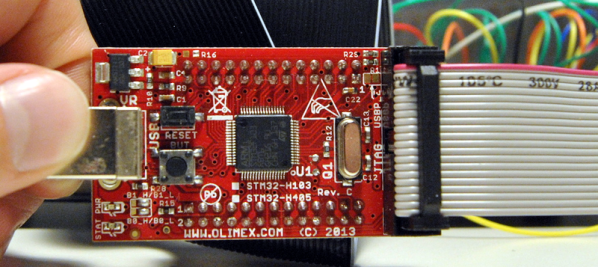
We confess. When starting a microcontroller project, we often start with the last one we did for that environment, copy it, and just make changes. And the first one? It — ahem — might have been found on the Internet. There’s a lot more than just your code that goes into this. If you want  to do (and understand) absolutely everything yourself on an ARM development project, you could use an all-in-one walkthrough. It just so happens [Jacob Mossberg] has a from scratch guide of what you need to do to get your C code running on ARM.

Starting with an ARM Cortex M3, he writes a simple C program and gets the assembly language equivalent. What follows is a detailed analysis of the machine code, exploring what the compiler assumed would be set up. This leads to understanding of what the start up code and linker script needs to look like.

It is a great approach and reminded us of the old saying about “teach someone how to fish.” He even devotes a little time to talking about getting debugging working with OCD. Of course, the exact details are specific to the chip he’s using, but most of it would apply to any ARM chip. Even if you don’t use ARM, though, the thought process and methodology is itself quite interesting.

This post would be just the thing if you are using Blue Pills and ready to move away from the Arduino ecosystem. Of course, if you want to veer away from the Arduino system, but don’t want to go all the way to bare metal, there’s always mBed.

Cheap FPGA Board Roundup

There’s never been a better time to get into using FPGAs. Nearly all vendors have some level of free software and while boards haven’t gotten as cheap as ones with microcontrollers, the prices are way down. [Joel Williams] was frustrated when his board of choice became unavailable, so he decided to compile data on as many cheap boards as he could.

[Joel] covers the major vendors like Intel and Altera. But he also includes information on Actel, Cypress, and Lattice. While the list probably isn’t comprehensive, it is a lot of information about many popular boards. The notes are helpful and point out oddities about the boards in many cases.

Continue reading “Cheap FPGA Board Roundup”