Teddy Ruxpin: Navigate To 143 Main Street

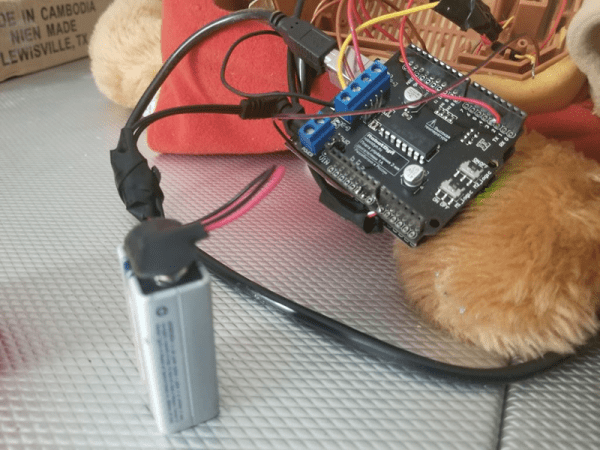
In the United States, TV and radio stations have to give the opportunity of equal airtime to all candidates. In that spirit, we thought we should show you [Jayden17’s] hack that puts Google Assistant into a Teddy Ruxpin. You can see the hacked bear do its thing in the video below.

Teddy was the best-selling toy for 1985 and 1986, and is still available, so over 30 years there are a lot of these hanging around. If you never looked at how they work, the original ones were quite simple. A cassette player routed one stereo channel to a speaker and used the other channel to control servo motors to move the mouth and eyes. The cassette was eventually replaced with a digital cartridge, and newer versions of Teddy only use two motors instead of the three in the original.

Continue reading “Teddy Ruxpin: Navigate To 143 Main Street”
Deploying A Turnkey Raspberry Pi System

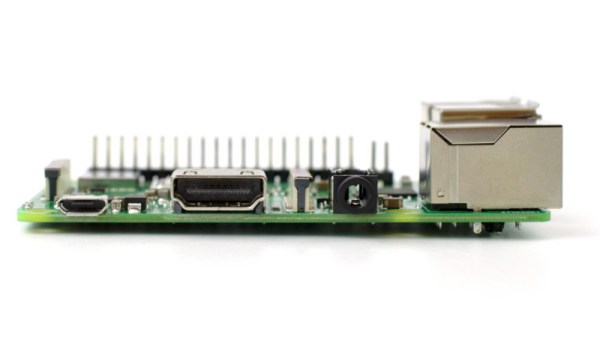
If you only do projects for yourself, you are spoiled. After all, you know your environment better than anyone. You know what power you’ll have, the temperature range, and how your network is configured. This last part is especially problematic if you are trying to deploy something that connects to a wireless LAN. How can you configure, say, a Raspberry Pi so that it can connect to an unknown user’s WiFi network? Fixing that problem is the goal of [schollz’s] Raspberry Pi Turnkey project.

The idea is simple. A Raspberry Pi image boots up for the first time and offers a WiFi hotspot itself called ConnectToConnect. The WiFi password is also ConnectToConnect. Once connected, you get configuration options that allow you to tailor the system to your network. Sure, you could have people log in and reconfigure via a serial terminal, wired ethernet (which isn’t always set up right, either), or a USB keyboard But that’s not a great out-of-the-box experience for most customers.

Continue reading “Deploying A Turnkey Raspberry Pi System”

Slow Cooking Filament

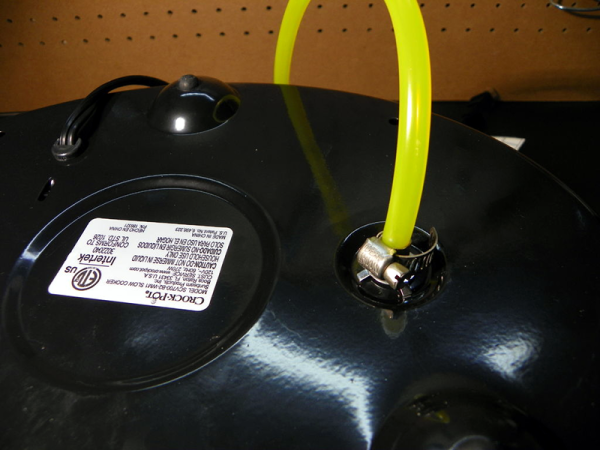
Getting good results from a 3D printer is like Goldilocks’ porridge. There are a lot of things that have to be just right. One common thing that gives people poor results is damp filament. This is especially insidious because the printer will work fine and then after some period time results degrade but it is no fault of the printer mechanics or electronics. There are many ways to attempt to dry filament, but [HydeTheJekyll] prefers using a slow cooker modified to operate with low air pressure.

We assume this works because the low pressure reduces the boiling point of water, allowing the water to boil off at temperatures that won’t distort the filament. The modifications aren’t very severe. You’ll need some hose and a pump along with some silicone caulk and petroleum jelly.

Continue reading “Slow Cooking Filament”

$6 Weather Station Goes Where You Do

We admit, we see a lot of weather stations. What makes [Mike Diamond’s] take on this old favorite interesting is that it is tiny enough to carry with you, and uses your cell phone as a hotspot to deliver its data. Of course, that assumes you have a phone that can act as a hotspot.

The parts are straightforward, a power supply, an ESP8266, and a weather sensor board. It looks as though you could easily slip the whole affair into a tube or maybe a 3D printed enclosure. We were a little concerned about the bare wire used, but as [Mike] points out you can use insulated wire if you like, and we’d encourage you to do so.

Continue reading “$6 Weather Station Goes Where You Do”

Someone Set Us Up The Compiler Bomb

Despite the general public’s hijacking of the word “hacker,” we don’t advocate doing disruptive things. However, studying code exploits can often be useful both as an academic exercise and to understand what kind of things your systems might experience in the wild. [Code Explainer] takes apart a compiler bomb in a recent blog post.

If you haven’t heard of a compiler bomb, perhaps you’ve heard of a zip bomb. This is a small zip file that “explodes” into a very large file. A compiler bomb is a small piece of C code that will blow up a compiler — in this case, specifically, gcc. [Code Explainer] didn’t create the bomb though, that credit goes to [Digital Trauma].

Continue reading “Someone Set Us Up The Compiler Bomb”

Buck Converter Efficiency

We always appreciate when someone takes the time to build something and then demonstrates what different design choices impact using the real hardware. Sure, you can work out the math and do simulations, but there’s something about having real hardware that makes it tangible. [Julian Ilett] recently posted two videos that fit this description. He built a buck converter and made measurements about its efficiency using different configurations.

The test setup is simple. He monitors the drive PWM with a scope and has power meters on the input and output. That makes it easy to measure the efficiency since it is just the ratio of the power output to input. You can see the two videos, below.

Continue reading “Buck Converter Efficiency”

Print Your Own Filament

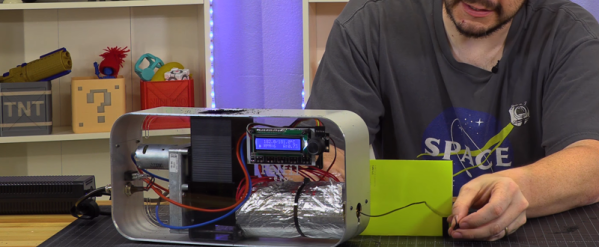
Ask anyone with a 3D printer what they make the most. They’ll probably say “trash.” There are extra pieces, stuff that oozes out of the extruder, support material, parts that didn’t stick to the bed, or just parts that needed a little tweaking to get right. No matter what you do, you are going to wind up with a lot of scraps. It would be great if you could recycle all this, and [3D Printing Nerd] looks at the FelFil Evo Filament extruder that promises it can do just that. You can see the video below.

As you’d expect, the device is a motorized auger that extrudes filament through a hot end not dissimilar to your printer’s hot end. You have to run a bag of special material through it first to clean out the plastic path. After that, you can create filament from standard pellets or pieces of old plastic.

Continue reading “Print Your Own Filament”