IoT Potty Training

If you have not had children, stop reading now, we implore you. Because before you’ve had kids, you can’t know how supremely important it is that they take care of going to the bathroom by themselves. [David Gouldin] knows how it is. But unlike most of us, he resorted to using an Amazon IoT button and Twilio. No, we are not kidding.

The problem he was trying to solve is when his younger child would need to use the potty in the middle of the night, calling out for assistance would wake the older child. [David] said it best himself:

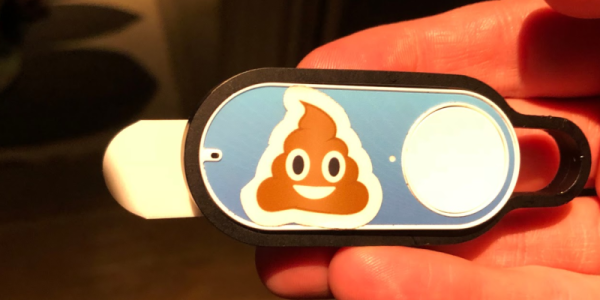
Behind the smiling emoji facade is an Amazon IoT button, a variant of Amazon’s dash button. When my kid presses this button, it triggers an AWS Lambda function that uses Twilio’s Python Helper Library to call my iPhone from a Twilio number. The Twilio number is stored in my contacts with “emergency bypass” turned on, so even when it’s 2am and I’m on “do not disturb” I still get the call.

Continue reading “IoT Potty Training” →

You Don’t Need To Be Tony Stark To Afford This Hand Controller

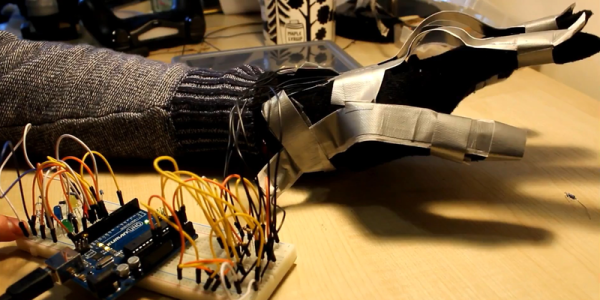
Proving that duct tape really can do anything, [StudentBuilds] uses it to make a workable controller out of a glove. To be fair, there are a few more bits too, including paper coated with pencil graphite and tin foil, which forms a variable resistor you can read with an Arduino analog input. You can see the entire thing in the video below.

The source code is simple at this point — eventually, he plans to control a robotic hand with the controller, but that’s later. However, there’s no promised link to the code in the description, so you’ll have to freeze frame and type. However, it is pretty simple — just read the analog pin values to determine the specific values for each finger.

Continue reading “You Don’t Need To Be Tony Stark To Afford This Hand Controller” →

Linux Fu: Regular Expressions

If you consider yourself a good cook, you may or may not know how to make a souffle or baklava. But there are certain things you probably do know how to do that form the basis of many recipes. For example, you can probably boil water, crack an egg, and brown meat. With Linux or Unix systems, you can make the same observation. You might not know how to set up a Wayland server or write a kernel module. But there are certain core skills like file manipulation and editing that will serve you no matter what you do. One of the pervasive skills that often gives people trouble is regular expressions. Many programs use these as a way to specify search patterns, usually in text strings such as files.

If you aren’t comfortable with regular expressions, that’s easy to fix. They aren’t that hard to learn and there are some great tools to help you. Many tools use regular expressions and the core syntax is the same. The source of confusion is that the details beyond core syntax have variations.

Let’s look at the foundation you need to understand regular expression well.

Continue reading “Linux Fu: Regular Expressions” →

Google Ups The Ante In Quantum Computing

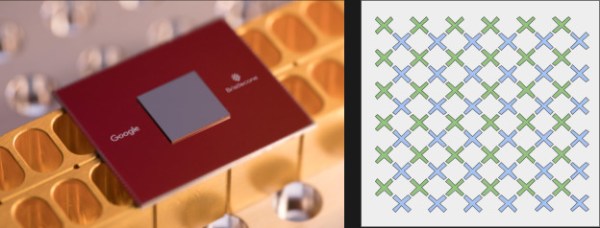
At the American Physical Society conference in early March, Google announced their Bristlecone chip was in testing. This is their latest quantum computer chip which ups the game from 9 qubits in their previous test chip to 72 — quite the leap. This also trounces IBM and Intel who have 50- and 49-qubit devices. You can read more technical details on the Google Research Blog.

It turns out that just the number of qubits isn’t the entire problem, though. Having qubits that last longer is important and low-noise qubits help because the higher the noise figure, the more likely you will need redundant qubits to get a reliable answer. That’s fine, but it does leave fewer qubits for working your problem.

Continue reading “Google Ups The Ante In Quantum Computing” →

CIPODS: Earbuds For Cochlear Implants

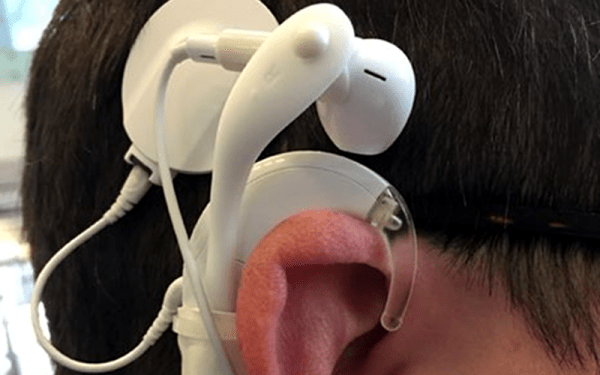
If you wear cochlear implants, sound doesn’t enter through your ear, but rather from microphones above your ears. That means earbuds are useless and you have to resort to large and clumsy over the ear headphones. [Mjcraig23] wanted the convenience of earbuds and set out to do what we all do: hack it.

The result is handily portable as you can see in the video, below. The trick is that he used replacement battery covers and then grafted earbud holders (called EARBUDi) to them using one of our favorite fasteners, zip ties. Apparently, you can wire a cable directly into the device, but then you lose the ability to hear what’s going on around you, which would not be a good idea for catching some tunes while walking your dog or other common earbud use cases.

Continue reading “CIPODS: Earbuds For Cochlear Implants” →

Hacking A Pint-Sized Mercedes

[Jonas] bought an electric Mercedes “ride on” toy for his one-year-old son. At least that’s his story. However, the vehicle has become a target for dad’s obsession with hacking and he’s already done quite a few upgrades. Even better, he did quite a bit of analysis on what’s already there. He isn’t done, but he’s promised quite a bit in the next installment which isn’t out yet.

The original car can take a driver or it can use remote control. [Jonas] has an ambitious list of ideas, some of which are still not complete:

  • Speed along with softer acceleration and braking
  • Improve the radio controller
  • Proper rubber tires
  • Proper stereo system
  • Individual brake disks on the front wheels
  • Improved horn
  • Proper seat belt or maybe even a new seat

Continue reading “Hacking A Pint-Sized Mercedes” →

FPGA Makes ASCII Video

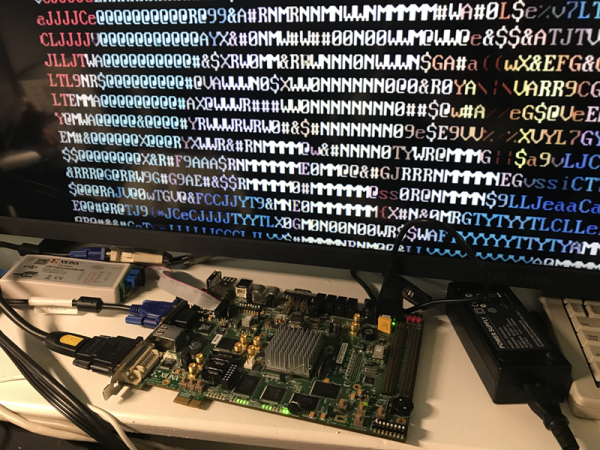
Human beings like pictures which is probably why there’s the old adage “A picture’s worth a thousand words.” We take computer graphic output for granted now, but even in the earliest days for Teletypes and line printers, there was artwork made from characters ranging from Snoopy to Spock. [Wenting Z] continues the tradition by creating an FPGA that converts VGA video to ASCII art and outputs it via DVI.

The device uses a Xilinx Virtex device and uses about 500 LUT (look up tables) which is not much at all. You can see a video (that includes an overlay of the source video) of the device in action below.

In fact, we think of art like this as a computer phenomenon, but [Flora Stacey] created a butterfly on a typewriter in 1898 and ham radio operators were doing art using paper tape for the last half of the twentieth century. Even before that, In 1865, Alice in Wonderland had a certain passage that was typeset to suggest a mouse’s tail. Perhaps the pinnacle is the famous ASCII version of Star Wars.

This is decidedly less mechanical than some of the other ASCII art projects we’ve seen. If you have a taste for more text art, have a look at some other examples, including a very old advertisement that uses character art.

Continue reading “FPGA Makes ASCII Video” →