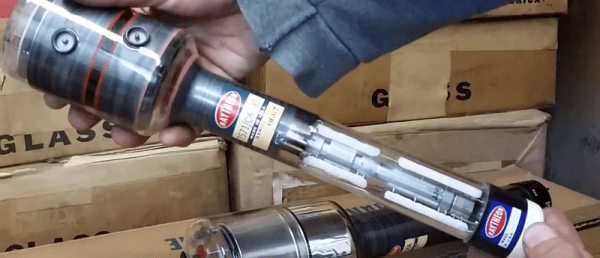
A lot of people like tubes either for their audio sound or their collectible value. [Uniservo] likes oddball tubes. His recent video (see below) shows a radechon — a computer memory tube. These were apparently widely used in RADAR sets until recently and has some similarity to a Williams tube.
The tube is essentially a CRT that illuminates a sheet of mica or another dielectric instead of a phosphor screen. The dielectric has a fine mesh grid in contact with it. By depositing charge on the mica, the tube can store an analog value. In theory, the tube could store about 16 kbits of information, but in practice, the resolution was less.
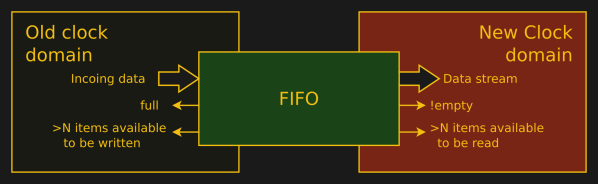
Gisselquist Technology recently posted a good blog article about metastability and common solutions. If you are trying to learn FPGAs, you’ll want to read it. If you know a lot about FPGAs already, you might still pick up some interesting tidbits in the post.
Don’t let the word metastability scare you. It is just a fancy way of saying that a flip flop can go crazy if the inputs are not stable for a certain amount of time before the clock edge and remain stable for a certain amount of time after the clock edge. These times are the setup and hold times, respectively.
Normally, your design tool will warn you about possible problems if you are using a single clock. However, any time your design generates a signal with one clock and then uses it somewhere with another clock, metastability is a possible problem. Even if you only have one clock, any inputs from the outside world that don’t reference your clock — or, perhaps, any clock at all — introduce the possibility of metastability. Continue reading “FPGA Metastability Solutions”→
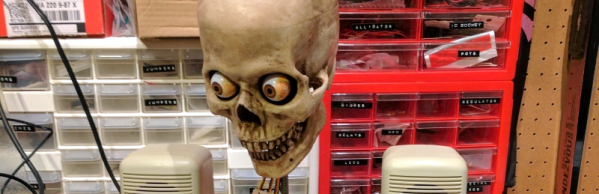
If you are looking around for a Halloween project, you might consider The Yorick Project from [ViennaMike]. As you can see in the video below, it marries a Raspberry Pi acting as an Amazon Alexa with an animatronic skull.
This isn’t the most technically demanding project, but it has a lot of potential for further hacking. The project includes a USB microphone, a servo controller, and an audio servo driver board. It looks like the audio servo board is controlling the jaw movement and based on the video, we wondered if you might do better running it completely in software.
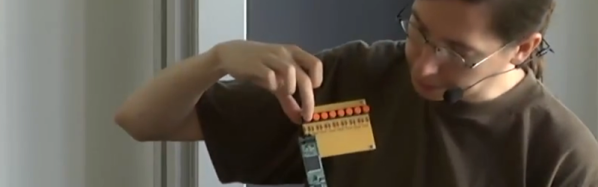
[Roland Lutz] gave a talk about FPGA design using the free tools for Lattice devices at the MetaRheinMainChaosDays conference this year. You can see the video below. It’s a great introduction to FPGAs that covers both the lowest-level detail and some higher level insight. If you’re getting started with these FPGAs, this video is a must-see.
[Roland] starts with the obligatory introductory material. He then jumps into an actual example before zooming back out to look at the internal details of the Lattice FPGA. For instance, this FPGA supports multiple bitstreams, so you can switch between different “programs” on the fly.
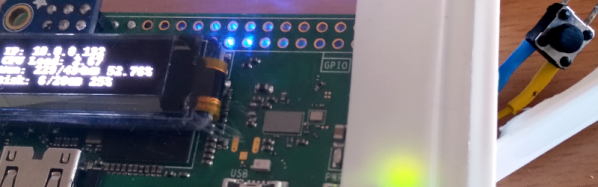
There’s a long history of building things in Altoid tins, but the Pi-Tac 1.0 uses a Pi Zero W inside a Tic-Tac box. In addition to the processors, there is a tiny OLED display and a battery controller. According to a Reddit post, [Deathonater] plans to use it as a WiFi access point.
The display and the battery/power controller are from AdaFruit. You can find some sample code for the battery controller if you want to duplicate the design. You can also opt for an enhanced version that can report the battery state readily.
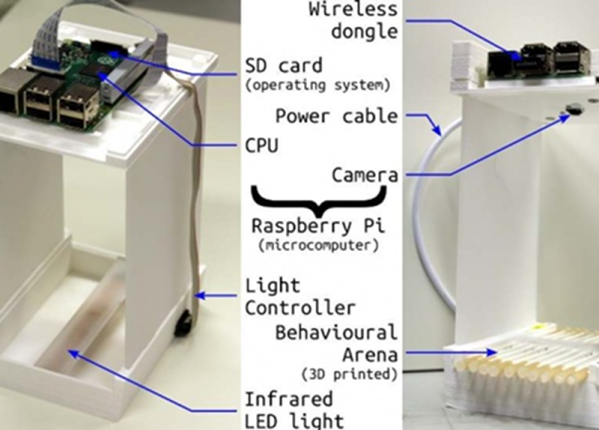
Groucho Marx famously said, “Time flies like an arrow, but fruit flies like a banana.” As insulting as it is, researchers often use fruit flies for research because they have similar behavior and genetics to humans. For example, the flies exhibit signs of anxiety, stress, and many common diseases. Researchers at Imperial College London built an inexpensive and customizable research platform for fruit flies — the ethoscope — that uses a 3D printed enclosure and a Raspberry Pi to study our winged counterparts. You can see a video about the ethoscope, below.
By using a camera, the Pi can watch the flies, something researchers used to do by hand. The software is easy to customize. For example, while studying sleep deprivation, the ethoscope could detect when a fly didn’t move for 20 seconds and rotate its tube to wake it up.
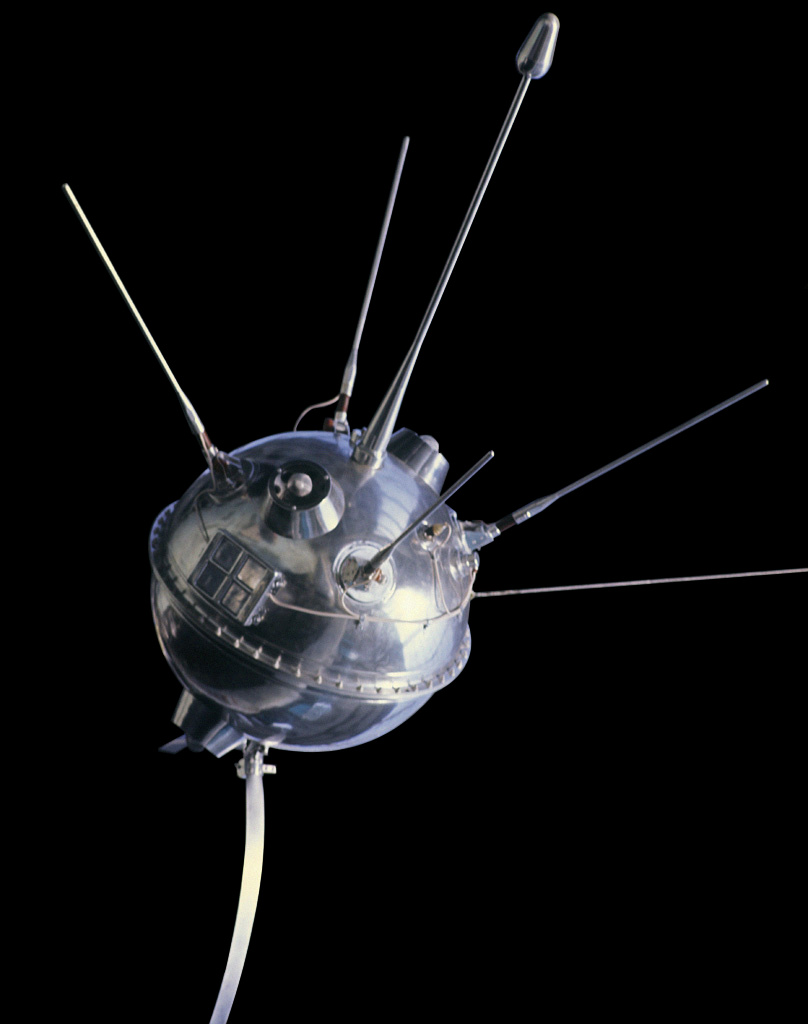
Ever hear of the Soviet Luna program? In the west, it was often called Lunik, if you heard about it at all. Luna was a series of unmanned moon probes launched between 1959 and 1976. There were at least 24 of them, and 15 were successful. Most of the failures were not reported or named. Luna craft have a number of firsts, but the one we are interested in is that it may have been the first space vehicle to be stolen — at least temporarily — in a cold war caper worthy of a James Bond novel.
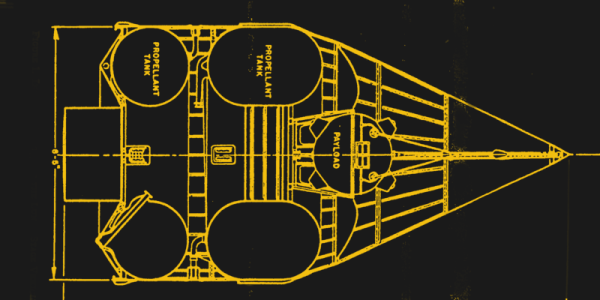
Luna-1 Payload
Around 1960, the Soviet Union toured several countries with exhibits of their industrial and technological accomplishments. One of the items on display was the upper stage of a Luna vehicle with windows cut out to show the payload inside. At first, the CIA suspected the vehicle was just a model. But they wanted to be sure.
The story is laid out in a CIA document from 1967 that was only declassified in 1994. Even then, the document has a lot of redactions in it. The paper is sparse on how they managed it, but when the exhibit closed — somehow — a group of intelligence operatives wound up inside the exhibition hall alone for 24 hours.
What they found was surprising. While the engine and most of the avionics were gone, the vehicle was the real article. They took measurements and photos, hoping that analysis would reveal more about the vehicle’s performance characteristics.
Here’s where you start getting into the redacted material. The team was able to get something from the probe — probably machine tooling marks — but there wasn’t enough detail to identify where and how they were made. They decided to get a team specializing in this kind of analysis to examine it more closely.