You Are Go For FPGA!

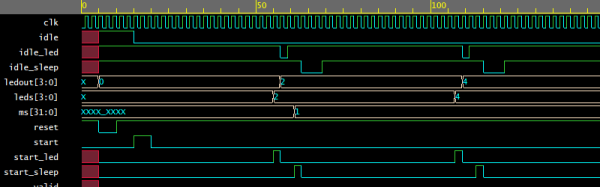
Reconfigure.io is accepting beta applications for its environment to configure FPGAs using Go. Yes, Go is a programming language, but the software converts code into FPGA constructs, so you don’t need Verilog or VHDL. Since Go supports concurrent routines and channels for synchronization and communications, the parallel nature of the FPGA should fit well.

According to the project’s website, the tool also allows you to reconfigure the FPGA on the fly using a cloud-based build and deploy system. There isn’t much detail yet, unless you get accepted for the alpha. They claim they’ll give priority to the most interesting use cases, so pitching your blinking LED project probably isn’t going to cut it. There is a bit more detail, however, on their GitHub site.

Continue reading “You Are Go For FPGA!”

Ikea Tradfri Hacking

Smart lighting is all the rage right now. Sure, Phillips Hue is the giant player in the market, but there are plenty of ZigBee, Bluetooth, and WiFi light bulbs out there. Ikea–known for cheap furniture, meatballs, and waffles–is a recent addition to the field with their Tradfri system. Like most things from Ikea, they are effective and inexpensive. [Andreas] takes a Dremel to the controller and shows how to hack the system to use MQTT. You can check out the video below.

Once he had the device opened, the used the German Make magazine article we talked about earlier, to help understand what he had. Armed with the pinout, he was able to solder a wiring harness to the controller. He then connected a WeMos board. A little Arduino code later, and he was controlling the light with MQTT.

Continue reading “Ikea Tradfri Hacking”

Biped Bob Walks And Dances

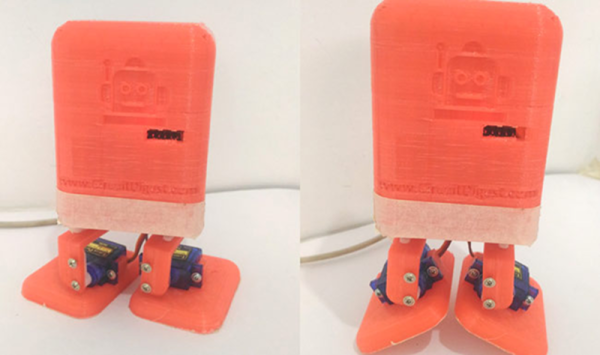
If you have a few servo motors, an Arduino, and a Bluetooth module, you could make Biped Bob as a weekend project. [B. Aswinth Raj] used a 3D printer, but he also points out that you could have the parts printed by a service or just cut them out of cardboard. They aren’t that complex.

Each of Bob’s legs has two servo motors: one for the hip and one for the ankle. Of course, the real work is in the software, and the post breaks it down piece-by-piece. In addition to the Arduino code, there’s an Android app written using Processing. You can build it yourself, or download the APK. The robot connects to the phone via BlueTooth and provides a simple user interface to do a few different walking gaits and dances. You can see a few videos of Biped Bob in action, below.

This wouldn’t be a bad starter project for a young person or anyone getting started with robotics, especially if you have a 3D printer. However, it is fairly limited since there are no sensors. Then again, that could be version two, if you were feeling adventurous.

We have mixed feelings about the BlueTooth control. BlueTooth modules are cheap and readily available, but so are ESP8266s. It probably would not be very difficult to put Bob on WiFi and let him serve his own control page to any web browser.

If Bob meets Jimmy, he may find himself envious. However, Jimmy would be a little more challenging to build. We’ve actually seen quite a few walking ‘bots over the years. Continue reading “Biped Bob Walks And Dances”

Single Part Boost Converter Challenge (Completed)

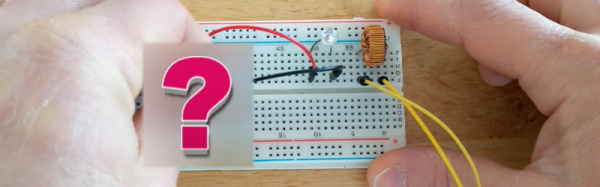
[Josh] posed an interesting challenge. Create a boost converter that can light a blue LED using a nearly dead battery and one part. Well, we were skeptical until we saw he wasn’t counting an ATtiny processor as a part. You can see a video of the challenge, below.

The challenge has already been solved, so if you view the link, you might want to avoid the comments until you’ve had time to think about your own solution. We’ll confess, the first one we thought of was probably not workable for reasons [Josh] explains. The final answer neatly fits the criteria of a hack.

Continue reading “Single Part Boost Converter Challenge (Completed)”

Oh No! It’s The Claw Again!

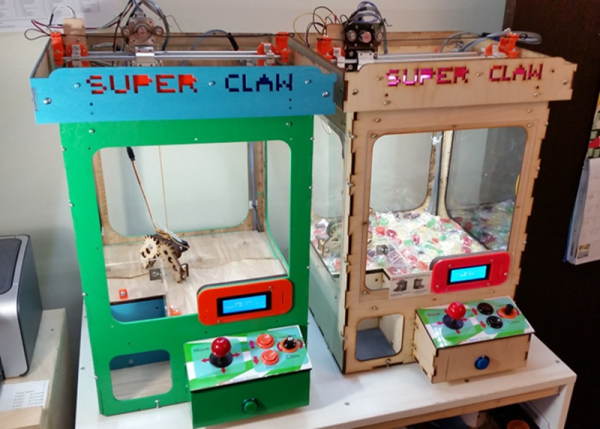
[Ryan Bates] apparently really likes building claw machines. We noticed his latest build with a new PCB, but then we scrolled down and found other incarnations of the machine going back to 2015.

The laser-cut claw is interesting looking and the brains are an Arduino. You can see the action in the video below and there are plenty of older videos on the project page.

Continue reading “Oh No! It’s The Claw Again!”

NEETS: Electronics Education Courtesy Of The US Navy

Just about everything the US Government publishes is available to the public. Granted, browsing the GPO bookstore yields a lot of highly specialized documents like a book on how to perform pediatric surgery in hostile environments. However, there are some gems if you know where to look. If you ever wanted to have a comprehensive electronics course, the US Navy’s NEETSĀ (Navy Electricity and Electronics Training Series) is freely available and has 24 modules that cover everything from electron flow through conductors, to tubes, to transistors and integrated circuits.

There are many places you can download these in one form or another. Some of them are in HTML format. Others are in PDF, which might be easier to put on a mobile device. The Internet Archive has them, although sorting by title isn’t quite in numerical order.

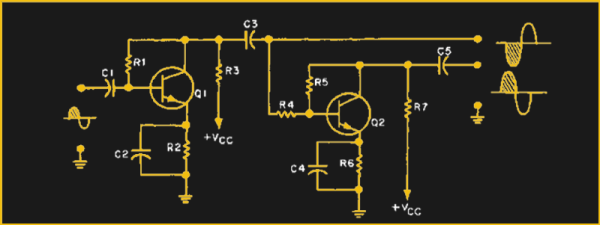
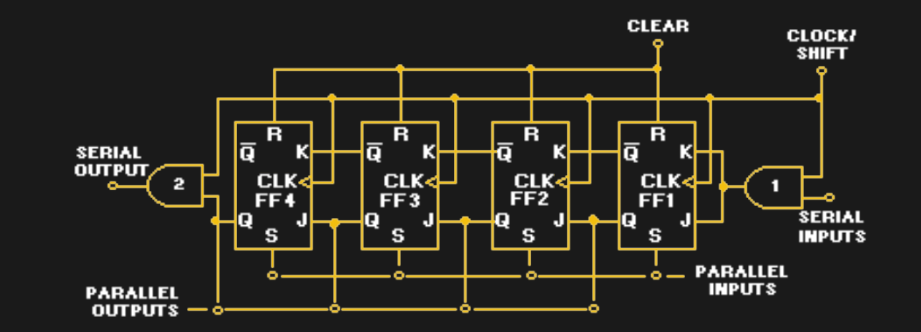
Some of the content is a bit dated — the computer section talks about magnetic core and bubble memory, for example, even though the latest revision we know of was in 1998. Of course, there are also references to bits of Navy gear that probably doesn’t mean much to most of us. However, things like the shift register (from module 13) you can see above haven’t changed in a few decades, so you can still learn a lot. The phase splitter in the top banner is even more timeless (you can find it in module 8).

Continue reading “NEETS: Electronics Education Courtesy Of The US Navy”