Papa Loves Mamba: Slithering Robot Is Reconfigurable

It makes sense considering evolution, but nature comes up with lots of different ways to do things. Consider moving. Land animals walk on four feet or two, some jump, and some use peristalsis or otherwise slither. Oddly, though, mother nature never developed the wheel (although the mother-of-pearl moth’s caterpillar will form its entire body into a hoop and roll away from attackers). Human-developed robots which, on the other hand, most often use wheels. Even a tank track has wheels within. [Joesinstructables] latest robot still uses wheels, but it emulates the slithering motion of a snake, He calls it the Lake Erie Mamba.

The most interesting thing about the robot is that it can reconfigure and move in several different modalities. Like the caterpillar, it can even form a wheel like an ouroboros and roll. You can see that at the end of the video, below.

Continue reading “Papa Loves Mamba: Slithering Robot Is Reconfigurable”
FlowCode Graphical Programming

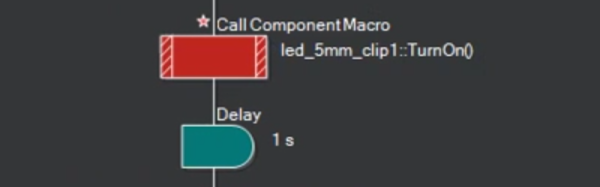
If you’ve ever been curious if there’s a way to program microcontrollers without actually writing software, you might be interested in FlowCode. It isn’t a free product, but there is a free demo available. [Web learning] did a demo of programming a Nucleo board using the system. You can check it out below.

The product looks slick and it supports a dizzying number of processors ranging from AVR (yes, it will do Arduino), PIC, and ARM targets. However, the pricing can add up if you actually want to target all of those processors as you wind up paying for the CPU as well as components. For example, the non-commercial starter pack costs about $75 and supports a few popular processors and components like LEDs, PWM, rotary encoders, and so on.

Continue reading “FlowCode Graphical Programming”

Z80 Fuzix Is Like Old Fashioned Unix

Classic Z80 computers tend to run CP/M. If you’re a purist you’ll be happy with that because that’s certainly what most serious Z80 computers ran back in the day. However, for actual use, CP/M does feel dated these days. Linux is more comfortable but isn’t likely to run on a Z80. Or is it? Linux borrows from Unix and back in the 1980s [Doug Braun] wrote a Unix-like OS for the Z80 called UZI. There have been lots of forks of it over the years, and a project called FuzixOS aims to make a useful Z80 Unix-like OS.

Of course, 1980 Unix was a lot different from modern-day Linux, but it is still closer to a modern system than CP/M. Fuzix also adds several modern features like 30 character file names and up-to-date APIs. The kernel isn’t just for the Z80, by the way. It can target a variety of older processors including the 6502, the 6809, the 8086, and others. As you might expect, the system can fit in a pretty small system.

The video below shows [Scott Baker’s] RC2014 computer running Fuzix. You’ll see it looks a lot like a Linux system, although that analogy only goes so far.

Continue reading “Z80 Fuzix Is Like Old Fashioned Unix”

Hacker U.

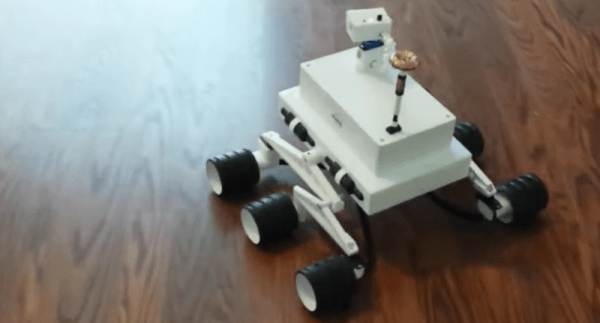
If you go to the University of South Florida, you can take the “Makecourse.” The 15-week program promises to teach CAD software, 3D printing, Arduino-based control systems, and C++. Don’t go to the University of South Florida? No worries. Professor [Rudy Schlaf] and [Eric Tridas] have made the entire course available online. You can see several videos below, but there are many more. The student project videos are great, too, like [Catlin Ryan’s] phase of the moon project (see below) or [Dustin Germain’s] rover (seen above).

In addition to a lesson plan and projects, there’s a complete set of videos (you can see a few below). If you are a regular Hackaday reader, you probably won’t care much about the basic Arduino stuff and the basic electronics–although a good review never hurts anyone. However, the more advanced topics about interrupts, SDCards, pin change interrupts might be just the thing. If you ever wanted to learn Autodesk Inventor, there are videos for that, too.

Continue reading “Hacker U.”

Measuring Capacitors At The Birth Of Rock And Roll

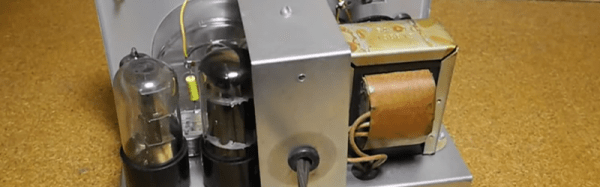
The late 1950s [Bill Haley], [Elvis Presley], and [Little Richard] were building a new kind of music. Meanwhile, electronic hobbyists were building their own gear from Heathkit. A lot of that gear shows you how far we’ve come in less than a century. [Jeff Tranter’s] YouTube channel is a great way to look at a lot of old Heathkit gear, including this really interesting “direct reading capacity meter.” You can see the video, below.

Measuring capacitance these days is easy. Many digital multimeters have that function. However, those didn’t exist in the 1950s–at least, not in the way we know them. The CM-1 weighed 5 pounds, had several tubes, and cost what would equate to $250 in today’s prices. Unlike other instruments of the day, though, the capacitance was read directly off a large analog meter (hence, the name). You didn’t have to interpret readings using a nomograph or move a knob to balance a bridge and read the knob’s position.

Continue reading “Measuring Capacitors At The Birth Of Rock And Roll”

Build Your Own PC — Really

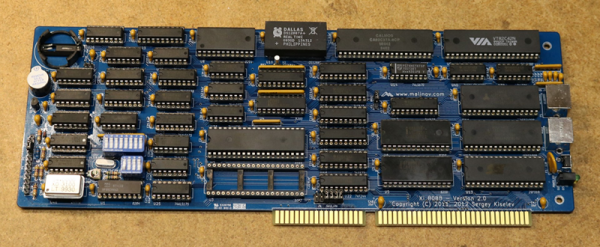
There was a time when building your own computer meant a lot of soldering or wire wrapping. At some point, though, building a PC has come to mean buying a motherboard, a power supply, and just plugging a few wires together. There’s nothing wrong with that, but [Scott Baker] wanted to really build a PC. He put together an Xi 8088, a design from [Sergey] who has many interesting projects on his site. [Scott] did a great build log plus a video, which you can see below.

As the name implies, this isn’t a modern i7 powerhouse. It is a classic 8088 PC with a 16-bit backplane. On the plus side, almost everything is conventional through-hole parts, excepting an optional compact flash socket and part of the VGA card. [Scott] acquired the boards from the Retrobrew forum’s inventory of boards where forum users make PCBs available for projects like this.

Continue reading “Build Your Own PC — Really”

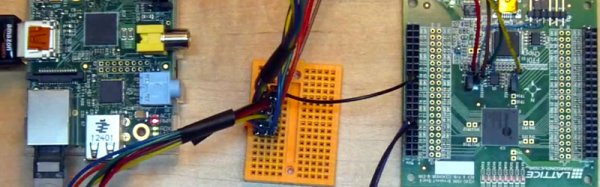
Lattice ICE40 FPGA Configured By Linux Kernel

The Linux kernel recently added support for loading firmware into an FPGA via the FPGA Manager Framework. [OpenTechLab] has built a driver for the Lattice iCE40 FPGA (same chip used on the iCEStick and other development boards). One attraction to the iCE40 is there is an open source toolchain called iCEStorm.

Even if you aren’t specifically interested in FPGAs, the discussion about Linux device drivers is good background. The principles would apply to other drivers, and would definitely apply if you want to write another FPGA loader.

Continue reading “Lattice ICE40 FPGA Configured By Linux Kernel”