Ugly DIY Portable Soldering Iron

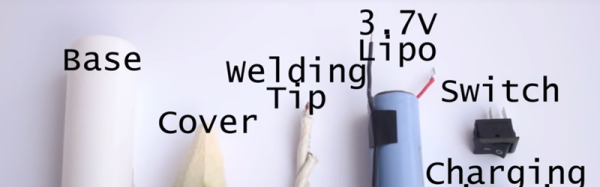
If you’ve ever wanted a battery-operated soldering iron and you just can’t stand the thought of buying one, you might check out the video below from [Just5mins]. In it, he takes a candy tube, some scrap materials, a lithium ion battery, a nichrome wire, a USB charger, and a switch and turns it into an apparently practical soldering iron.

Paradoxically, [Just5mins] used a soldering iron to build this one, so it probably can’t be your only soldering iron, although we suppose you could figure something out in a pinch. Maybe in rep-rap style, make a poor quality one with no soldering and use it to solder up the next one.

Continue reading “Ugly DIY Portable Soldering Iron”

Editor Wars

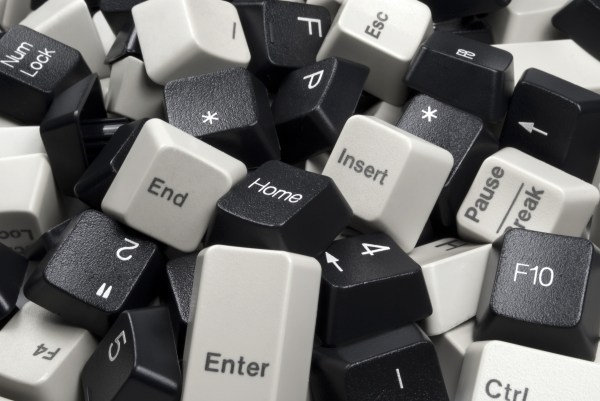
As a rule, I try hard not to get sucked into religious wars. You know, Coke vs Pepsi. C++ vs Java. Chrome vs Firefox. There are two I can’t help but jump into: PC vs Mac (although, now that Mac has turned into Unix, that’s almost more habit than anything else) and–the big one–Emacs vs vi.

If you use Linux, Unix, or anything similar, you are probably at least aware of the violence surrounding this argument. Windows users aren’t immune, although fewer of them know the details. If you aren’t familiar with these two programs, they are–in a way–text editors. However, that’s like calling a shopping mall “a store.” Technically, that’s correct, but the connotation is all wrong.

Like most religious wars, this one is partly based on history that might not be as relevant as it used to be. Full disclosure: I’m firmly in the Emacs camp. Many of my friends are fans of vi–I try not to hold it against them. I’ll try to be balanced and fair in my discussion, unless I’m talking about my preference. I don’t have to be fair when it comes to my opinions. Just to be clear: I know how to use vi. My preference isn’t based out of not wanting to learn something new.

Continue reading “Editor Wars”

BST-1 Car Shortwave Receiver

Commuting is a pain. Luckily, nearly every car has some sort of radio or other audio player to while away the hours stuck in traffic. However, most of those radios sport AM and FM bands, along with a weather band and–maybe–a long wave band. What if you prefer shortwave?

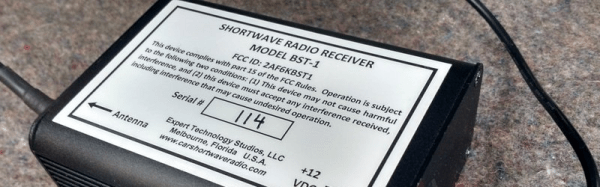
[Thomas] posted a review of the BST-1, a car-friendly shortwave receiver. The device is made to mount out of sight–presumably near an external antenna. It beams the shortwave signal to the car’s FM radio. The control is a small key fob and even if you aren’t interested in the radio itself, the user interface design is somewhat interesting.

Continue reading “BST-1 Car Shortwave Receiver”

Semisolid Lithium Ion Batteries Promise Better Cars, Solar

Lithium-ion batteries make possible smaller and lighter electronics. Unfortunately, they are also costly to produce. In a conventional lithium-ion battery, many thin layers create the finished product much like filo dough in baklava. A startup company called 24M thinks they have the answer to making less expensive lithium-ion batteries: a semisolid electrode made by mixing powders and liquid to form an electrolyte goo.

Not only will the batteries be cheaper and faster to create, but the cost of the factory will be less. Currently, 24M has a pilot manufacturing line, but by 2020 they expect to scale to produce batteries that cost less than $100 per kilowatt hour (today’s costs are about $200 to $250 for conventional batteries). Under $100, the batteries become competitive with the cost of internal combustion engines, according to the article.

Continue reading “Semisolid Lithium Ion Batteries Promise Better Cars, Solar”

Quad Serial Adapter

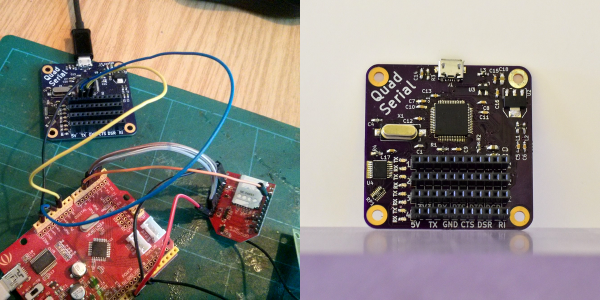
Despite concerted efforts to kill them, serial ports are alive and well, especially in embedded system. True, most of them end in a USB port, these days, but there’s still a lot of gear with a DE-9 (it isn’t a DB-9, despite the common use of the word) or a TTL-serial port lurking around. [James Fowkes] got tired of managing a bunch of USB to serial adapters, so he decided to build his own FT4232 breakout board that would provide four serial ports from a USB connection.

The small board has transmit and receive LEDs for each port along with EMI and ESD protection on the USB port. The ports are all TTL serial, serving the modern hacker, and the 3.3V pins are 5V tolerant.

Continue reading “Quad Serial Adapter”

Making Graphene More Practical

[James Tour] and others at Rice University announced an improved form of graphene that uses nanoscale rivets. The material incorporates carbon nanotubes along with carbon spheres that encase iron nanoparticles. The nanotubes provide strength and higher conductivity overall, while the spheres let the material transfer more easily.

Typically, placing graphene on something involves using chemical vapor deposition on a polymer layer before transferring to another site. The polymer tends to degrade the graphene’s properties. This new material doesn’t require this intermediate step. In addition, the spheres allow interfacing to the graphene more readily.

Continue reading “Making Graphene More Practical”

Retrotechtacular: The Incredibly Difficult Task Of Copying A Document

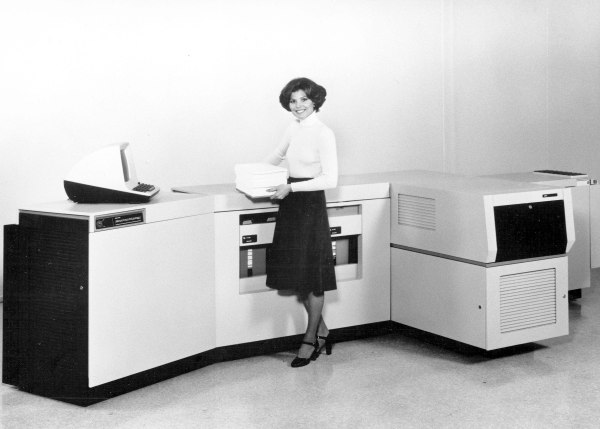
It seems hard to imagine, but in the early part of the 20th century, there weren’t a lot of great options for creating copies of documents. The most common method was to use carbon paper to create multiple copies at once from a typewriter or a line printer. All that changed with a company called Haloid. Never heard of them? They later became the Xerox company.

The underlying technology dates back to 1938 (invented by a physicist who was also a lawyer). In 1944, they produced a practical copier and shortly thereafter sold the rights to Haloid. The Haloid company originally made photographic copy machines that used wet chemistry.

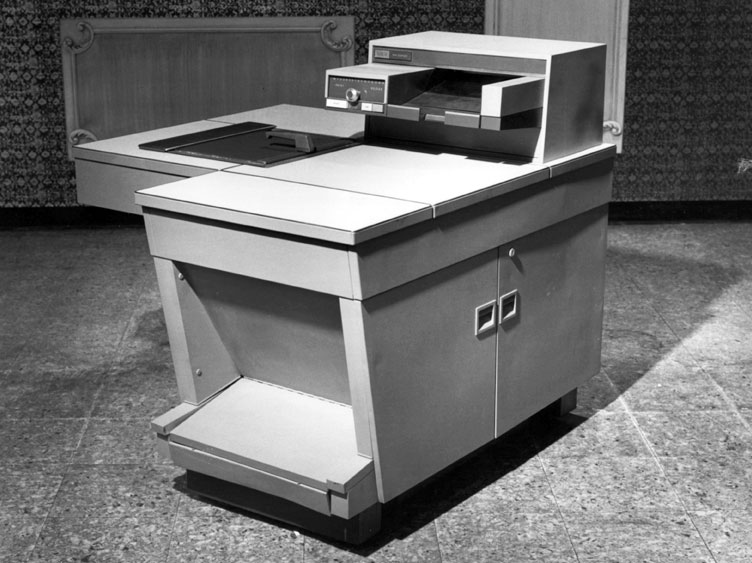
In 1959, the Xerox 914 (so called because it could copy a 9″ x 14″ document) came on the scene (that’s it, below). The 650 pound copier could make seven copies per minute and came with a fire extinguisher because it had a tendency to burst into flames. If you didn’t want to spend the $27,500 price tag, you could rent for only $25/month (keep in mind that in 1959, $25 would buy about 25 pounds of T-bone steaks). You can see a commercial for the 914 in the video below.
Xerox_914

In the commercial, you’ll see them make a big deal out of the fact that the print was dry. That’s because a lot of previous machines used actual photographic processes with wet chemistry. Obviously, that also took special paper.

Even Further Back

If the copier didn’t exist until recently, how did people make copies before? Turns out there were lots of ways to make copies of varying degrees of bad quality or extreme trouble. In some sense, the best copies were made by scribes just writing down a second copy of things. There were a variety of machines that would capture what you wrote and make a copy by mechanical or other means. A polygraph (not the lie detecting kind) allowed Thomas Jefferson to write letters and make a copy. The machine moved a pen to match the movements of the author’s pen, thus making a near perfect copy. With a few adjustments, this became the pantograph which not only does the same job, but also can shrink or enlarge the copy. Carbon paper was widely used to make multiple copies of handwritten and typewritten documents.

Continue reading “Retrotechtacular: The Incredibly Difficult Task Of Copying A Document”