Need A Nano-Ammeter? You Already Have One!

[Dannyelectronics] sometimes needs to measure tiny currents. Really tiny, like leakage currents through a capacitor. He’s built a few setups to make the measurements, but he also knew he’d sometimes want to take readings when he didn’t have his custom gear available. So he decided to see what he could do with an ordinary digital meter.
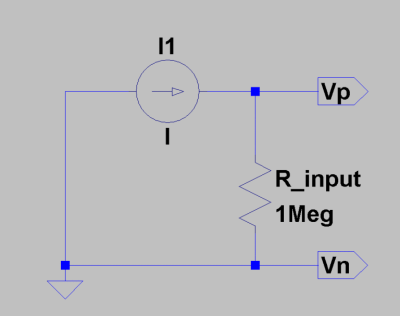
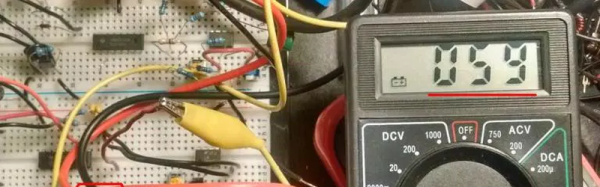
dmm-nano-ammeterAs you might expect, a common digital meter’s current scales aren’t usually up to measuring nano- or pico-amps. [Danny’s] approach was not to use the ammeter scale. Instead, he measures the voltage developed across the input impedance of the meter (which is usually very high, like one megaohm). If you know the input characteristics of the meter (or can calibrate against a known source), you can convert the voltage to a current.

For example, on a Fluke 115 meter, [Danny] found that he could read up to 60nA with a resolution of 0.01nA. A Viktor 81D could resolve down to 2.5pA–a minuscule current indeed.

We’ve looked at the difficulties involved in reading small currents before. If tiny currents aren’t your thing, maybe you’d like to try charging an iPhone with 3 KA, instead.


London Tries Smart Cities

What’s a smart city? According to Wikipedia, a smart city uses ICT (information and communication technologies) to enhance quality, performance, and interactivity of urban services while reducing costs and resource consumption. Hackers have been using technology to enhance all sorts of things for years.

London is joining forces with cities across Europe to demonstrate smart city technology, mostly in the Royal Borough of Greenwich. The project is in conjunction with the EU Horizon 2020 project, which is still soliciting proposals for funding. It seems like some Hackaday readers–especially in the EU–ought to have some ideas worth funding.

Continue reading “London Tries Smart Cities”

Crosswords Help You Learn Regular Expressions

Regular expressions might seem arcane, but if you do any kind of software, they are a powerful hacker tool. Obviously, if you are writing software or using tools like grep, awk, sed, Perl, or just about any programming language, regular expressions can simplify many tasks. Even if you don’t need them directly, regular expression searches can help you analyze source code, search through net lists, or even analyze data captured from sensors.

If you’ve been using regular expressions for a long time, they aren’t very hard. But learning them for the first time can be tedious. Unless you try your hand at regular expression crosswords. The clues are regular expressions and the rows and columns all have to match the corresponding regular expressions.

Continue reading “Crosswords Help You Learn Regular Expressions”

ESP8266 Transmits Television On Channel 3

We’ve seen a lot of ESP8266 projects in the past, but this one most definitely qualifies as a hack. [Cnlohr] noticed that the ESP8266, when overclocked, could operate the I2S port at around 80MHz and still not lose DMA data. He worked out how to create bit patterns that generate RF around 60MHz. Why is that interesting? Analog TVs can receive signals around that frequency on channel 3.

As you can see in the video below, the output is monochrome only and is a little snowy. It also will lose frames on some WiFi events, but this is all forgivable when you consider this very inexpensive module isn’t meant to do video output at all.

Continue reading “ESP8266 Transmits Television On Channel 3”

The Infinite Monkey Cage And General Relativity

If you are British, you probably already know where this is going. For the rest of you, it might help to know that The Infinite Monkey Cage is an odd little show on BBC  Radio 4 (and they’ve been on tour, too). It is the show that asks a question you probably never asked: “What would happen if a physicist and a comedian had a radio show?”

The answer, it turns out, is some science information that is anything but dry. If you are prone to listening to radio programs or podcasts, you might find some interesting tidbits in the Cage. A two-part episode on general relativity was especially interesting although it isn’t exactly like their regular program.

The physicist in question is [Brian Cox] who is an Advanced Fellow of particle physics at the University of Manchester. The comic, [Robin Ince] is not only a comedian, but also a writer, an impressionist, and has an honorary doctorate from Royal Holloway, University of London.

If you poke around the BBC’s site, you can find plenty of episodes to stream or download. General relativity is just one of the topics. You might also enjoy episodes on artificial intelligence or the science of sound.

If you need more comedy connections, consider that [Eric Idle] is responsible for the theme song. Of course, we cover relativity (and other topics) in a hopefully amusing style. Americans typically get British humor, or they don’t.  There’s no in between. The good part about these is that if you don’t get the humor, there’s still the science content. Contrast this to the very funny (if you get it) Look Around You series that is probably not the best place to get scientific information (see the video below).

Continue reading “The Infinite Monkey Cage And General Relativity”

Back To The Drawing Board

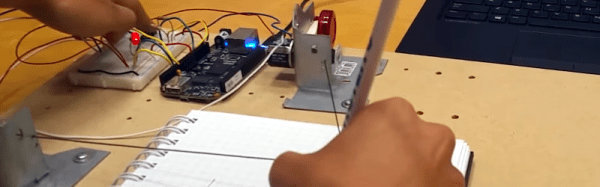
Ever try signing your name with a mouse or a trackball? Not so easy. You could buy a graphics tablet with a pen. [Rahul Ramakrishnan] has a different approach. He took two 10-turn pots, and attached some strings and a washer. A pencil goes through the washer, and a BeagleBone Black reads the pots to determine what it is drawing on the paper. A couple of retractable badge lanyards keep tension on the string.

This ingenious design would be easy enough to replicate with any microcontroller that can read the two pots. The only awkward part is the need to press a button down when you want the device to treat the pencil as down (see the video below). It would probably be easy to rig up some switch on the pencil to make operation a little smoother.

Continue reading “Back To The Drawing Board”

The Price Of Space

Many engineers of a certain age have one thing in common: Their early interest in science and engineering came from watching the US and Russian space programs. To me, regardless of any other benefit from the space program (and there are many), that ability to inspire a future generation of engineers made the entire program worthwhile.

We live in a world where kids’ role models are more likely to be sports or entertainment figures that have regular visits to police stations, jails, and rehab centers. The value of having role models that “do science” is invaluable.

This time of the year is a dark time for NASA missions, though. On January 27, 1967, the Apollo I crew (Grissom, White, and Chaffee) died in a fire. The investigation led to NASA limiting how much Velcro you can use in a cabin and moving away from pure oxygen in the cabin.

Continue reading “The Price Of Space”