ESP8266 Or MKR1000?

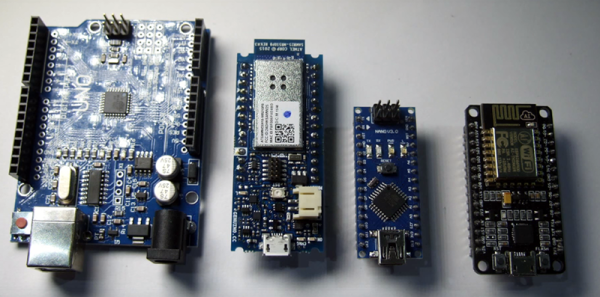
If you are a regular Hackaday reader, you’ve probably seen plenty of ESP8266 projects. After all, the inexpensive device is a workhorse for putting a project on WiFi, and it works well. There is a processor onboard, but, most often, the onboard CPU runs a stock firmware that exposes an AT command set or Lua or even BASIC. That means most projects have a separate CPU and that CPU is often–surprise–an Arduino.

It isn’t a big leap of logic to imagine an Arduino with an integrated WiFi subsystem. That’s the idea behind the MKR1000. But the real question you have to ask is: is it better to use an integrated component or just put an Arduino and ESP8266 together?

[Andreas Spiess] not only asked the question, but he answered it in a YouTube video (see below). He examines several factors on the MKR1000, the Arduino Due and Uno, and several other common boards. The examination covers performance, features, and power consumption.
Continue reading “ESP8266 Or MKR1000?” →

Ping Pong Spectrum Analyzer

A spectrum analyzer is a pretty useful tool for working with signals where the size of the frequency components matter. Usually, the display is a screen. Sometimes, you see it done with LEDs. [Mag Laboratories] did it with ping pong balls.

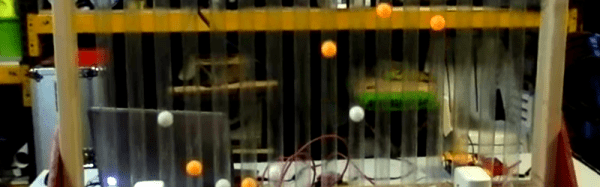
The device uses a processor to calculate a Fourier transform, cutting an audio signal into 16 frequency bands. The processor converts each of these values to a PWM output that drives small fans. The fans blow the ping pong ball up the tube proportional to the fan speed. You can see the result in the video below.

Continue reading “Ping Pong Spectrum Analyzer” →

Passwords? Just Use Your Head!

Biometrics–the technique of using something unique about your body as a security device–promises to improve safety while being more convenient than a password. Fingerprints, retinal scans, and voice identification have all found some use, although not without limitations.

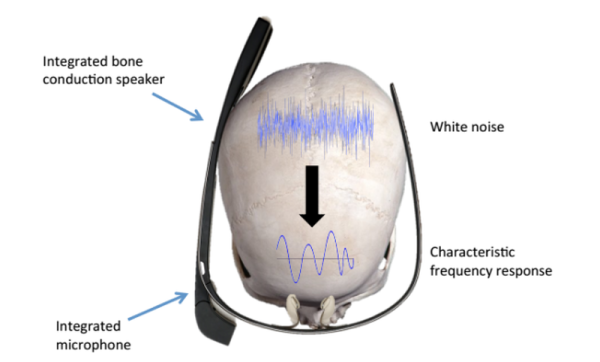
Now researchers in Germany want you to use your head, literally. SkullConduct measures vibrations of your skull in response to a sonic signal. A small prototype was successful and is particularly well suited for something you are holding up to your head anyway, like a smartphone or a headset like a Google Glass.

There are some limitations, though. For one thing, background noise can be a factor. It stands to reason, also, that more testing is necessary.

This looks straightforward enough that you could try your own version of it. After all, scanning veins in your hand has been hacked. We’ve even seen a biometric safe.

Gear Clock Uses Stepper Motor

[Rjeuch] liked a wooden clock he saw on the Internet, but the gears were produced with a proprietary software tool. So he built his own version. Unlike the original, however, he chose to use a stepper motor to drive the hands.

The clock’s gears aren’t just for show, and the post does a good job explaining how the gears work, how you might customize them, and how they fit together. The clock’s electronics rely on an Arduino.

Continue reading “Gear Clock Uses Stepper Motor” →

Atomic Arduino (and Other) Development

Even the most die-hard Arduino fan boys have to admit that the Arduino development environment isn’t the world’s greatest text editor (they’d probably argue that its simplicity is its strength, but let’s ignore that for now). If you are used to using a real code editor, you’ll probably switch to doing your Arduino coding in that and then use the external editor integration in the IDE.

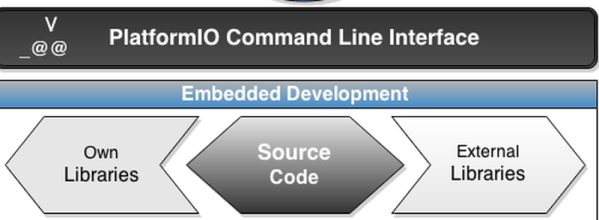
That works pretty well, but there are other options. One we noticed, PlatformIO, extends GitHub’s Atom editor. That makes it cross-platform, powerful, and with plenty of custom plug ins. It also supports a range of platforms including Arduino, many ARM platforms, MSP430, and even desktop computers running Linux or Windows.

Continue reading “Atomic Arduino (and Other) Development” →

Death, Taxes, And Laundry

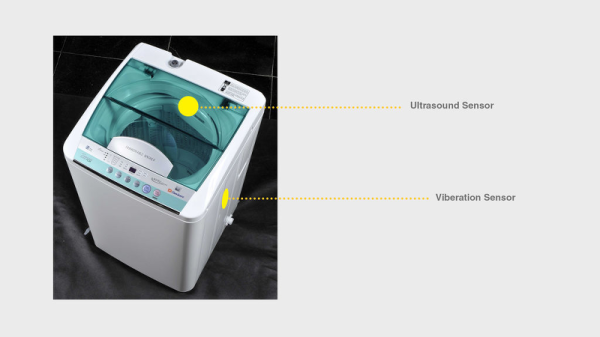
There’s an old saying that the only two things that are certain are death and taxes. However, unless you live in a nudist colony, there’s probably also laundry. [Darpan Bajaj] and some friends were at a hackathon and decided to put their washing machine on the Internet.

Most of us here at Hackaday — and many Hackaday readers, judging by the comments — are a little suspicious about how much we really need everything attached to the Internet. However, a washing machine is probably not a bad idea: you use it often, you need to know when it is done, and you probably don’t want to just sit and watch it spin. Besides, the intended installation is in a hostel where there are multiple machines and many potential users.

Continue reading “Death, Taxes, And Laundry” →

Super Thin Display Makes Your Skin Your Screen

Researchers in Japan have created a 3-micrometer display that looks like plastic wrap and can make any part of your skin into an electronic display. The idea isn’t new, but this display is far thinner and more durable than previous devices. It also lasts longer (several days) and has increased brightness.

The display uses polymer LEDs to form a seven-segment digit, so you aren’t going to stream Netflix to the back of your hand anytime soon.  However, the team wants to build more advanced displays that could one day replace smartwatch or smartphone screens.

Continue reading “Super Thin Display Makes Your Skin Your Screen” →