Belkin WeMo Teardown

[Brian Dipert] over at EDN has a teardown of Belkin’s answer to the Internet of Things (IoT) craze: the WeMo. This little WiFi gadget plugs into an outlet and lets you turn a connected device on and off from a smart phone app or something like Amazon Echo.

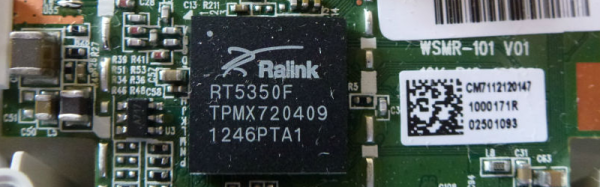
As you might expect from a cheap piece of consumer hardware, there’s not a whole lot inside. The digital board contains a Ralink WiFi chip, an antenna etched on the PCB, and a handful of components, including an SDRAM and some flash memory.

Continue reading “Belkin WeMo Teardown”

Microsoft, Minecraft, And Kids

Code.org annually sponsors an Hour of Code (December 7th to the 13th will be the third one). The goal is to try to teach kids the basics of computer science in just an hour. Microsoft has announced they will team with Code.org to bring Minecraft-based lessons to this year’s hour.

It makes sense when you remember that Microsoft bought Mojang (the company behind Minecraft) last year. Users can sign up for the free Hour of Code Minecraft module and learn how to make characters adventure through a Minecraft world using programming. There are other themed modules, too, including Star Wars, Frozen, and other kid-attracting motifs. There’s also a lot of videos (like the one below) that explain why you might want to learn about computer science.

If you think Minecraft isn’t a sufficient programming language, don’t be so sure. There are many Minecraft CPUs out there as well as a (very slow) word processor. If you want real hardware, you might check out our review of Minecraft-related projects from earlier this year.

Continue reading “Microsoft, Minecraft, And Kids”

Powdered Glue Activates When Squished

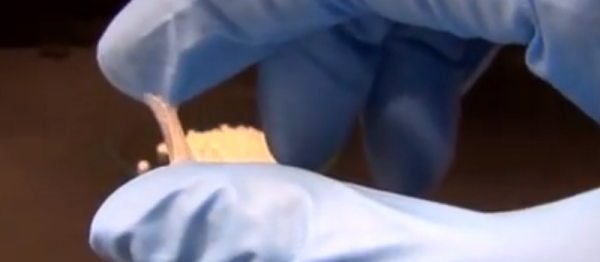
Sometimes a hack needs something more than duct tape. Cyanoacrylate glue is great, if you don’t mind sticking your fingers together. But it doesn’t stick to everything, nor does it fill gaps. Epoxy is strong, but isn’t nearly as convenient. The point is, one type of glue doesn’t fit every situation, and that’s why you have to keep a lot of options.  [Syuji Fujii] of Japan’s Osaka Institute of Technology (and his colleagues) have a new option: a glue that goes on dry and sticks when squished.

According to New Scientist,  the researchers rolled spheres of a latex liquid in a layer of calcium-carbonate nanoparticles. The resulting spheres are a few millimeters across and pour easily. When put under pressure for a few seconds, the nanoparticles are pushed inside, and the sticky liquid contacts the surface. The source paper is also available if you want to read the gory details. Or you can cut right to the video below to see it in action.

If you don’t think glue is a good hacking material, you don’t know [Kevin Dady]. You can even glue wires if you really hate soldering, although we’d rather solder.

Continue reading “Powdered Glue Activates When Squished”

Polyakov Direct Digital Synthesis Receiver

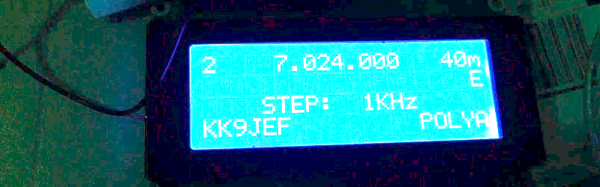
Direct conversion receivers are popular among ham radio operators and others who build radios. Suppose you want to listen to a signal at 7.1 MHz. With a direct conversion receiver, you’d tune a local oscillator to 7.1 MHz, and mix it with the incoming signal. The resulting sum and differences of the input frequencies will include the audio of an AM signal on the desired frequency.

Continue reading “Polyakov Direct Digital Synthesis Receiver”

Autonomous RiverBot Goes 15 Meters Deep

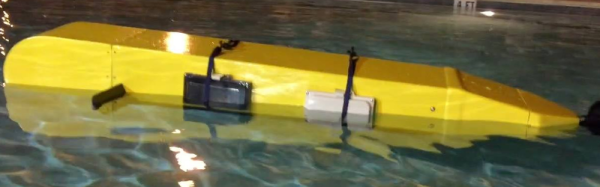
If you want to make a submersible robot (or, really, any robot) you can either design it for a specific mission, or you can try to make it general purpose. The researchers at the Cura Oceanus Foundation opted for the latter approach with RiverBot, a community-designed unmanned submersible.

Comparing it to the Space Shuttle, the RiverBot has payload bays that accept sensor kits or custom-made payloads. The builders hope to provide a platform for students and others and want to have students start with RiverBot in middle school, and keep working with the program all the way up to the PhD level.

Continue reading “Autonomous RiverBot Goes 15 Meters Deep”

Processing For Raspberry Pi

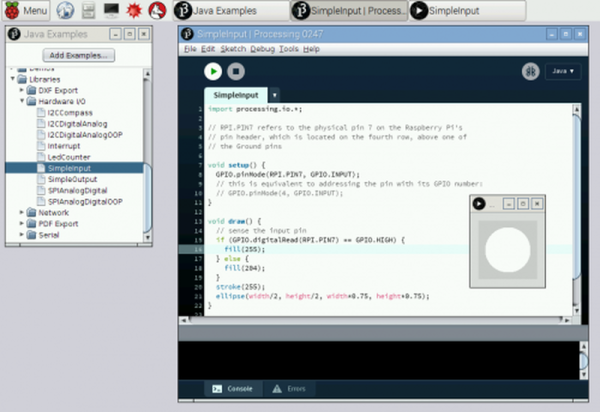
You know Processing? It is the programming language and IDE aimed at the electronic arts, new media art, and visual design communities. [Gottfried Haider] recently got Processing working on the Raspberry Pi and included a hardware input/output library to manipulate the Pi’s I/O pins.

If you want to experiment with Processing, you can download it right on your Pi with the following command:

curl https://processing.org/download/install-arm.sh | sudo sh

You can also download it from the download page. There’s a specific tutorial available or you can watch some general videos on Processing (see below).

Continue reading “Processing For Raspberry Pi”

Low Parts Count ARM SDR

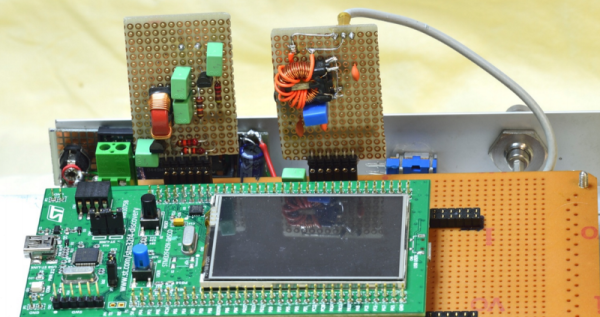
[Alberto di Bene] wanted to build an SDR for relatively low frequencies. Usually, you’d start with some front end to get the radio frequency signal down where you can work with it. But [Alberto] practically just fed an antenna into an STM32F429 Discovery board and did all the radio processing in the onboard ARM chip.

There is a little more to it than that, but only a little. If you open the PDF file on [Alberto’s] site, you’ll see there is a simple front end filter (a transformer, along with a few capacitors and inductors). This low pass filter prevents high frequencies from reaching the ARM processor’s analog to digital converter. In addition, a capacitor and a couple of resistors ensure the converter only sees positive voltages.

The CPU digitizes the incoming signal and processes it, demodulating several different types of radio transmission. The recovered audio is sent through the onboard digital to analog converter.

In addition to an input filter, the output also needs a filter to prevent high frequencies from reaching the speaker. Unlike the input filter, this one is a bit more complicated. The inductors needed for a passive filter were too large to be practical, so the output filter is an active one with a few transistors. The only other external circuitry is the power supply for the Discovery board.

The document does a great job of explaining the rationale behind the design choices and how the whole system works. It also includes simulations of both analog and digital filters used in the design.

This is really bare metal SDR and reading the code is educational. However, if you want to start with something simpler, consider GNU Radio and either an SDRPlay or a cheap RTL-SDR dongle.