Happy Programmer’s Day

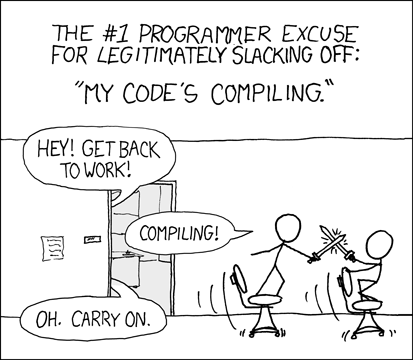
Today (September 13, 2015) is Programmer’s Day — a recognition day that started in Russia, but has been adopted by many countries. While it is great that there is a day recognizing the contribution of programmers to society, the really interesting part is why it is on September 13 (except on leap years).

The leap year part should be a clue. Today is Julian day 256. We’ll guess that anyone reading Hackaday doesn’t need to be told the rest of the story. While it might not be as good of an in-joke as May the 4th (be with you), it is satisfying to know that it isn’t just a random date from the calendar. Now if we could only get the day off as paid vacation…
Continue reading “Happy Programmer’s Day”

Sense Hat Lights Up Pi

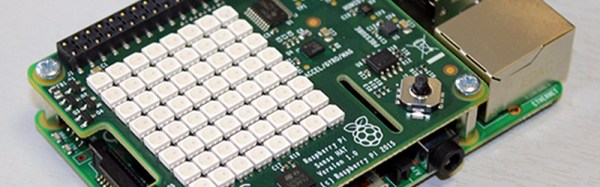
One of our chief complaints about the Raspberry Pi is it doesn’t have a lot of I/O. There are plenty of add ons, of course to expand the I/O capabilities. The actual Raspberry Pi foundation recently created the Sense Hat which adds a lot of features to a Pi, although they might not be the ones we would have picked. The boards were made for the AstroPi project (the project that allowed UK schools to run experiments in space). They don’t appear to be officially for sale to the public yet, but according to their site, they will be selling them soon. Update: Despite some pages on the Raspberry Pi site saying they aren’t out yet, they apparently are.

Continue reading “Sense Hat Lights Up Pi”

Resistance Is… There’s An Augmented Reality App For That!

Like many engineers of a certain age I learned the resistor color code using a mnemonic device that is so politically incorrect, only Tosh might venture to utter it in public today. When teaching kids, I have to resort to the old Radio Shack standby: Big Boys Race Our Young Girls But Violet Generally Wins. Doesn’t really roll off the tongue or beg to be remembered. Maybe: Bad Beer Rots Our Young Guts But Vodka Goes Well. But again, when teaching kids that’s probably not ideal either.

Maybe you can forget all those old memory crutches. For one thing, the world’s going surface mount and color coded resistors are becoming a thing of the past. However, if you really need to read the color code, there’s at least three apps on the Google Play Store that try to do the job. The latest one is ScanR, although there is also Resistor Scanner and Resistor Scan. If you use an iPhone, you might try this app, although not being an Apple guy, I can’t give you my feedback on that one.

Continue reading “Resistance Is… There’s An Augmented Reality App For That!”

Homebrew Mini-Chumby Blends 3D Printing, ESP8266 And A Touchscreen

We were all despondent when our Chumby’s went dead. And plans to hack at least one of them died when the device quit powering on. [Spiros Papadimitriou] must have missed his too because he’s made a good start at making his own wireless, touchscreen, smart clock.

In all honesty, it isn’t much of a Chumby replacement yet. It has a clock and can control some devices. There’s some hooks to add a weather display that isn’t finished yet. Still, it is a working first step. Of course, anyone can take a Raspberry Pi (or similar), a Wifi dongle, and a touchscreen and do the same thing, right? Maybe, but it is a lot harder to make one you (or your significant other) wants on your nightstand. [Spiros] took a lot of time to design a beautiful 3D printed case.

Continue reading “Homebrew Mini-Chumby Blends 3D Printing, ESP8266 And A Touchscreen”

ARM Programming On Mars

Before you overreact to the title, keep in mind the latest version of Eclipse is code named “Mars.” It is always a bit of a challenge to set up a generic ARM tool chain. If you don’t mind sticking to one vendor, shelling out a lot of money, or using Web-based tools, then you might not have this problem. But getting all the tools together can be annoying, at best.

[Erich Styger] works with students and knows they often stumble on just this step so he’s provided clear documentation for getting Eclipse, the ARM gcc compiler, and a full set of tools installed. He focuses on Windows and the Kinetis platform, but the steps are virtually the same regardless. Just get the right tools for your operating system and skip the Kinetis-specific parts if you don’t need them.

Continue reading “ARM Programming On Mars”

Kids And Hacking: Blind Robotics

If you are a Hackaday reader, it is a good bet that when you were a kid there was some adult who infected you with the madness you have for science, engineering, tinkering, or whatever it is that brings you here. Maybe it was a parent or a teacher. For many of us, it was a local ham radio operator. But it was probably someone who had the passion for this kind of thing and you caught it.

Paying that debt forward can be very rewarding. Schools and youth organizations are always looking for people to share their passions with kids and at the right age and the right school, you could be that one push that moves a kid off a bad path.

Continue reading “Kids And Hacking: Blind Robotics”