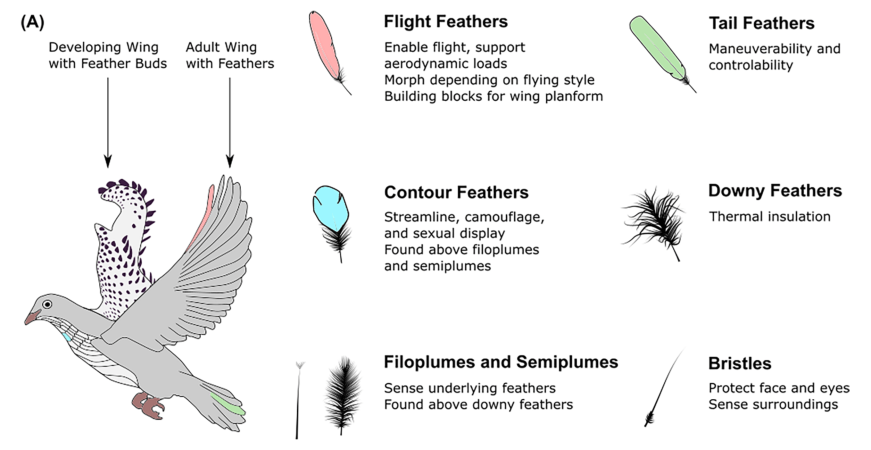
An image of a pigeon on the left and a breakdown of six of the different kind of feathers on the bird. The bird's right wing is white with black dots and has an arrow pointing to it saying, "Developing wing with feather buds." The left wing is grey with one feather highlighted in pink with the text "Adult wing with feathers" at the end of an arrow pointing to it. The six feather types on the right side of the image are flight feathers, illustrated in pink with the text "enable flight, support aerodynamic loads, morph depending on flying style, building blocks for wing planaform." In green, we have tail feathers and the text "Maneuverability and controlability." In blue are the contour feathers, accompanied by the text, "streamline, camouflage, and sexual display. Found above filoplumes and semiplumes." A black floofy branched structure shows us the downy feathers next to the text "thermal insulation." Filoplumes and semiplumes look to be both thin and bushy feathers in black with the text "Sense underlying feathers, found above downy feathers." Finally, we have a black, stick-like bristle feather with the text "Protect face and eyes, sense surroundings."

Feathers Are Fantastic, But Flummoxing For Engineers

Birds are pretty amazing creatures, and one of the most amazing things about them and their non-avian predecessors are feathers. Engineers and scientists are finding inspiration from them in surprising ways.

The light weight and high strength of feathers has inspired those who look to soar the skies, dating back at least as far as Ancient Greece, but the multifunctional nature of these marvels has led to advancements in photonics, thermal regulation, and acoustics. The water repellency of feathers has also led to interesting new applications in both food safety and water desalination beyond the obvious water repellent clothing.

Sebastian Hendrickx-Rodriguez, the lead researcher on a new paper about the structure of bird feathers states, “Our first instinct as engineers is often to change the material chemistry,” but feathers are made in thousands of varieties to achieve different advantageous outcomes from a single material, keratin. Being biological in nature also means feathers have a degree of self repair that human-made materials can only dream of. For now, some researchers are building biohybrid devices with real bird feathers, but as we continue our march toward manufacturing at smaller and smaller scales, perhaps our robots will sprout wings of their own. Evolution has a several billion year head start, so we may need to be a little patient with researchers.

Some birds really don’t appreciate Big Brother any more than we do. If you’re looking for some feathery inspiration for your next flying machine, how about covert feathers. And we’d be remiss not to look back at the Take Flight With Feather Contest that focused on the Adafruit board with the same name.
Small Feathers, Big Effects: Reducing Stall Speeds With Strips Of Plastic

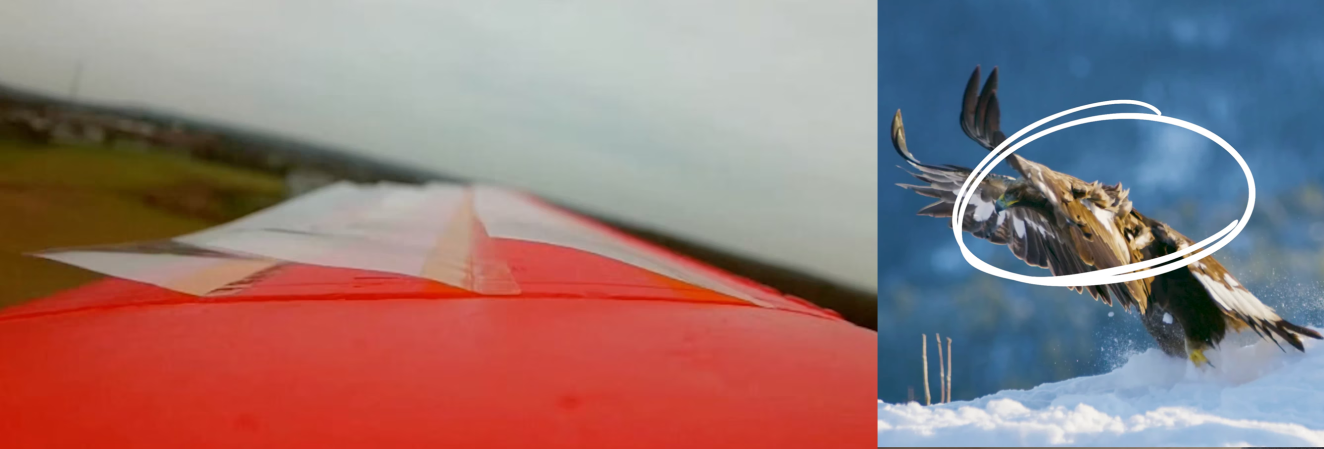
Birds have long been our inspiration for flight, and researchers at Princeton University have found a new trick in their arsenal: covert feathers. These small feathers on top of birds’ wings lay flat during normal flight but flare up in turbulence during landing. By attaching flexible plastic strips – “covert flaps” – to the top of a wing, the team has demonstrated impressive gains in aircraft performance at low speeds.

Wind tunnel tests and RC aircraft trials revealed a fascinating two-part mechanism. The front flaps interact with the turbulent shear layer, keeping it close to the wing surface, while the rear flap create a “pressure dam” that prevents high-pressure air from moving forward. The result? Up to 15% increase in lift and 13% reduction in drag at low speeds. Unfortunately the main body of the paper is behind a paywall, but video and abstract is still fascinating.

This innovation could be particularly valuable during takeoff and landing – phases where even a brief stall could spell disaster. The concept shares similarities with leading-edge slats found on STOL aircraft and fighter jets, which help maintain control at high angles of attack. Imitating feathers on aircraft wings can have some interesting applications, like improving control redundancy and efficiency.

Continue reading “Small Feathers, Big Effects: Reducing Stall Speeds With Strips Of Plastic”

A Featherweight Direct Drive Extruder In A Class Of Its Own

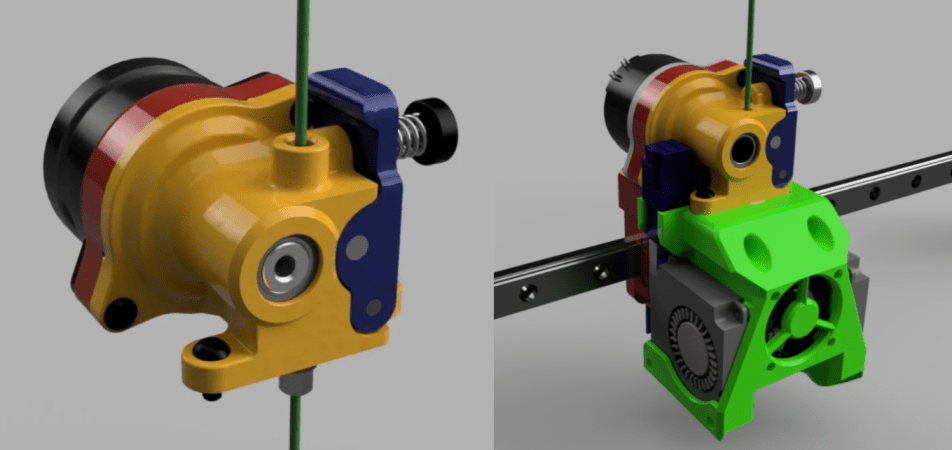
Even a decade later, homebrew 3D printing still doesn’t stop when it comes to mechanical improvements. These last few months have been especially kind to lightweight direct-drive extruders, and [lorinczroby’s] Orbiter Extruder might just set a paradigm for a new kind of direct drive extruder that’s especially lightweight.

Weighing in at a mere 140 grams, this setup features a 7.5:1 gear reduction that’s capable of pushing filament at speeds up to 200 mm/sec. What’s more, the gear reduction style and Nema 14 motor end up giving it an overall package size that’s smaller than any Nema 17 based extruder. And the resulting prints on the project’s Thingiverse page are clean enough to speak for themselves. Finally, the project is released as open source under a Creative Commons Non-Commercial Share-Alike license for all that (license-respecting!) mischief you’d like to add to it.

This little extruder has only been around since March, but it seems to be getting a good amount of love from a few 3D printer communities. The Voron community has recently reimagined it as the Galileo. Meanwhile, folks with E3D Toolchangers have been also experimenting with an independent Orbiter-based tool head. And the Annex-Engineering crew has just finished a few new extruder designs like the Sherpa and Sherpa-Mini, successors to the Ascender, all of which derive from a Nema 14 motor like the one in the Orbiter. Admittedly, with some similarity between the Annex and Orbiter designs, it’s hard to say who inspired who. Nevertheless, the result may be that we’re getting an early peek into what modern extruders are starting to shape into: smaller steppers and more compact gear reduction for an overall lighter package.

Possibly just as interesting as the design itself is [lorinczroby’s] means of sharing it. The license terms are such you can faithfully replicate the design for yourself, provided that you don’t profit off of it, as well as remix it, provided that you share your remix with the same license. But [lorinczroby] also negotiated an agreement with the AliExpress vendor Blurolls Store where Blurolls sells manufactured versions of the design with some proceeds going back to [lorinczroby].

This is a clever way of sharing a nifty piece of open source hardware. With this sharing model, users don’t need to fuss with fabricating mechanically complex parts themselves; they can just buy them. And buying them acts as a tip to the designer for their hard design work. On top of that, the design is still open, subject to remixing as long as remixers respect the license terms. In a world where mechanical designers in industry might worry about having their IP cloned, this sharing model is a nice alternative way for others to both consume and build off of the original designer’s work while sending a tip back their way.

Continue reading “A Featherweight Direct Drive Extruder In A Class Of Its Own”

Winners Of The Take Flight With Feather Contest

It’s hard to beat the fidelity and durability of printed text on paper. But the e-paper display gets pretty close, and if you couple it will great design and dependable features, you might just prefer an e-reader over a bookshelf full of paperbacks. What if the deal is sweetened by making it Open Hardware? The Open Book Project rises to that challenge and has just been named the winner of the Take Flight with Feather contest.

This e-reader will now find its way into the wild, with a small manufacturing run to be put into stock by Digi-Key who sponsored this contest. Let’s take a closer look at the Open Book, as well as the five other top entries.

Continue reading “Winners Of The Take Flight With Feather Contest”

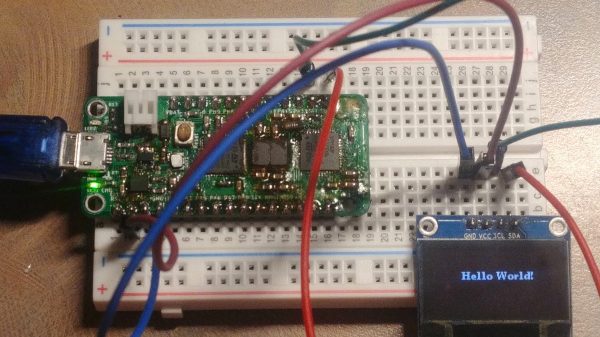
A STM32F4 Based Arduino In The Feather Form Factor

[minh7a6] loves the Adafruit Feather, but sees some room for improvement.

First is the matter of 5V tolerance. While just about everything is available in a 3.3v range these days, sometimes it’s just nice not to have to care. The main controller on the Feather is plenty powerful, but its intolerant pins just wouldn’t do so it was swapped for a chip from the ever popular STM32F4 line.

Then he wanted better energy efficiency when running from battery. In order to achieve this he switched from a linear regulator to a buck-boost converter. He also felt that the need for a separate SWD adapter for debugging seemed unnecessary, so he built a Black Magic Probe right in.

He’s just now finishing up the Arduino IDE support for the board, which is pretty cool. There’s no intention to produce this souped up Feather, but all the files are available for anyone interested.

Announcing The “Take Flight With Feather” Contest

The Adafruit Feather is the latest platform for microcontroller development, and companies like Particle, Sparkfun, Seeed Studios, and of course Adafruit are producing Feather-compatible devices for development and prototyping. Now it’s your turn! The Take Flight With Feather contest challenges you to design a board to fit in the Feather ecosystem, with the grand prize of having your boards manufactured for you and listed for sale on Digi-Key.

To get started, take a look at the current Feather ecosystem and get acquainted with this list of examples. From there, get to work designing a cool, useful, insane, or practical Feather. But keep in mind that we’re looking for manufacturability. Electron savant Lady Ada will be judging each board on the basis of manufacturability.

What’s a good design? We’re looking for submissions in the following categories:

  • The Weirdest Feather — What’s the most ridiculous expansion board you can come up with?
  • You’ll Cut Yourself On That Edge — We’re surrounded with bleeding-edge tech, what’s the coolest use of new technology?
  • Retro Feather — Old tech lives on, but can you design a Feather to interact with it? Is it even possible to build a vampire Ethernet tap or an old acoustically-coupled modem?
  • Assistive Tech — Build a Feather to help others. Use technology to improve lives.
  • Wireless Feather — Add a new wireless technology to the Feather ecosystem

In addition to the grand prize winner, five other entries (one in each of the 5 categories above) will receive $100 Tindie gift certificates. The contest begins now and runs through December 31st. To get started, start a project on Hackaday.io and use the “Submit Project To” dropdown box on the left sidebar of your project page to enter it in the contest.

The Feather “FAUXBERRY” Is Now A Real Thing

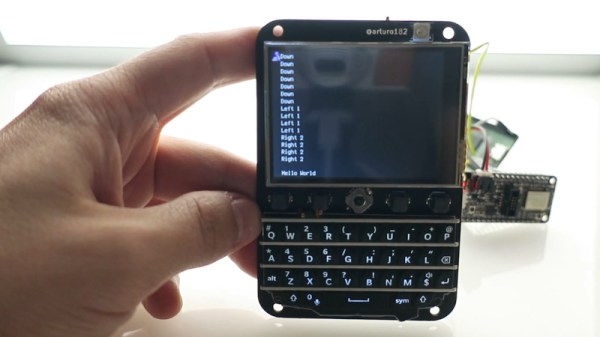
Last month we featured an interesting project from Hackaday.io that was essentially trying to recreate the iconic Blackberry form factor for use with Adafruit’s line of Feather development boards. This would let you drop in modules for everything from LTE to packet radio, opening up a nearly limitless possibilities for handheld hacking. The only problem was, it didn’t actually exist yet.

But recently creator [arturo182] wrote in to tell us that not only had all the parts arrived, but that he’d completed assembly of the first prototype. He even put together a video about the current status of the device, which you can see after the break. The short version is: it works, and it looks fantastic.

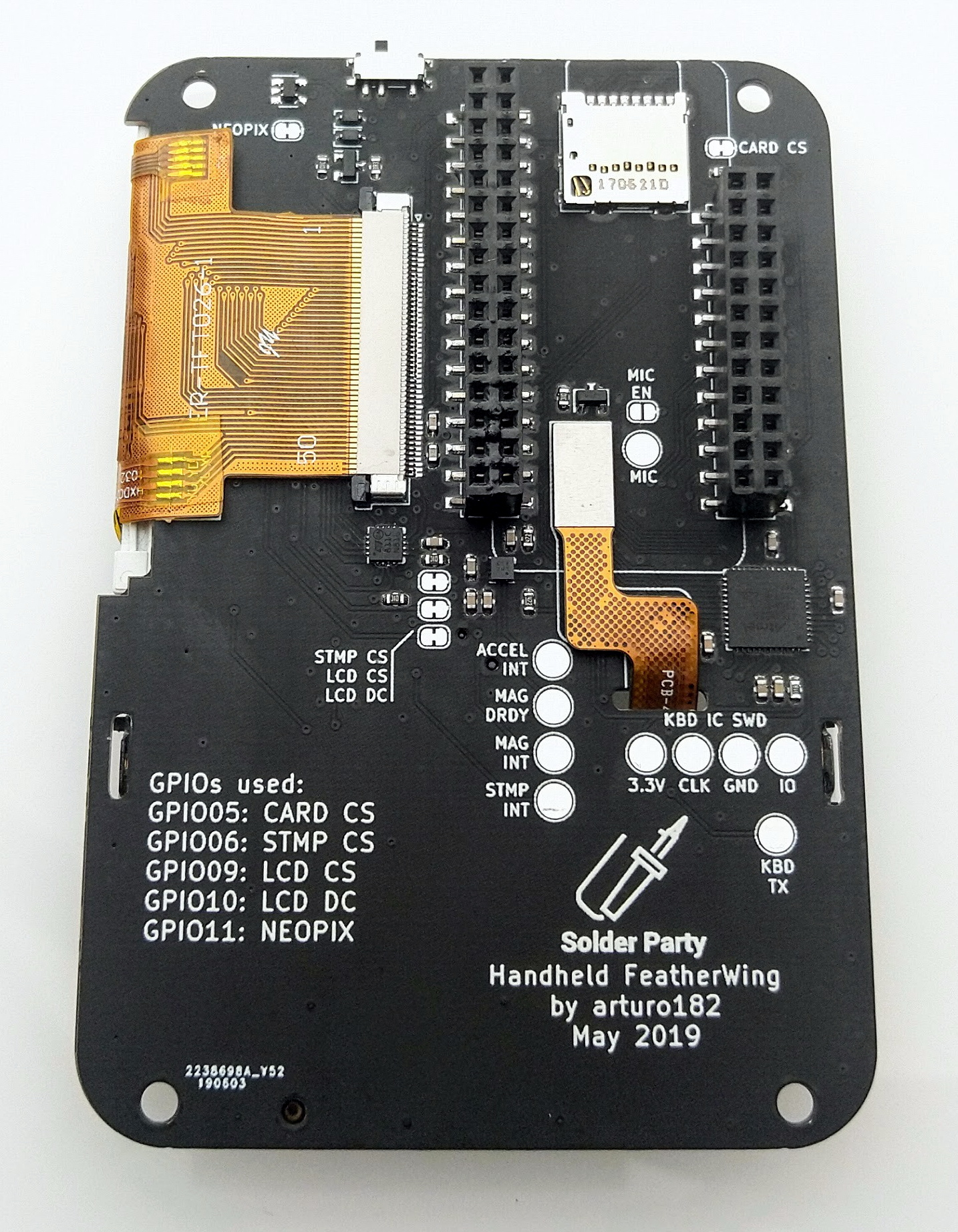
For those who might not have seen this project the first time around, the front features a 2.6 inch 320×240 touch screen display, four general purpose buttons, a RGB NeoPixel LED for visual status display, a five way joystick, and what’s arguably the star of the show, a QWERTY keyboard originally designed for the Blackberry Q10. Around the back it has an SD card slot, a socket for the Feather module of your choice, and some handy GPIO expansion pads you can attach your own hardware onto.

[arturo182] says he’s looking at a couple cosmetic changes, but on the whole, everything works and he considers the PCB essentially done. He’ll soon be sending out a handful of test units to individuals who’ve expressed interest in helping him develop the project and then…well, he’s not really sure what’s going to happen then. Some kind of commercial release seems like the logical conclusion given the interest he’s already seen in the project, but he hasn’t quite worked out whether that will be a kit or as assembled devices.

Until then, anyone who’s looking for a pocket sized device that will let them bang out some Python with a physical keyboard will have to stick with their TI-83s.

Continue reading “The Feather “FAUXBERRY” Is Now A Real Thing”