Background Substitution, No Green Screen Required

All this working from home that people have been doing has a natural but unintended consequence: revealing your dirty little domestic secrets on a video conference. Face time can come at a high price if the only room you have available for work is the bedroom, with piles of dirty laundry or perhaps the incriminating contents of one’s nightstand on full display for your coworkers.

There has to be a tech fix for this problem, and many of the commercial video conferencing platforms support virtual backgrounds. But [Florian Echtler] would rather air his dirty laundry than go near Zoom, so he built a machine-learning background substitution app that works with just about any video conferencing platform. Awkwardly dubbed DeepBackSub — he’s working on a better name — the system does the hard work of finding the person in the frame with Tensorflow Lite. After identifying everything in the frame that’s a person, OpenCV replaces everything that’s not with whatever you choose, and the modified scene is piped over a virtual video device to the videoconferencing software. He’s tested on Firefox, Skype, and guvcview so far, all running on Linux. The resolution and framerates are limited, but such is the cost of keeping your secrets and establishing a firm boundary between work life and home life.

[Florian] has taken the need for a green screen out of what’s formally known as chroma key compositing, which [Tom Scott] did a great primer on a few years back. A physical green screen is the traditional way to do this, but we honestly think this technique is great and can’t wait to try it out with our Hackaday colleagues at the weekly videoconference.
Seven-Segment Single-Steps Through The Time

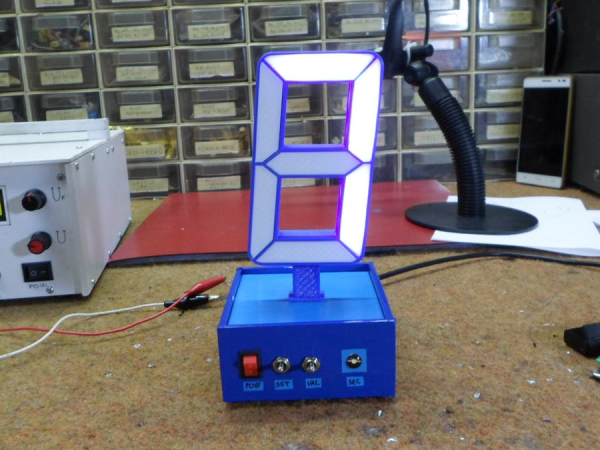
Have you ever looked at the time, and then had to look again because it just didn’t register? This phenomenon seems more prevalent with phone timepieces, but it’s been known to happen with standard wall clocks, too. This latest offering in a stream of unusual clocks fashioned by [mircemk] solves that problem by forcing the viewer to pay attention as the time flashes by in a series of single digits, separated by a hyphen.

Inside the boxy blue base is an Arduino Nano, a DS3231 real-time clock module, and a perfboard full of transistors for switching the LED strips inside the segments. There’s an LED on the front that blinks the seconds, and honestly, we’re kind of on the fence about this part. It would be nice if it faded in and out, or was otherwise a little less distracting, but it did grow on us as we watched the demo.

We love the way this clock celebrates the seven-segment display, and only wish it were much bigger. The STLs and code are available if you want to make one, though they only cover the 7-segment part — the base is made of foam board. Check out the demo and build video after the break.

Would you rather hear the time go by in gentle chimes? Here’s chime clock that uses old hard drive actuators.

Continue reading “Seven-Segment Single-Steps Through The Time”

Classic Leica Film Camera Turns Digital

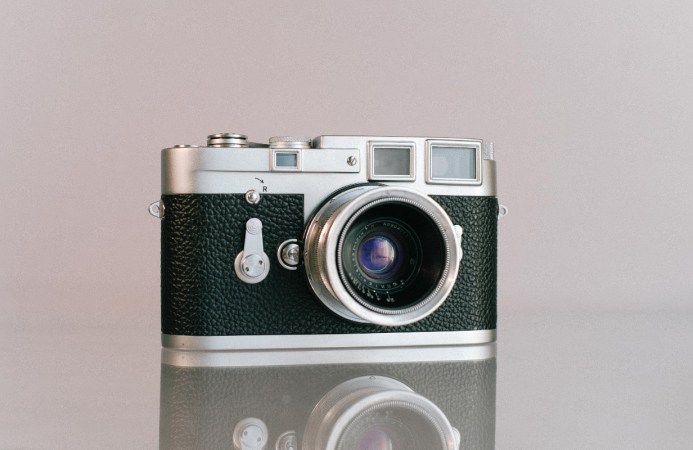
While there’s still a market for older analog devices such as vinyl records, clocks, and vacuum-tube-powered radio transmitters, a large fraction of these things have become largely digital over the years. There is a certain feel to older devices though which some prefer over their newer, digital counterparts. This is true of the camera world as well, where some still take pictures on film and develop in darkrooms, but if this is too much of a hassle, yet you still appreciate older analog cameras, then this Leica film camera converted to digital might just attract your focus.

This modification comes in two varieties for users with slightly different preferences. One uses a Sony NEX-5 sensor which clips onto the camera and preserves almost all of the inner workings, and the aesthetic, of the original. This sensor isn’t full-frame though, so if that’s a requirement the second option is one with an A7 sensor which requires extensive camera modification (but still preserves the original rangefinder, an almost $700 part even today). Each one has taken care of all of the new digital workings without a screen, with the original film advance, shutters, and other HIDs of their time modified for the new digital world.

The finish of these cameras is exceptional, with every detail considered. The plans aren’t open source, but we have a hard time taking issue with that for the artistry this particular build. This is a modification done to a lot of cameras, but seldom with so much attention paid to the “feel” of the original camera.

Thanks to [Johannes] for the tip!

Plasma Cutter + Sharpie Is Surprisingly Useful

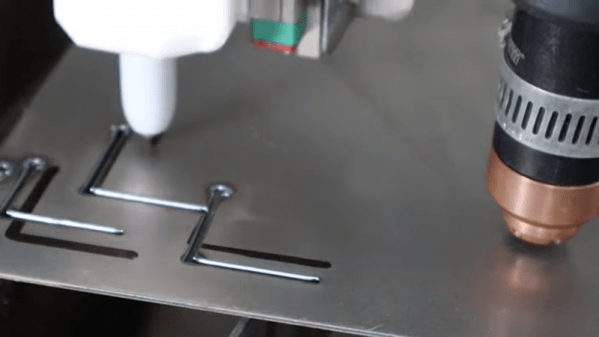
What we want is a Star Trek-style replicator. What we have are a bunch of different machines that can spew out various 2D and 3D shapes. For the foreseeable future, you’ll still need to post-process most of what you build in some way. [Stuff Made Here] had a challenge. He often uses his plasma cutter to create complex sheet metal items. But the cutter is two dimensional so the piece doesn’t look right until you bend it at just the right places. If you are doing a simple box, it is easy to figure out, but getting just the right spot on a complex bend can be a challenge. His answer? Attach a marker to the gantry so the machine can draw the lines right on the sheet metal.

Sounds easy and if you were willing to do a pen pass separately and then remove the pen and do the plasma cutting it would be relatively easy. However, that seems kind of crude. Mounting it permanently requires a way to raise it up when cutting — and it needs to survive the noisy environment near the torch. The pen would also dry out if you left in uncapped. The answer was using a permanent marker with a click retractor and let the mechanism extend and retract the pen point on command.

Continue reading “Plasma Cutter + Sharpie Is Surprisingly Useful”

COVID-19 And The State Of The Climate

The novel coronavirus sweeping the globe has led governments to institute widespread quarantines to stem the spread. Many industries have slowed production or shutdown entirely, and economic activity has slowed to a crawl. This has naturally led to a sudden reduction in greenhouse gas emissions. But how great will the effect be, and will it buy us any real time?

On The Ground

Nitrogen dioxide levels in China have dropped sharply with the reduction in industrial activity due to COVID-19. Image source: NASA

In the wake of COVID-19, good news stories have sprung up as people look for a silver lining. Unfortunately, these stories aren’t always true. There aren’t dolphins in the waters of Venice, though the water has cleared due to reduced boat activity. And drunken elephants did not begin roaming the mountains of China.

Despite this, there have been notable reductions in emissions in several areas due to government-mandated lockdowns. Northern Italy is seeing a much lower concentration of nitrogen dioxide, likely due to reduced industrial and vehicular activity. Carbon monoxide levels have similarly dropped in New York, while China has seen its carbon emissions temporarily drop by a full 25%.

On the surface of it, these are all promising numbers. Many are cautiously optimistic that this could be a major development to help stave off the worst of climate change for a little longer. Nonetheless, it’s early days yet, and what happens after the crisis passes is just as important as what’s happening now.

Continue reading “COVID-19 And The State Of The Climate”

Hackaday Podcast 062: Tripping Batteries, Ventilator Design, Stinky Prints, And Simon Says Servos

Hackaday editors Elliot Williams and Mike Szczys check out the week’s awesome hacks. From the mundane of RC controlled TP to a comprehensive look into JTAG for Hackers, there’s something for everyone. We discuss a great guide on the smelly business of resin printing, and look at the misuse of lithium battery protection circuits. There’s a trainable servo, star-tracking space probes, and a deep dive into why bootstrapped ventilator designs are hard.

Take a look at the links below if you want to follow along, and as always tell us what you think about this episode in the comments!

Take a look at the links below if you want to follow along, and as always, tell us what you think about this episode in the comments!

Direct download (60 MB or so.)

Continue reading “Hackaday Podcast 062: Tripping Batteries, Ventilator Design, Stinky Prints, And Simon Says Servos”

3D Printing Fishing Lure Molds

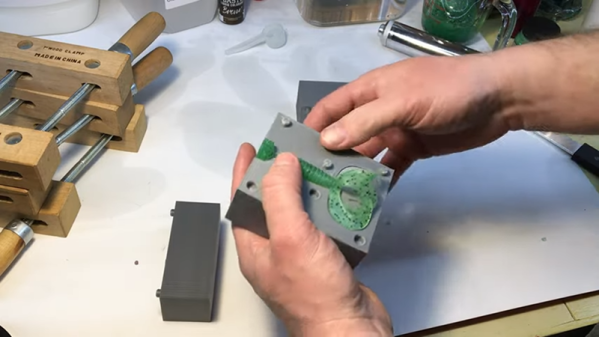
Every fisherman has a secret. A secret spot, a secret technique, or a secret bait. Maybe that’s why tying flies is so popular. [Steve] certainly has is own special lures, although he’s not keeping it a secret. (Video, embedded below.) He designs lures in Simplify3D, 3D prints molds, and then casts them.

The 3D printing part is interesting, but it is also kind of neat to see the lures and the natural prey he uses for inspiration. If you want to catch fish, you have to use bait that looks like real food.

Continue reading “3D Printing Fishing Lure Molds”