CNC Calculator Does What You Can’t

The Hackaday community — and the greater hacker community — can do absolutely anything. Readers of Hackaday regularly pilot spaceships. The transmutation of the elements is a simple science project here, one easily attainable by a high school student. Hackaday readers have solved international crises, climbed Everest, and one day we’re going to have readers accessing Hackaday from an IP address on Mars. There is almost no limit to what our community can do.

This project does the one thing Hackaday readers are utterly incapable of doing. As a cool little bonus, the enclosure for this device is a beautiful work of milled aluminum, anodized in a deep, beautiful black and engraved with exacting precision.

The guts of this build are in essence an Arduino loaded up with some special code that does what no human is capable of doing. Added onto that is a small lithium battery, charging circuit, character display, and a small keypad. There’s really nothing here that can’t be sourced from your favorite AliDXExtremeDeal shop.

The real show here is the beautiful milled aluminum enclosure. This was designed in Fusion360 and milled away on a Tormach CNC loaded up with a slightly worn endmill. The engraving was done with a Lakeshore carbide engraver. The first prototype was finished with a powder coat because that’s the easiest way for someone in a home shop to put a great finish on a milled enclosure. The production versions of this amazing device (available here, although it’s sold out at the time of this writing) are anodized and look fantastic.

If this is the sort of project that appeals to your desire for logic with just a touch of anti-Americanism, be sure to check out the number one most commented post on Hackaday ever. There are a lot of great opinions in the comments section there, even if the topic being discussed is obtuse and weird to the entire Hackaday community.


Continue reading “CNC Calculator Does What You Can’t”

Joe Kim: Where Technology And Art Collide

The rewards of being a writer for Hackaday are many, but aside from the obvious perks like the secret Hackaday handshake and admission to the private writer’s washroom, having the opportunity to write original content articles is probably the best part of the job. It gets even better, though, because after you submit an article, you’ll eventually get an email from Supplyframe Art Director Joe Kim with a Dropbox link to the original art he has created to accompany your piece. No matter where I am when that email comes in, I click on the link immediately, eager to see what Joe has come up with. And I’m never disappointed.

Continue reading “Joe Kim: Where Technology And Art Collide”

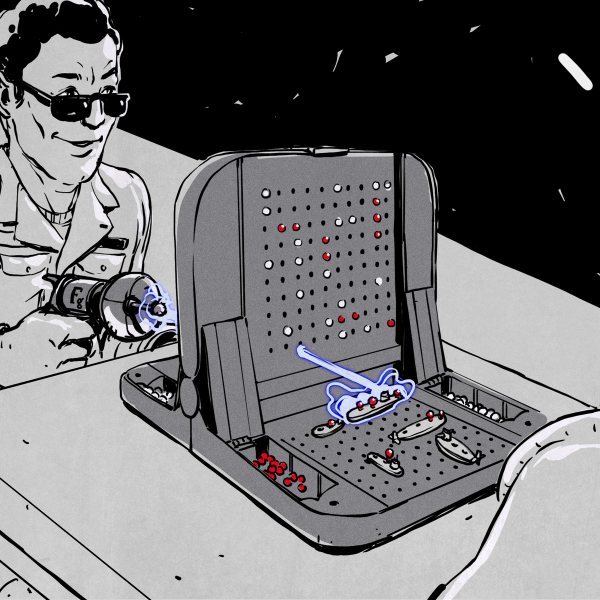
Disrupting The Computer Industry Before It Existed: Rear Admiral Grace Hopper

The feature of being easier to write than assembly is often seen as the biggest advantage of high-level programming languages. The other benefit that comes with them is portability. With high-level languages, algorithms can be developed independently from the underlying hardware. This allows software to live on once the hardware becomes obsolete.

The compiler was a concept that was met with resistance when it was first introduced. This was at a time when computers were custom-built machines bearing individual names like ENIAC, UNIVAC and Mark I. A time when the global demand for computers was estimated to be around five units by the CEO of IBM. In this scenario, it took a visionary to foresee a future where the number of computers would outgrow the number of programmers and hardware would evolve so much faster than software that a compiler would make sense. One visionary was [Grace Hopper].

Continue reading “Disrupting The Computer Industry Before It Existed: Rear Admiral Grace Hopper”

3D Print Yourself A Flame Thrower

For a large proportion of the world’s population, it’s now winter, which means there’s plenty of rain and snow to go around. With the surrounding environment generally cooler and wetter than usual, it’s a great time to experiment with dangerous flame based projects, like this wrist mounted flame thrower.

It’s a build that does things in both a simple and complicated way, all at once. Fuel is provided by a butane canister with a nozzle that needs to be pressed to release the gas.  A servo is used to push the canister into a 3D printed housing, releasing the gas into a pipe to guide the fuel towards the end of the user’s wrist. The fuel is then ignited by a heated coil of wire. The heated wire and the servo are both controlled by standard radio control gear typically seen on RC cars or buggies. Using the brushed speed controller to run the heated coil is particularly off-beat, but it does the job admirably.

Overall, it goes without saying that this build presents some serious risks of burns and other injuries. However, the fundamental premise is sound, and it does what it says on the tin with parts that could be readily found in the average junk box.

For another take on a wrist-mounted flame thrower, check out this version using a scavenged solenoid valve.

The British Drone Law Reaches Parliament

We’ve brought you a variety of stories over the years covering the interface between multirotor fliers and the law, and looked at the credibility gap between some official incident reports and the capabilities of real drones. In the news this week is a proposed new law in front of the British House of Commons that would bring in a licensing scheme for machines weighing over 250 g, as well as new powers to seize drones. We’ve previously told you about the consultation that led up to it, and its original announcement.

As a British voter with some interest in the matter, I decided to write to my Member of Parliament about it, and since my letter says what I would have written to cover the story anyway it stands below in lieu of the normal Hackaday article format. If you are a British multirotor flier this is an issue you need to be aware of, and if you have any concerns you should consider raising them with your MP as well. Continue reading “The British Drone Law Reaches Parliament”

Grabbing Better Images From A Newer Russian Satellite

The Soviet Union took the world by surprise when it sent its Sputnik satellite into low earth orbit way back in 1957. The event triggered a space race between the Soviets and the United States and ushered in technologies that would go on to touch the lives of every human on earth. Today, several nations have a space program. And one of the more useful things to put in orbit are weather satellites.

In 2014, the Russians launched their Meteor N M-2 weather satellite into a polar orbit. The part that were most interested in is the fact that it transmits images at 137.1 MHz using the standard LRPT protocol. However, the newer Meteor N M-2 transmits images at twelve times the resolution of US NOAA satellites. No typo there –  that’s twelve (12!) times. Have we got your attention now?

We shouldn’t have to tell you to jump on over to [phasenoise’s] blog which gives you everything you need to start grabbing some of these awesome images.

Now, before you get your jumper wires in a bunch – we are well aware that receiving satellite images is nothing new.

Thanks to [Roy Tremblay] for the tip!

Making A Motorized Turntable Portable

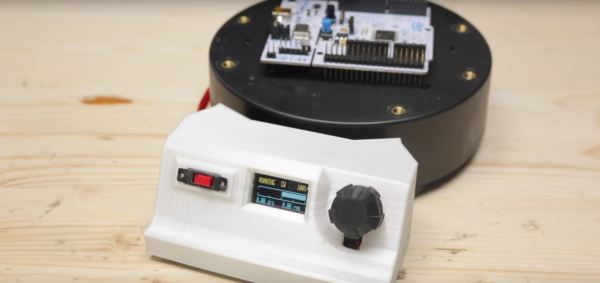
[Robin Reiter] needed a better way to show off his work. He previously converted an electric TV stand into a full 360-degree display turntable, but it relied on an external power supply to get it spinning. It was time to give it an upgrade.

Putting his spacial organization skills to work, [Reiter] has crammed a mini OLED display, rotary encoder, a LiPo 18650 battery and charging circuit, a pair of buck converters, a power switch, and an Arduino pro mini into the small control console. To further maximize space, [Reiter] stripped out the pin headers and wired the components together directly. It attaches to the turntable in question with magnets, so it can be removed out of frame, or for displaying larger objects!

When first powered on, the turntable holds in pause mode giving [Reiter] time to adjust the speed and direction. He also took the time to add an optical rotary encoder disk to the turntable and give the gearing a much needed cleaning. Check out the project video after the break!

Continue reading “Making A Motorized Turntable Portable”