NYC Maker Faire: The Logistics Of Manufacturing Pentagons

Most of the Maker Faire attendees have spent weeks or months putting together their projects. [Matt] is doing things a little differently. He brought two thousand boards, each containing twelve pentagon PCBs with individually addressable LEDs mounted in the center. This weekend, he, his team, and anyone else who can wield a soldering iron will be assembling these pentagon panels into a gigantic glowing crystal.

Last year, [Matt] put together a Kickstarter for Blinkytape, a WS2812 LED strip with an Arduino on one end of the strip to generate patterns of colors. This year, [Matt] is moving into three dimensions with a system of pentagons with a single RGB LED mounted in the center. The pentagons can be soldered together into a regular polyhedra or a convoluted wall of LEDs that form a geometric crystal pattern of blinkyness. The Kickstarter for the BlinkyTile should be up before the faire is over.

[Matt] has a few tips for anyone wanting to run their own Kickstarter: don’t have a lot of SKUs. [Matt] only has to keep track of a single panel of twelve pentagons. Compare this to other failed Kickstarters with dozens of options, several colors, and a few stretch goals, and you quickly see why many, many Kickstarters fail. [Matt] is just selling one thing.

Munich: Help Plan Hackaday’s First European Event

On Thursday, November 13th we’ve rented a huge hall in Munich, Germany and plan to host a hacking event followed by a celebration.

You need to take the day off of work and join us. Better yet, convince your boss that this is professional development and that attending is good for the company!

We’re not taking the space shuttle across the pond, this illustration reflects the connection with The Hackaday Prize. This trip will mark the end of the contest and the unveiling of the Grand Prize winner.


What do *you* want to hack?

The big question we have right now, is what kind of hands-on hardware hacking do you want to do? We published a page over on Hackaday.io to discuss the possibilities. Let your imagination run wild and we’ll do our best to make it all happen. We know from James’ hackerspace tour last year that there are a ton of Hackaday community members within reasonable travel distance from Munich. Here’s our chance to get everyone together for an Epic day of building and night of partying.

PSP Lithium Hack Could Be Called The Franken-Cell

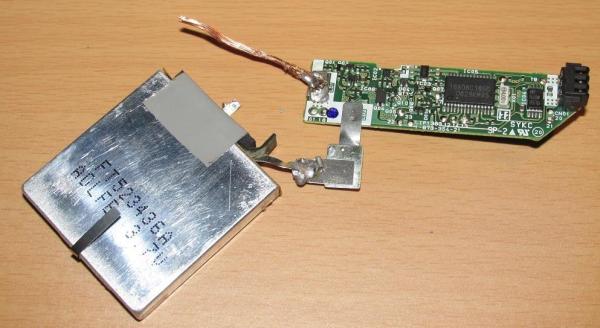
You assume that you’ll be able to get parts forever… after all: The Internet. But what if you can’t justify paying the price for them? [Cristi C.] was in this situation, not wanting to fork over $30+ for a replacement PSP battery. The handheld gaming rig itself was just discontinued this year but supposedly the batteries have been out of production for some time. What you see above is the controller board from an original battery, with the cell from a camera battery.

The key is protection. The chemistry in Lithium cells of several types brings a working voltage of around 3.7V. Swapping the cells — even if they are different capacities — should work as protection circuits generally measure current, voltage, and sometimes temperature as they charge in order to know when the cell is full. With this in mind [Christi] cracked open a used Canon NB-6L type battery and grabbed the prismatic cell as a replacement for the pouch cell in the Sony S110 case (PDF). The Canon cell is enclosed in a metal case and is just a bit smaller than the pouch was. This means with careful work it fit back inside the original plastic enclosure.

On a somewhat related note, be careful when sourcing brand-x batteries. Some manufacturers implement checks for OEM equipment but there are ways around that.

NYC MakerFaire: A Really, Really Big Printer

https://www.youtube.com/watch?v=FtQG733dC1s

Walk in to the science center at Maker Faire this year, and the first thing you’ll see is a gargantuan assemblage of aluminum extrusion spitting out molten plastic for one of the biggest 3D prints you’ve ever seen. It’s SeeMeCNC’s PartDaddy, a 16-foot tall 3D printer with a four foot diameter build plate.

The printer doesn’t extrude filament. Instead, this printer sucks up PLA pellets and extrudes them with a modified injection mold press mounted to a delta printer frame. That’s a 4mm nozzle squirting plastic. The heater for the extruder is 110 V, and the NEMA32 motors are controlled with 72V drivers. Everything about this is huge, and it’s surprisingly fast; a single-wall vase grew by about two feet in as many hours. We have no idea how fast a solid print can be completed, although the SeeMeCNC guys will probably find out later this weekend.

SeeMeCNC also had a neat little resin printer with an impossibly clever name on display. We’ll get a post up on that later this weekend.

Vector Laser Projector Is A Lesson In Design Processes

After two years of EE coursework, [Joshua Bateman] and [Adam Catley] were looking for a fun summer project. Instead of limping along with the resources they could put together themselves, they managed to get their school — Bristol University — to foot the bill!

Now Uni’s aren’t in the habit of just forking over funding for no reason, and we thing that’s why the two did such a great job of documenting their work. We’re used to seeing blogs devoted to one project, but this one has a vast portfolio of every piece of work that went into the build. Before any assembly started they drew out design diagrams to form the specification, laid out the circuit and the board artwork, and even worked out how the software would function in order to make sure the hardware met all their needs.

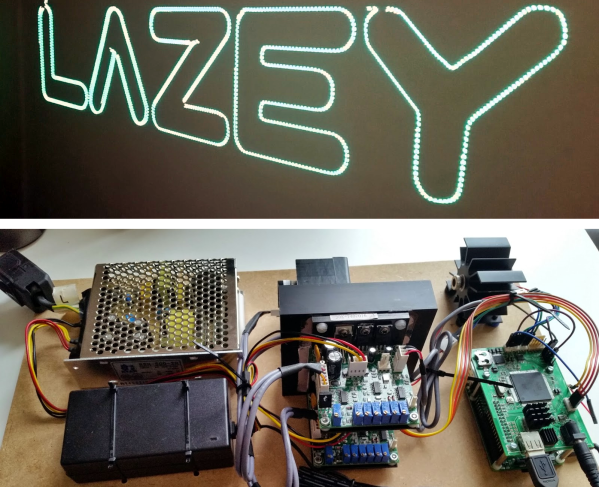
When the parts arrived the work of hand-populating the surface mount boards began. This is reflected in the fast-motion video they recorded including this clip which features a 176 pin LQFP. The driver board is a shield for a Raspberry Pi which drives the Galvanometers responsible for the X and Y movements of the mirror.

The video below shows off their success and the blog makes a great resource to point to when applying for work once a freshly minted diploma is in hand.

What do you think the next step should be? We’d advocate for a trip to crazy-town like this RGB laser projector we saw several years ago. Of course the same classic vector games we saw on Thursday would be equally awesome without alerting this hardware at all.

Continue reading “Vector Laser Projector Is A Lesson In Design Processes”

Using a Gimbal to Balance Your Coffee

Auto-Balancing Gimbal Keeps Your Coffee From Spilling

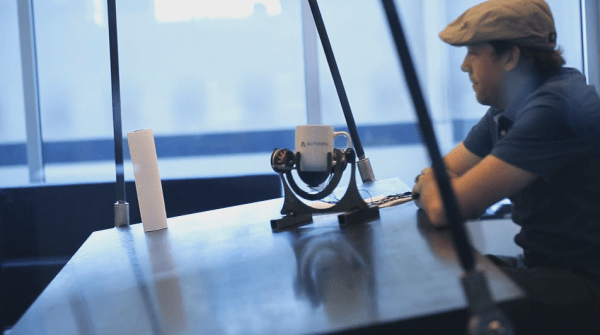
[Joe] works in one of those fancy offices that has some… unique furniture. Including a swinging boardroom table. See where we’re going with this? [Joe] made his own coffee cup gimbal.

The gimbal itself is made out of solid steel, welded together for maximum durability. He first built it out of plastic to test the concept, but then quickly moved to the all-metal solution. It’s a 2-axis gimbal featuring very powerful brushless DC motors, capable of balancing even a light-weight DSLR — however we think balancing a coffee cup is much more entertaining. It does this with ease, even when sitting on the treacherous swinging boardroom table (of DOOM).

Continue reading “Auto-Balancing Gimbal Keeps Your Coffee From Spilling”

Stepping Through Code On A Pace 4000 Set Top Box

[Lee] wrote in to tell us about a Set Top Box he hacked. Before the cable industry lawyers get out their flaming swords… he’s not stealing cable, or really doing much of anything. This is a hack just for the adventure and thrill of making someone else’s hardware design do your bidding without any kind of instructions.

He posted about the adventure in two parts. The first is finding the JTAG header and identifying the pins. Arduino to the rescue! No really, and this is the type of Arduino use we love. Using a package called JTAGenum the board becomes a quick tool for probing and identifying JTAG connections.

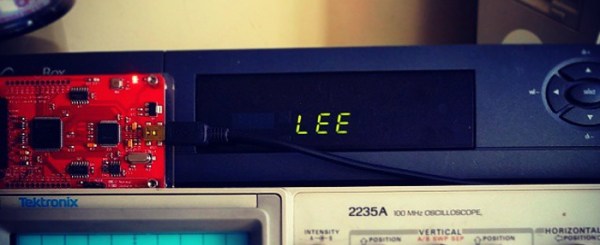
The image above shows a different piece of hardware. From looking at it we’re pretty sure this is a Bus Blaster which is specifically designed for JTAG debugging with ARM processors. This is the beginning of the second part of his documentation which involves code dumping and stepping through lines code (or instructions) using OpenOCD and GDB. It’s a chore to follow all that [Lee] discovered just to write his name to the display of the box. But we certainly found it interesting. The display has a convoluted addressing scheme. We assume that there are cascading shift registers driving the segments and that’s why it behaves the way it does. Take a look for yourself and let us know what you think in the comments.