Virtual Chess Uses Glove Controllers

chess-using-glove-controllers

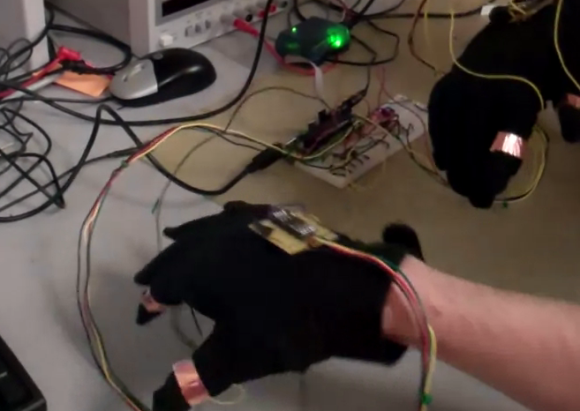
Check out the game of chess going on above. It’s a virtual game where each player uses a glove as the controller. Or course the game board and pieces are missing from this image. They’re displayed on a computer monitor which both players can see.

The hardware rather simple, and we think it would be a great project to challenge your microcontroller skills. Each glove has an accelerometer attached to it, as well as a ring of copper foil on the pointer finger and thumb. One ATmega1284 monitors both gloves. The accelerometer data is used to move the mouse cursor on the screen, while the contacts are used to grip or release a playing piece. The game board and pieces are displayed using MATLAB with controller commands fed to it via a USB connection.

If you’re more into building a mechanized game check out this pair of telepresence chess boards.
Continue reading “Virtual Chess Uses Glove Controllers”

Table Golf

table-golf

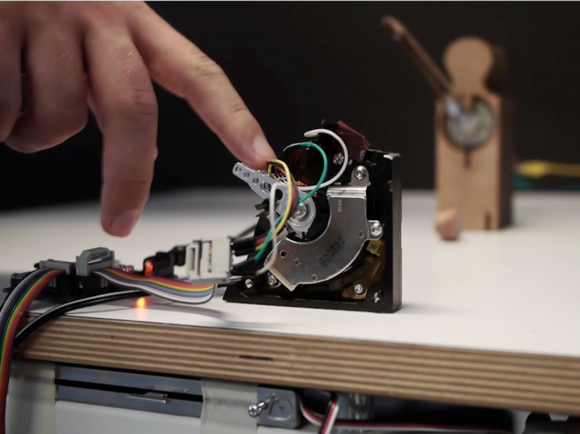
This could be the dawning of a new hackerspace sport. [Antoni Kaniowski] and [Rohit Sharma] came up with a delightful game of desktop golf. But the control scheme has a decidedly geeky flair. They’re using salvaged parts from an audio device and a hard drive to control the swing of the mechanical golfer just out of focus in the background of this image.

The game was built for a class project at the Copenhagen Institute of Interaction Design. Originally they wanted to have haptic feedback which would help you learn to tailor each shot for a perfect game. This proved to be impossible with the hardware they had on hand, but as you can see from the clip after the break the system still turned out just great. The audio slide which is taped to the underside of the table adjust the swing velocity. The hunk of hardware from an old hard drive acts the trigger for the swing.

The ‘hole’ is a laser cut ring of plywood. We’d love to see complicated courses designed in CAD and meticulously assembled for competition… but maybe we’re just getting carried away.

Continue reading “Table Golf”

Open Compute Project Hosts Hackathon

OCP Summit

The folks at Open Compute Project are running their annual summit in January, but this year they’ll be adding a hardware hackathon to the program. The hackathon’s goal is to build open source hardware that can be applied to data centers to increase efficiency and reduce costs.

The Open Compute Project (OCP) is a foundation that develops open hardware for data centers. This includes power supplies, motherboards, and storage disk arrays. The project started up at Facebook, but it’s now an independent foundation.

The hackathon will take place over the two day summit on January 16th and 17th, 2013 in Santa Clara. The registration is now open, and it’s free but limited to the first 100 people.

The hackathon is being put on with collaboration from Upverter, Github, and GrabCAD, who will be providing tools for the event. If you’re in the Santa Clara area and looking to do some hacking early in the new year, you might want to check this out.

Retrotechtacular: A 1983 Walking Robot Called ODEX-1

odex-1

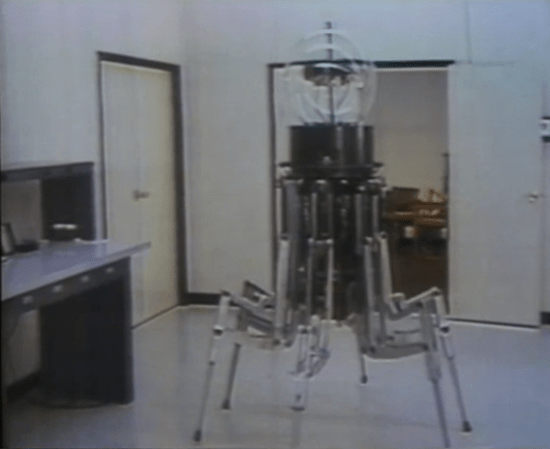
ODEX-1 is called the first commercial walking robot in this video from 1983. Of course you will quickly recognize this as a hexapod. It’s hard to get over the fact that what was so advanced at the time can now be built at home relatively inexpensively.

As with most of these retrotectacular posts the presentation is a big part of the fun. The audio track right at the beginning of the video expresses the shock at seeing such an advanced robot walking through the building (it’s coming right for us?!). The trends in engineer garb are also on display. ODEX-1 is being heralded as the solution to mechanized travel in an environment full of ladders and stairways. Apparently it can get traverse the stairs, but you’d better be ready to wait a while for it to get anywhere. See for yourself in the video after the break.

Continue reading “Retrotechtacular: A 1983 Walking Robot Called ODEX-1”

Arduino Esplora Makes A Great Controller

duino

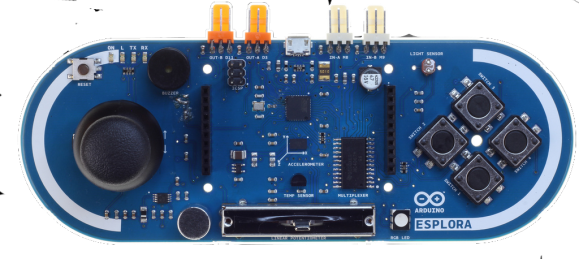
The folks at Arduino seem to be stepping up their game. With the new Arduino Leonardo board able to emulate USB keyboards and mice right out of the box, it seems the perfect time for Arduino designers to come up with a proper video game controller. This new board is called the Arduino Esplora and packs enough buttons and sensors inside to capture just about any user input you can imagine.

On board the Esplora is the same ATMega 32U4 microcontroller found in the newest Arduino boards. For input, the designers included an analog joystick, four tact switches, a linear pot, a microphone, and light sensor. The Esplora also includes a three-axis accelerometer, RGB LED, buzzer, and a breakout for an SPI-controlled TFT LCD display, lest you would want to recreate something like the new Wii U controller on your own.

You can check out everything the Esplora can do over on the official Arduino site for the Esplora library.

Rolling Your Own Furnace Controller

replacement-thermostat

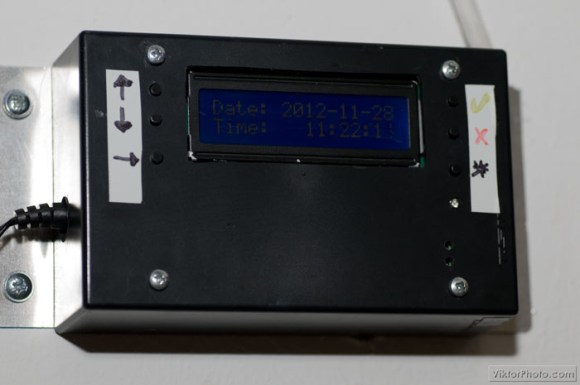
[Viktor’s] found an opportunity to put his embedded design skills to use when the furnace controller in his building went out. He admits it would have been much easier to just purchase a replacement, but not nearly as fun. Instead he built this furnace controller based on a PIC 18F4550.

First off, you may find it strange that we’re calling this a furnace controller and not a thermostat. But a study of the hardware schematic reveals that the device doesn’t have the ability to sense temperature. It merely switches the furnace on and off based on a time schedule. We guess this is for an apartment building where measuring the temperature at one central point doesn’t suffice?

At any rate, the build is clean and the UI looks quite easy to use. Inside there’s a board-mounted 12V relay which controls the furnace. The schedule is saved to the EEPROM of the microcontroller and time is kept by a battery-backed DS1307.

We’d love to see this extended in the future. Some possibilities would be adding internet connectivity and implementing a mesh network of temperature sensors which would give feedback to the main unit.

Building A Tiny Arcade Cabinet From A Game Boy Advance

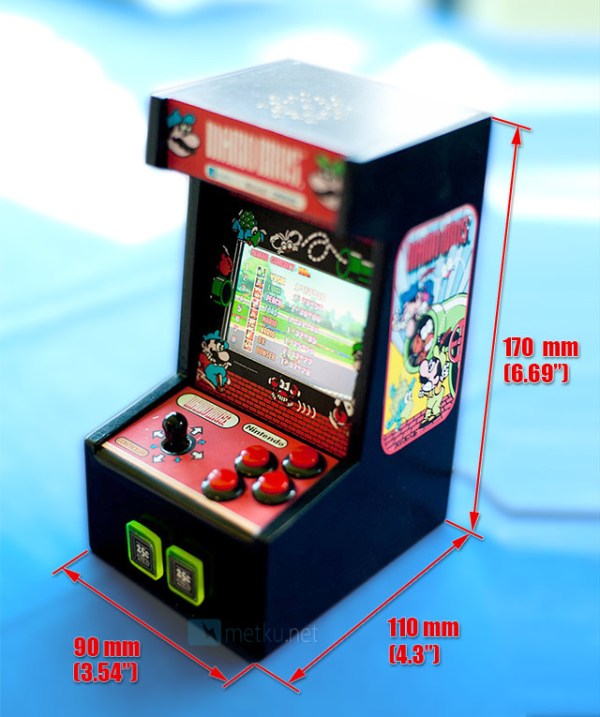
[Jani ‘Japala’ Pönkkö] found a way to make his old Game Boy Advance exciting again. He poured a ton of time and craftsmanship into building a miniature arcade cabinet. He did such a good job it’s easy to think this is a commercial product. But when you open the back of the case to switch games one look at what’s crammed inside let’s you know this is custom work.

What’s most surprising to us is that he didn’t draw out a full set of plans before beginning. He simply measured the circuit board and LCD screen from the Game Boy and went with his gut for everything else. The case itself is crafted from baltic birch plywood, which was primed and painted before applying the decals. There is also a screen bezel made of acrylic with its own decal like you’d find on coin-op machines. These were made using printable sticker paper. The electronic part of the build involves no more than extending contacts from the circuit board to buttons mounted on the case. But he did also replace the stock speaker for one that produces better audio.